How to Choose the Best Motorized Impeller or Blower
Share this:
Table of Contents
You want the best motorized impeller or blower for your system, so focus on what matters most. Start by checking your airflow rate, system resistance, and the space available. Think about noise levels, power use, and how the unit handles tough environments. Here’s a quick look at the top criteria you should consider for motorized impeller and blower selection:
Selection Criteria
What It Means
Airflow Rate
Matches the airflow your system needs
System Resistance
Handles ductwork and filter challenges
Noise Levels
Keeps things quiet
Power Consumption
Uses energy efficiently
Environmental Ratings
Stands up to heat, cold, and moisture
Size Constraints
Fits your design space
Dynamic Response
Reacts quickly when needed
Control Options
Offers flexible control choices
Maintenance
Makes future servicing simple
Tip: Always match product features to your exact application. Oversizing can waste energy and reduce efficiency.
how to choose the best motorized impeller or blower
Key Takeaways
Understand your system’s airflow needs. Measure airflow in cubic feet per minute (CFM) to ensure you select the right size blower.
Consider energy efficiency. Choose motorized impellers with direct-drive designs to reduce energy loss and lower your bills.
Check noise levels. Select blowers with lower decibel ratings for quieter operation, especially in sensitive environments like offices or hospitals.
Match the blower type to your application. Different types, like centrifugal or positive displacement, serve specific needs for airflow and pressure.
Plan for maintenance. Regular checks and cleaning can extend the life of your equipment and prevent costly repairs.
Benefits
Space-Saving
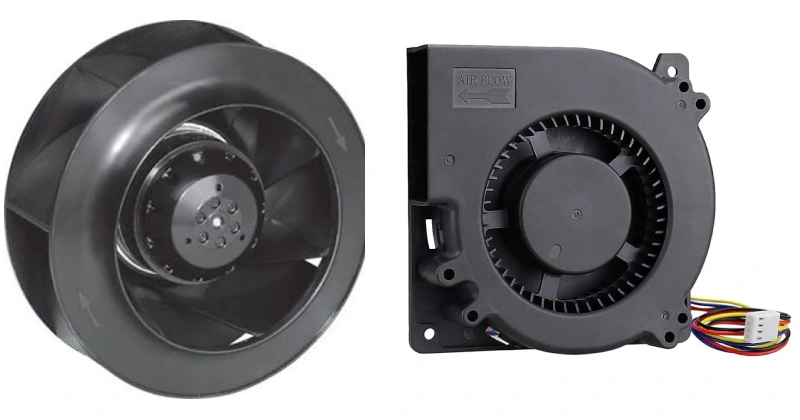
You probably want your equipment to fit into tight spaces. Motorized impellers give you a compact cooling solution that works well in crowded environments. These units take up less room than traditional fan systems. Their design lets you move a lot of air without needing a bulky setup. For example, backward curved motorized impellers deliver strong airflow and pressure while using a smaller footprint than most centrifugal blowers. This makes them a smart choice for commercial and industrial spaces where every inch counts. You can install them in places where larger fans just won’t fit.
Efficiency
If you care about energy bills and system performance, you’ll love how efficient these products are. Motorized impellers use a direct-drive setup, which means the motor connects straight to the impeller. This design cuts down on moving parts and boosts efficiency. Here’s what you get with this efficient cooling solution:
The fan motor powers the impeller directly, so you lose less energy.
Fewer moving parts mean less friction and less wasted power.
The compact design works well for small and medium fans, making the whole system more efficient.
In large-scale HVAC systems, certain fan designs like backward curved centrifugal fans and airfoil fans stand out for their higher efficiency. When you use efficient motorized impellers, you can lower your energy consumption by up to 30-40% compared to traditional blowers. That’s a big win for your bottom line and the environment. Plus, better heat dissipation helps the motor last longer and keeps your system running smoothly.
Low Maintenance
Nobody wants to spend hours fixing equipment. With motorized impellers and blowers, you get a cooling solution that’s easy to care for. The direct-drive design means fewer parts can break or wear out. You still need to clean and check your fans regularly, but the process is simple. A basic maintenance checklist helps you keep things running without much hassle. If you stick to a regular schedule, your equipment can last 10 to 25 years, depending on the type and how you use it. That means less downtime and more peace of mind for you.
Applications
Refrigeration
You rely on proper ventilation to keep refrigeration systems running smoothly. When you use motorized impellers or blowers, you get steady airflow that helps control temperature and humidity. This airflow prevents frost buildup and keeps food fresh. Ventilation also helps remove heat from compressors and motors, which protects your equipment from overheating. In walk-in coolers and freezers, you need strong ventilation to move cold air evenly. This keeps every corner at the right temperature. You also avoid hot spots that can spoil products. Ventilation systems in refrigeration units often use compact motorized impellers because they fit in tight spaces and deliver reliable performance.
HVAC
Ventilation is the heart of any HVAC system. You want clean, comfortable air in your building, and motorized impellers make that possible. These devices manage airflow by drawing air into the center and pushing it outward. This design creates high pressure and moves air efficiently through ducts and filters. Good ventilation improves indoor air quality and helps control odors, dust, and allergens. You also get better temperature control and energy savings. Many ventilation systems use AC or DC motorized impellers for reliable airflow management. You can trust these components to keep your air fresh and your system running quietly. Ventilation systems with smart controls let you adjust airflow as needed, so you always have the right balance.
Feature
Description
Airflow Management
Motorized impellers create steady airflow for effective ventilation.
Design
Rotating blades draw air in and expel it outward, boosting pressure and coverage.
Airflow Direction
Radial airflow moves air at a right angle to the axis, perfect for ventilation systems.
Industrial Uses
You see ventilation everywhere in industrial settings. Factories, labs, and warehouses all depend on strong ventilation to keep air clean and safe. Motorized blowers and impellers handle tough jobs like drying, cooling, and cleaning. For example, centrifugal blowers power air knives that dry bottles and cans on packaging lines. Ventilation removes dust and debris from conveyor belts, which is important for food safety and electronics assembly. You also find ventilation in air handling units that support HEPA filtration in labs. These systems keep sensitive environments free from contaminants. Here’s a quick look at common industrial uses:
Drying: Ventilation removes moisture from products and packaging.
Cooling: Ventilation lowers equipment temperatures after welding or machining.
Cleaning & Blow-Off: Ventilation clears dust and liquids from surfaces.
Air Handling: Ventilation supports clean rooms and controlled environments.
You need the right ventilation system for each job. Motorized impellers and blowers give you the flexibility to match your application, whether you want to protect products, improve safety, or meet strict cleanliness standards.
Motorized Impeller and Blower Selection
Choosing the right blower impeller for your system can feel overwhelming. You have many options, and each one offers unique benefits. Let’s break down the main types and see how they fit different needs.
Blower Types
You will find three main blower types in most applications:
Centrifugal blowers: These use a spinning wheel to pull air in and push it out at a right angle. Centrifugal blower impeller designs work well for moving air through ducts or filters. You get steady airflow and strong pressure. This type is common in HVAC, industrial, and refrigeration systems.
Crossaxial blowers: Sometimes called tangential blowers, these move air in a straight line across the length of the blower impeller. You often see them in electronics cooling or small appliances. They create a wide, gentle airflow but do not handle high pressure.
Positive displacement blowers: These trap air and force it through the system in fixed amounts. You use them when you need constant airflow, even if the pressure changes. They work well for pneumatic conveying or vacuum systems.
Each blower impeller type offers different performance. Centrifugal blower impeller units give you high pressure and moderate airflow. Crossaxial blowers focus on wide coverage with lower pressure. Positive displacement blowers keep airflow steady, no matter what.
Impeller Types
The impeller is the heart of your blower impeller system. The shape and design of the impeller blades decide how much air you move and how much pressure you get. Here are the main impeller types you will see:
Forward-curved impellers: These have blades that curve in the direction of rotation. You get high airflow at low pressure. They work best for clean air and low-resistance systems.
Backward-curved impellers: The blades curve away from the direction of rotation. These offer higher efficiency and can handle more pressure. You often find them in HVAC and industrial systems.
Radial impellers: These discharge air at a 90° angle from the intake. You get high static pressure and low volume. Radial impellers shine in harsh environments and high-pressure jobs. Their compact construction makes them tough and reliable for industrial use.
You should match the impeller type to your application. For example, if you need high-pressure performance in a tough industrial setting, radial impellers are your best bet. They handle harsh conditions and deliver strong performance.
Comparison
You want to know how these blower impeller types stack up. Let’s compare their features, performance, and where they work best.
Type
Airflow Range
Pressure
Noise Level (dB)
Best Use Case
Performance Notes
Centrifugal blower impeller
Moderate to high
Moderate to high
50-60
HVAC, industrial, refrigeration
Good for ducts and filters, steady performance
Crossaxial blower impeller
Wide, low pressure
Low
35-45
Electronics, small appliances
Quiet, gentle airflow, not for high resistance
Positive displacement
Constant, low volume
High
55-62
Pneumatic, vacuum, conveying systems
Keeps airflow steady, handles pressure changes
Radial impeller
Low volume
High
50-60
Industrial, harsh environments
High static pressure, compact, robust performance
You will notice that as pressure increases, airflow drops. If your system has high back pressure, the blower impeller will move less air. Centrifugal blower impeller designs give you the best balance of airflow and pressure for most HVAC and industrial jobs. Crossaxial types keep things quiet and cool in electronics. Positive displacement blowers shine when you need steady airflow, no matter the pressure.
Noise matters too. Axial fans run quietly at 35-45 dB, but when you push them for high pressure, they get loud—over 65 dB. Centrifugal blower impeller units and radial impellers usually stay between 50-60 dB, which is about as loud as a normal conversation. If you need a quiet space, crossaxial or low-speed centrifugal types work best.
Vibration can affect performance and equipment life. High-speed impellers create more vibration at the motor base. Blade thickness also plays a role. Thicker blades can reduce vibration, but if you go too thin, you risk more deformation and noise. Always check the specs for vibration ratings when you choose a blower impeller.
When you look at motorized impeller and blower selection, think about your airflow needs, pressure, noise, and space. A motorized impeller gives you a compact, efficient solution for most jobs. If you need a motorized impeller fan for tight spaces, you get strong performance and easy installation. For larger systems, centrifugal blower impeller units deliver reliable performance and handle tough conditions.
Tip: Always match your blower impeller to your system’s needs. The right choice boosts performance, saves energy, and keeps your equipment running longer.
Selection Criteria
Airflow & Sizing
Getting the right-sized fan for your system starts with knowing your required airflow. You want to check how much air your application needs, usually measured in cubic feet per minute (CFM). Make sure you look at both normal and peak conditions. Next, think about system resistance. This is the pressure your blower must overcome, which comes from ductwork, filters, or equipment. Fan performance curves help you see how airflow changes as static pressure goes up. If you move heavy or dense materials, you may need more pressure. Also, consider the temperature and elevation where you’ll use the blower. These factors can change how well your fan works. Matching the blower type to your system’s flow and pressure profile helps you avoid oversizing or undersizing.
Check airflow demands (CFM)
Measure system resistance (static pressure)
Consider temperature and elevation
Match blower type to your needs
Efficiency & Compliance
You want your system to run with energy-efficient fans. Look for energy-efficient impeller designs that cut down on wasted power. Many commercial buildings now follow new standards like the Fan Efficiency Index (FEI) and California’s Title 20. These rules make sure fans and blowers meet strict energy requirements. The Department of Energy also set a federal test procedure for fans and blowers. If you pick an energy-efficient motorized impeller, you’ll save money and help the environment. Always check if your equipment meets the latest standards before you buy.
Noise & Ruggedness
Noise can be a big deal, especially in offices or hospitals. Some blowers run as quiet as 35 dB, while others get much louder. Always check the noise rating if you need a quiet space. Ruggedness matters too. Look for blowers with IP ratings to protect against dust and moisture. Some models work in extreme temperatures or high humidity. You can even find options built for military or aerospace use. These features keep your system running longer, even in tough spots.
Controls
Modern blowers come with smart features. You can use automation and remote monitoring to check fan status and adjust settings from your phone or computer. Some systems offer real-time data on pressure, temperature, and power use. User-friendly interfaces make setup and troubleshooting easy. Predictive maintenance tools, like condition monitoring kits, help you spot problems before they cause downtime. These controls help you save energy, lower noise, and boost reliability.
When you focus on matching your system’s needs to product features, you avoid common mistakes like oversizing. Oversized blowers can cause high energy bills, noisy operation, and even shorten equipment life. You get better results by taking a systems approach and using smart controls. Before selecting the best cooling solution, check airflow, pressure, efficiency, and noise. Compare products by looking at certifications, cost of ownership, and manufacturer support. This way, you make a choice that keeps your system running smoothly.
FAQ
What is the difference between a blower and a fan?
You might wonder about this. A blower moves air with higher pressure and focuses airflow. A fan moves air with lower pressure and spreads it out. Blowers work better for ducts or filters. Fans work best for open spaces.
How do I know what size motorized impeller I need?
Start by checking your system’s airflow needs in CFM. Look at your duct size and resistance. Use the manufacturer’s performance curves. If you need help, ask your supplier for sizing support.
Can I use a motorized impeller outdoors?
Yes, you can. Just make sure you pick a model with the right environmental rating, like IP54 or higher. These ratings protect against dust and moisture. Always check the specs before you install it outside.
How often should I maintain my blower or impeller?
You should check and clean your unit every few months. Replace filters and inspect for dust or debris. Regular maintenance keeps your system running longer and helps you avoid costly repairs.
Are motorized impellers energy efficient?
Absolutely! Most motorized impellers use direct-drive motors. This design cuts energy loss and boosts efficiency. Look for models with energy certifications or high Fan Efficiency Index (FEI) ratings for the best savings.
Control transformers are best classified by electrical duty, winding arrangement, construction, phase, and code category, not by output voltage alone. Most industrial control transformers are dry-type, two-winding isolation transformers designed
When you see different distribution box types, you may ask why there are so many. Each electric distribution box has its own job. You might need a main distribution board
You might hear the term “what is distribution box” when discussing electricity at home or at work. So, what is distribution box? It is the main unit that directs electrical
To provide the best experiences, we use technologies like cookies to store and/or access device information. Consenting to these technologies will allow us to process data such as browsing behavior or unique IDs on this site. Not consenting or withdrawing consent, may adversely affect certain features and functions.
Functional
Always active
The technical storage or access is strictly necessary for the legitimate purpose of enabling the use of a specific service explicitly requested by the subscriber or user, or for the sole purpose of carrying out the transmission of a communication over an electronic communications network.
Preferences
The technical storage or access is necessary for the legitimate purpose of storing preferences that are not requested by the subscriber or user.
Statistics
The technical storage or access that is used exclusively for statistical purposes.The technical storage or access that is used exclusively for anonymous statistical purposes. Without a subpoena, voluntary compliance on the part of your Internet Service Provider, or additional records from a third party, information stored or retrieved for this purpose alone cannot usually be used to identify you.
Marketing
The technical storage or access is required to create user profiles to send advertising, or to track the user on a website or across several websites for similar marketing purposes.