You want your wires to last and stay safe, right? Cable gland strain relief helps you do just that. When you use the right strain relief, you keep your wires protected from pulls, twists, and harsh weather. Check out these industry findings:
| Evidence Type | Description |
|---|---|
| Failure Rates | Unprotected cables face 4x higher failure rates in dynamic applications. |
| Cost Savings | Proper implementation reduces repair costs by up to 68% annually. |
| Connection Failures | 83% of connection failures originate within 2 inches of termination points. |
- Mechanical stress protection absorbs damaging forces before they reach connection points.
- Graduated stiffness designs combat torsion, tension, and bending.
You lower the risk of electrical faults and avoid expensive repairs when you rely on the right solution.
Key Takeaways
- Cable gland strain relief protects wires from damage caused by pulls, twists, and harsh weather.
- Using proper strain relief can reduce repair costs by up to 68% and lower the risk of electrical failures.
- Regular inspections and maintenance of cable glands help ensure long-lasting performance and safety.
- Choosing the right strain relief based on the environment and cable type is crucial for effective protection.
- High-quality cable glands prevent common issues like broken wires and loose connections, keeping your equipment running smoothly.
What is cable gland strain relief?
Definition and purpose
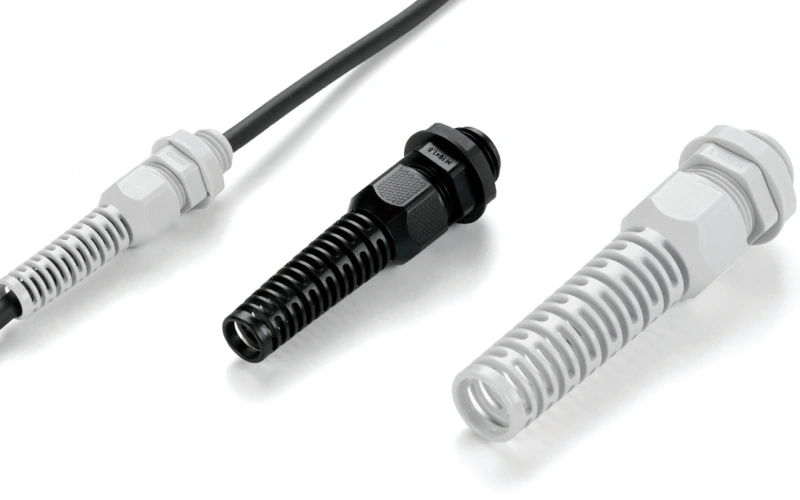
You might wonder what cable gland strain relief actually means. It’s more than just a fancy term. You use it to keep your cables safe and secure where they enter electrical equipment. When you install a cable gland, you create a strong barrier that holds the cable in place. This barrier stops the cable from moving around or getting pulled out by accident.
A cable duct with strain relief prevents this. It secures the cable in the cable gland or connector and ensures that the tensile and bending forces that occur on the outside don’t continue to the other side, but are absorbed by the structure on which the strain relief is mounted. Ideally, the forces at the contacts in the plug or in the cable inside the control cabinet are zero.
You see, the main purpose of cable gland strain relief is to absorb stress before it reaches the sensitive parts of your wires. This keeps your connections safe and helps your equipment last longer. You don’t want wires breaking or coming loose, especially in places where safety matters.
Take a look at the main functions of cable gland strain relief in different settings:
| Function | Description |
|---|---|
| Protection | Cable glands protect cables and wires from being pulled out, preventing damage. |
| Strain Relief | Strain relief ensures a secure connection to the cable, preventing damage from tension or strain. |
| Versatility | Cord grips connect various types of cables to devices across multiple industries, including aerospace and industrial settings. |
How it protects wires
You rely on cable gland strain relief to keep your wires safe from all kinds of trouble. Here’s how it works for you:
- Wire strain relief minimizes mechanical stress at connection points, which is crucial for preventing wire breakage.
- It helps maintain electrical integrity, ensuring reliable performance.
- The design of strain relief components absorbs stress, extending the lifespan of cables.
- The primary function of cable strain relief is to protect vulnerable electrical terminations from external mechanical forces.
- This protection is vital in environments where cables experience frequent movement, such as automotive and industrial applications.
- Strain relief transitions flexible cables to rigid connectors, preventing mechanical forces from damaging connections.
- It is essential for maintaining the integrity of electrical connections in dynamic environments.
You get protection from bending, kinking, and environmental hazards. Cable gland strain relief acts like a shield, keeping your cords stable and strong. You avoid common problems like broken wires, loose connections, and electrical faults. Different types of strain relief exist for different cords and uses, but they all aim to keep your cables working safely.
If you want your cables to last, you need to use cable gland strain relief. You keep your wires safe, your equipment running, and your workplace secure.
Why cable gland strain relief matters
Risks of poor strain relief
You might think skipping strain relief saves time, but it actually creates big problems. When you don’t secure your cables, you risk damage and electrical failures. Take a look at some common risks:
| Risk Description | Implication |
|---|---|
| Cable slippage or pull-out under tension | Leads to potential electrical failures |
| Damage to cable insulation or conductors | Increases risk of short circuits |
| Compromised sealing and loss of IP rating | Results in moisture ingress and corrosion |
| Poor earthing or screen termination | Affects system grounding and safety |
| EMC performance issues | Can lead to interference in electrical systems |
| Moisture ingress or corrosion within the enclosure | Deteriorates equipment reliability |
| Non-compliance with ATEX/IECEx certification | Poses legal and safety compliance risks |
You see these risks in real-world situations. Wires can break at the backshells if you don’t use strain relief. Improper clamping or missing edge protection makes wire chafing and insulation damage worse. If moisture gets inside, corrosion starts and equipment fails. You also face legal trouble if your installation doesn’t meet certification standards.
Safety and reliability
You want your electrical systems to work every time you flip the switch. Proper strain relief helps you achieve that. When you install a cable gland with good strain relief, you anchor the cable securely. This prevents accidental pull-out, twisting, or movement that could damage the cable or connections.
Here’s how strain relief boosts safety and reliability:
- You prevent cables from being pulled or twisted, which protects the conductors and insulation.
- Vibrations from machinery won’t loosen cables or damage internal connections.
- You avoid intermittent signals and system failures.
- Certified cable gland solutions meet IEC and UL standards, so you know your installation is safe.
- Testing verifies that cable glands perform well under real-world conditions.
- You get mechanical retention, sealing against water and dust, and electrical continuity in metallic glands.
When you choose cable gland strain relief, you protect your equipment and keep your workplace safe. Reliable strain relief means fewer repairs, less downtime, and peace of mind.
Cable gland strain relief solutions
You have a lot of choices when it comes to protecting your wires. Each solution offers unique features, so you can match the right product to your environment and application. Let’s break down the most popular options and see how they keep your cables safe.
Compression glands
Compression glands are a top pick for many professionals. You use them to grip cables tightly and stop damage from pulling, bending, or twisting. These glands also shield your wires from dust, moisture, and chemicals. You get mechanical support and earth continuity, which means your cables stay safe from corrosion and mechanical strain.
Tip: If you work in tough environments, compression glands are your best friend. They keep your connections clean and secure.
Here’s where you’ll find compression glands working hard:
- Industrial automation: Protects control and power cables in machines.
- Marine and offshore: Stops water and salt from getting in.
- Oil and gas: Seals cables in explosive areas.
- Renewable energy: Keeps solar and wind installations safe.
- Telecommunications: Shields fiber optic cables from moisture and interference.
Flexible cord grips
Flexible cord grips give you a strong hold and seal for your cables. You’ll notice their robust construction, which includes sealing rings and compression nuts. These grips offer more protection than simple bushings, but they do require careful installation.
Check out this comparison:
| Feature | Cord Grips | Strain Relief Devices |
|---|---|---|
| Purpose | Secure cables and provide environmental sealing | Protect electrical connections from mechanical stress |
| Design | Robust construction with sealing rings and compression nuts | Simpler designs like rubber or plastic bushings |
| Installation | More complex, requires tightening for sealing | Easier installation and replacement |
| Cost | Generally more expensive due to comprehensive protection | More cost-effective and lightweight |
| Environmental Protection | Offers comprehensive protection against environmental factors | Less protection against environmental factors |
You want to make sure your cord grips meet safety standards. Many flexible cord grips use halogen-free nylon and carry UL certifications. You’ll see ratings like UL 94V-0 for fire safety and UL 514B for hazardous locations. These grips are also RoHS and REACH compliant, so you know they’re safe for you and the environment.
- Halogen Free and Low Smoke Halogen Free options are available for sensitive areas.
- Many cord grips are listed under Underwriters’ Laboratories and certified by the Canadian Standard Association.
Plastic cable glands
Plastic cable glands are a smart choice for many jobs. You get superior sealing thanks to dual-sealing mechanisms like silicone O-rings and PTFE gaskets. These glands resist corrosion and handle high tensile forces, so your cables stay secure.
Here’s a quick look at their features:
| Feature | Description |
|---|---|
| Superior Sealing | Dual-sealing mechanisms create a watertight barrier. |
| Strain Relief | Corrosion-resistant materials withstand high tensile forces. |
| Versatile Use Cases | Suitable for marine, industrial, and EMC protection applications. |
| Material Options | Stainless steel, brass, nylon, and polycarbonate for different environments. |
| Thread Standards | PG, NPT, and metric threads for easy integration. |
| Certifications | Must pass IEC 60529 or GB/T 4208-2017 tests for IP68 ratings. |
You’ll see plastic cable glands in control panels, machinery, and outdoor lighting. They keep dust and moisture out, even in harsh weather. If you need a solution for limited spaces or outdoor fixtures, plastic cable glands deliver reliable strain relief.
- Control panels: Protects cable entry points.
- Machinery: Secures cables in tight spaces.
- Outdoor lighting: Handles rain, dust, and sun.
Star grommets & conduit glands
Star grommets and conduit glands help you route and protect cables in busy environments. You use star grommets to cushion cables and prevent chafing. Conduit glands seal and secure cables running through conduits, keeping everything neat and safe.
You’ll find these solutions in places like:
- Electrical cabinets: Organizes and protects multiple cables.
- Industrial equipment: Shields wires from vibration and movement.
- Outdoor installations: Keeps water and dust out of conduits.
When you choose the right cable gland strain relief solution, you keep your wires safe from mechanical stress and environmental hazards. You get peace of mind knowing your cables will last longer and perform better.
Choosing strain relief
When you pick the right strain relief, you make sure your cables stay safe and last longer. You need to look at three main things: the environment, the cable type and size, and your specific application needs.
Environmental factors
Your cables face different challenges depending on where you install them. You want to match your strain relief to the environment. Here are some things to check:
- If your cables sit in the sun, choose cable glands with UV protection.
- In food processing areas, use stainless steel or PVDF to meet FDA standards.
- Chemical plants need glands with FKM inserts to prevent damage from harsh substances.
- Ratings like IP68 and NEMA 4X show how well a gland protects against dust and water. IP68 means the gland keeps out dust and can handle being underwater for long periods.
Tip: Always check the environmental rating before you buy. It helps you avoid problems later.
Cable type & size
You need to match the strain relief to your cable’s size and type. This keeps your wires secure and prevents damage. Take a look at this table to help you decide:
| Cable Type/Size | Strain Relief Type | Notes |
|---|---|---|
| Small to Medium | Various types | Many options available |
| Large | Aluminum strain relief | Best for bigger cables |
| All sizes | Flex relief | Protects against bending and stress |
Measure your cable’s outer diameter and count the number of cores. Use a cable gland size chart to find the right fit. Make sure the gland matches your cable’s material and shielding.
Application needs
Every job is different. You want to choose strain relief that fits your application. Here’s a quick guide:
| Application-Specific Need | Description |
|---|---|
| Material Selection | Nylon, nickel-plated brass, stainless steel, or PVDF for tough environments |
| Mounting Methods | Threaded into panels or secured with locking nuts |
| Body Styles | Dome or flex shapes for different uses |
| Cable Size | Must fit the cable’s outer diameter |
| Thread Types | NPT, PG, or metric threads for compatibility |
You should also think about where you install the gland—indoors or outdoors—and if it faces extreme temperatures or hazardous conditions. Marine jobs need corrosion-resistant connectors. Outdoor work calls for UV-resistant features. Some waterproof wire caps even come with built-in strain relief for extra protection.
Choosing the right strain relief helps you avoid cable failures and keeps your equipment running smoothly.
Installation & maintenance
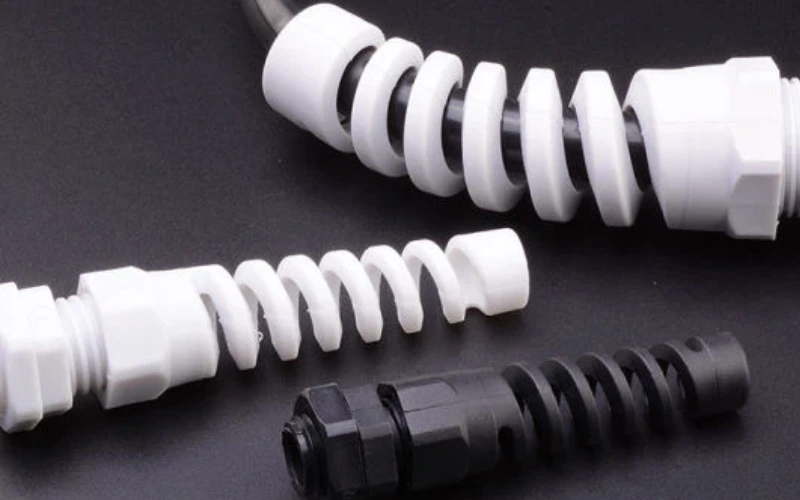
Installation steps
Getting your cable gland strain relief installed the right way makes a huge difference. You want your wires to stay safe and last longer. Here’s a simple step-by-step guide you can follow:
- Turn off all electrical equipment and disconnect any live wires.
- Check the cable gland size and make sure it matches your cable.
- Open the cable gland and remove the nut.
- Strip the outer sheath of your cable to the correct length.
- Slide the gland onto the cable and spread the peeled sheath evenly.
- Tighten the nut with a spanner so the gland grips the cable securely.
- If you use a two-part gland, drill a hole in your enclosure and attach both halves.
- For armoured cables, use explosion-proof glands and follow the special prep steps.
- Fit the cone of the gland under the insulation and armoring, keeping core wires out of the cone.
- Tighten all parts and seal the gland for a watertight finish.
Tip: Always test your installation by gently tugging the wire. If it moves, check your clamp and tighten it again.
Watch out for common mistakes. Don’t use zip-ties or tape to secure cables. Avoid overtightening or using the wrong size clamp. Make sure clamps face the right direction and sit properly. Never jam too many cables under one clamp.
Maintenance tips
You want your cable glands to keep working year after year. Regular checks help you spot problems early and keep your system safe.
- Inspect your cable glands every month for corrosion, cracks, dirt, or thread damage.
- Test the tightness of compression nuts once a year with a calibrated wrench.
- Check seal integrity yearly using water spray or IP-rated equipment.
- Look for signs of cable movement, wear, or changes in position.
- Replace worn or damaged parts right away.
- Treat cable glands as important parts of your electrical system, not just accessories.
Routine inspections and quick repairs keep your wires safe and your equipment running smoothly. If you work in tough environments, don’t skip these checks!
You want your wires to stay safe and your equipment to run smoothly. Cable gland strain relief gives you that peace of mind. Here’s what you get when you use the right solution:
- Strain relief absorbs tension, bending, and twisting, keeping cables and connectors protected.
- It prevents damage to inner contacts, so your electronics stay safe.
- In busy environments, strain relief keeps cables stable and reduces disconnections.
Adding a cord grip accessory boosts cable retention. You keep the outer jacket secure and lower the risk of slips or accidental pull-outs.
Choose high-quality cable glands and check them often. You’ll cut down on repairs and keep your workplace safe for years to come.
FAQ
What does ingress protection mean for cable glands?
Ingress protection tells you how well a cable gland keeps out dust and water. You check the IP rating to see if your wires stay safe in wet or dirty places. Higher numbers mean better protection.
How do I know which cable gland size fits my wire?
You measure your cable’s outer diameter. Then, you look at the manufacturer’s chart. Pick a gland that matches your cable size for a tight and secure fit.
Can I use cable glands outdoors?
Yes, you can use cable glands outside. Make sure you choose ones with high ingress protection ratings. These glands keep rain, dirt, and bugs away from your wires.
Do I need special tools to install cable gland strain relief?
You usually need a spanner or wrench. Some cable glands come with easy-to-use nuts. Always follow the instructions for a safe and secure installation.
How often should I check my cable glands?
You should inspect your cable glands every month. Look for cracks, loose nuts, or signs of wear. Regular checks help you catch problems early and keep your wires safe.