Imagine running your facility without ever worrying about overheating or surprise breakdowns. With RS485 and IoT, you step into a world where Smart Enclosure Cooling means your cabinet air conditioners talk to you, not just hum in the background. You get real-time data, instant alerts, and the power to predict issues before they cost you. Linkwell leads this transformation, giving you the tools to manage energy, cut downtime, and stay ahead—just like the most advanced industrial complexes today.
Key Takeaways
- Smart Enclosure Cooling replaces manual checks with real-time monitoring, saving time and reducing risks of equipment failure.
- RS485 technology ensures reliable communication in industrial settings, allowing for long-distance data transmission without interference.
- IoT integration provides instant alerts and remote control, enabling proactive maintenance and energy efficiency.
- Predictive maintenance features can reduce breakdowns by up to 70%, saving costs and improving operational efficiency.
- Centralized control systems simplify management, allowing you to monitor and adjust multiple cabinet air conditioners from one dashboard.
Evolution of Cabinet Cooling
Manual vs. Smart Enclosure Cooling
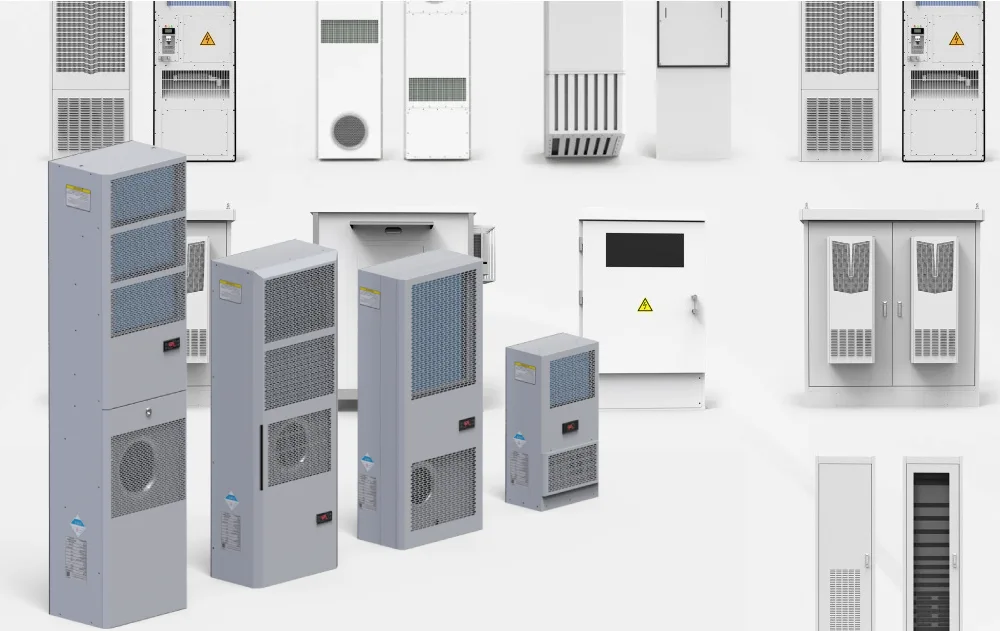
Think back to the days when you had to check every cabinet by hand. You walked around with a clipboard, maybe a temperature gun, hoping nothing was overheating. Manual cooling meant you had to trust your instincts and hope for the best. If something went wrong, you found out only after the damage happened.
Now, you can step into the world of Smart Enclosure Cooling. You get instant updates on your phone or computer. You see the temperature, humidity, and even get alerts if something looks off. You don’t have to guess anymore. The system tells you what’s happening inside each cabinet. You save time, energy, and avoid surprises.
Here’s a quick comparison:
| Manual Cooling | Smart Enclosure Cooling |
|---|---|
| Physical checks | Remote monitoring |
| Reactive maintenance | Predictive maintenance |
| No real-time alerts | Instant notifications |
| Higher risk of failure | Lower risk, more control |
Risks of Blind Cooling
Blind cooling is like driving with your eyes closed. You set the air conditioner and hope it works. You don’t know if the temperature inside the cabinet is safe. You miss warning signs until it’s too late.
Tip: Blind cooling can lead to overheating, equipment failure, and costly downtime. You don’t want to risk your sensitive electronics or your business.
When you rely on blind cooling, you lose control. You can’t see problems coming. You spend more on repairs and replacements. Smart Enclosure Cooling helps you avoid these risks. You get data, alerts, and peace of mind.
RS485 and IoT Technologies
RS485 Reliability in Industrial Settings
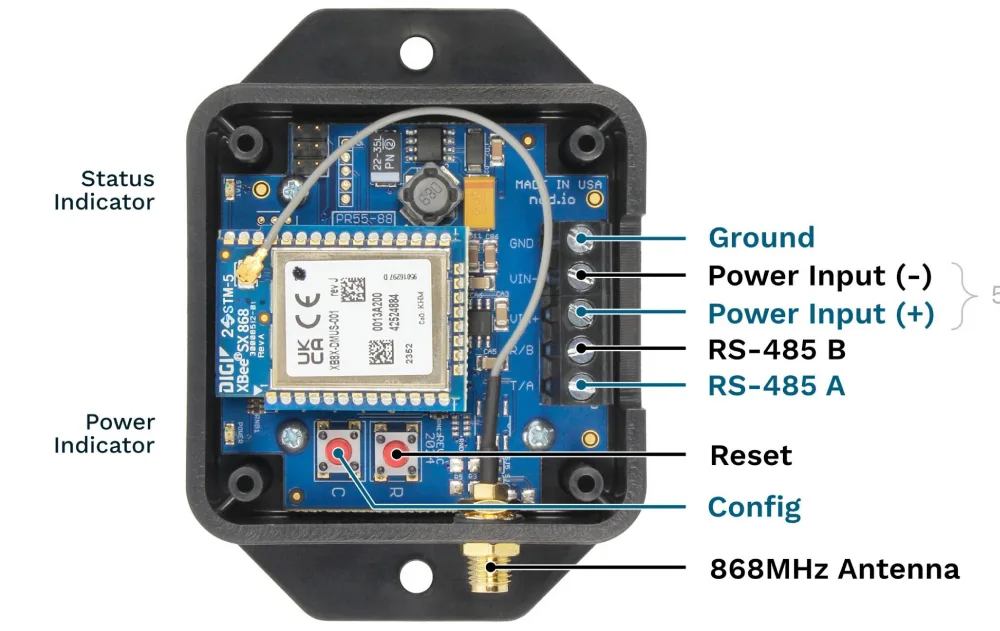
You want your cabinet air conditioners to work without hiccups, even in tough environments. RS485 makes that possible. This protocol stands out because it keeps communication stable, even when electrical noise tries to mess things up. You can run cables over long distances and still get reliable data. That’s a big deal in factories or outdoor setups where interference is everywhere.
Here’s a quick look at why RS485 is so dependable:
| Feature | Description |
|---|---|
| Strong anti-interference | Uses balanced drivers and differential receivers to block outside noise. |
| Long transmission distance | Sends data up to 1219 meters, so you can connect cabinets across a large site. |
| High communication rate | Moves data fast—up to 10Mbps—so you get updates in real time. |
| Supports multi-device connection | Lets you link up to 32 devices on one network, making it easy to manage lots of cabinets. |
RS485 is simple and cost-effective. You don’t need fancy equipment to set it up. While it doesn’t have built-in error checking, you can add higher-level protocols for extra safety. Compared to CAN Bus, RS485 is easier to use for basic cooling networks, though CAN Bus handles more devices and offers advanced error management for bigger systems.
IoT for Remote Monitoring
Imagine checking your cabinet air conditioners from anywhere. IoT makes that dream real. You get instant alerts, smart controls, and a dashboard that shows you everything happening inside your enclosures. You don’t have to guess or wait for something to break.
Here’s what IoT brings to the table:
- Energy efficiency: Automates cooling to save power and cut costs.
- Timely maintenance: Sends notifications before problems get serious, so you fix things fast.
- Environmental quality control: Keeps conditions safe for your electronics and your team.
- Device control: Lets you adjust settings from your phone or computer.
- Scalability: Manages lots of cabinets at once, perfect for big facilities.
- Instant leak detection: Alerts you right away if something goes wrong.
- Data tracking: Monitors temperature, humidity, pressure, and more for deep insights.
With RS485 and IoT working together, you get a smart, connected cooling system that’s easy to manage and ready for the future.
Smart Enclosure Cooling Benefits
Energy Efficiency and Cost Savings
You want your cooling system to work hard without draining your budget. Smart Enclosure Cooling helps you do just that. These systems use advanced controls and sensors to adjust cooling only when needed. You save energy and cut costs every month.
Take a look at how different cooling methods stack up:
| Cooling Method | Cost Reduction (%) | Equipment Lifespan Increase (%) |
|---|---|---|
| Modular Systems | 18 | 30 |
| Scalable Systems | 15-20 | N/A |
| DAC Thermal Cooling | 75 (energy savings) | N/A |
You get more than just lower bills. Smart Enclosure Cooling increases the lifespan of your equipment by up to 30%. That means fewer replacements and less downtime. Some systems, like DAC Thermal Cooling, can slash your energy use by 75%.
Tip: Smart enclosure cooling systems reduce your total cost of ownership by 18%. You spend less on repairs and replacements, and your electronics last longer.
Predictive Maintenance with Linkwell
Imagine knowing about a problem before it stops your operations. Linkwell’s smart enclosure cooling products make that possible. You get predictive maintenance features that spot trouble early. The system detects overheating motors and failing parts, so you can fix them before they cause downtime.
Infrared thermography lets you see thermal problems fast. You don’t have to wait for a shutdown to know something’s wrong. You act before issues get serious.
Check out how predictive maintenance changes the game:
| Evidence Type | Description |
|---|---|
| Reduction in Breakdowns | Predictive maintenance can reduce breakdowns by 70% and downtime by 50%. |
| Cost Savings | Organizations save between 10% and 30% when they use predictive maintenance strategies. |
| Improved Machine Availability | Early detection means machines stay available and productive. |
- Proactive monitoring cuts direct expenses like repair costs and unplanned downtime.
- Targeted maintenance extends component life and reduces waste.
- You boost operational efficiency and avoid hidden costs like energy waste.
Real-Time Data and Automation
You want to know what’s happening inside your cabinets right now. Smart Enclosure Cooling gives you real-time data on temperature, humidity, and system status. You see problems as they happen and respond fast.
Automated alerts and workflows make your job easier. The system sends you notifications when something needs attention. You don’t have to watch screens all day. You get instant insights into thermal performance, so you make quick decisions.
- Real-time insights help you act fast and keep your equipment safe.
- Predictive modeling helps you plan for future needs.
- Automated alerts and workflows streamline your operations and reduce response times.
- IT and facilities teams work together with unified data, making decisions easier.
- Efficient cooling management prevents overheating and lowers energy costs.
Smart Enclosure Cooling isn’t just about keeping things cool. It’s about giving you control, saving you money, and making your facility run smoother every day.
Integration Process
Connectivity and Data Flow
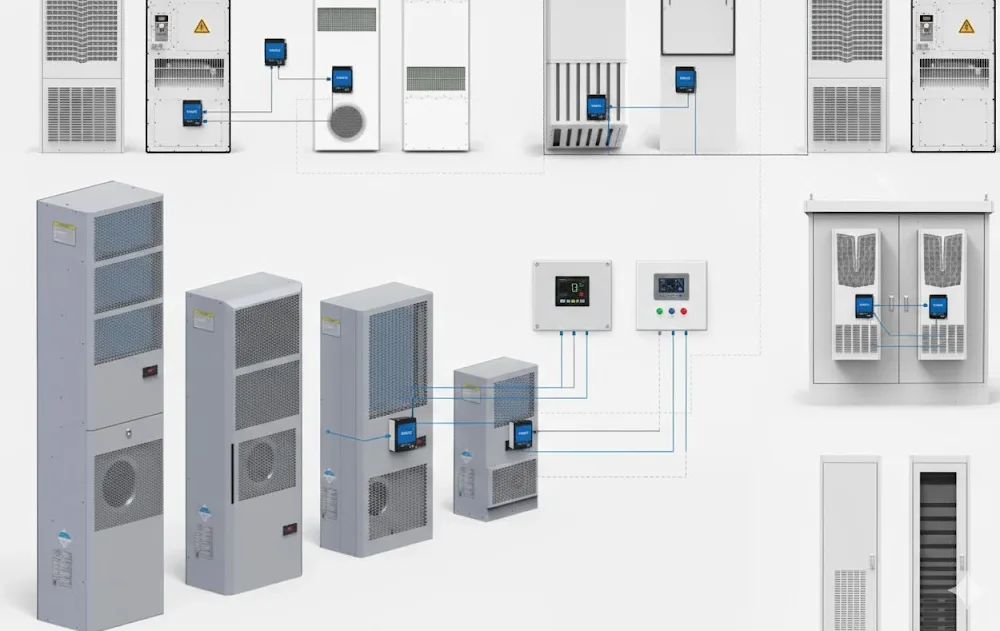
You want your cooling system to work as a team, not as isolated units. Integrating RS485 and IoT into Linkwell Cabinet Air Conditioner and Top Mounted Cabinet Air Conditioner models lets you connect every unit into a single, smart network. You get centralized management and remote diagnostics, so you always know what’s happening.
Here’s how you can set up a connected system:
- Power Supply Deployment
Start by connecting a reliable power supply to each cabinet air conditioner. This ensures stable operation and protects against accidental reverse connections. - Sensor Integration
Mount temperature and humidity sensors inside your cabinets. Connect these sensors to the control modules, so you get accurate readings from every zone. - Module Connections
Wire control modules to switches and regulators. This lets you monitor and adjust fan speeds, lighting, and emergency stops from one place. - Network Setup
Insert all modules into the main controller. Connect the controller to your industrial switch, and reserve RS485 ports for future expansion. - Parameter Configuration
Set up network and protocol settings. This step enables remote control and helps optimize energy performance.
When you link multiple cabinet air conditioners using RS485, you create a daisy-chain network. Each unit shares its sensor data but also listens to central commands. You can manage dozens of units from a single dashboard. This setup gives you granular control over each cabinet, whether you’re cooling a single room or an entire facility.
Let’s look at how different protocols help your system communicate:
| Protocol | Characteristics |
|---|---|
| Wi-Fi | High bandwidth, easy app/cloud access, shorter range, best for thermostats. |
| Zigbee/Z-Wave | Low power mesh, extends range, modest latency, good for battery sensors. |
| Thread/Matter | IP mesh, low power, resilient, ideal for interoperability. |
| BACnet/Modbus | Wired RS485 or IP, deterministic, scalable, proven for multi-zone systems. |
| MQTT | Lightweight publish/subscribe, bridges field buses to cloud analytics. |
Tip: Using BACnet or Modbus over RS485 gives you reliable, scalable communication for Smart Enclosure Cooling. You can expand your system as your needs grow.
RS485 and IoT technologies let you monitor real-time status, receive fault alarms, and even perform remote debugging. You can program updates online and use predictive maintenance to catch problems before they happen. This means less downtime and more efficient cooling.
User Interfaces and Control
You want a control system that’s easy to use and powerful enough to handle complex tasks. Linkwell’s cabinet air conditioners support both legacy and smart assets, so you can upgrade your system without replacing everything.
Here’s what you get with modern user interfaces:
| Feature | Description |
|---|---|
| Intelligent & Non-Intelligent HVAC Control | Compatible with both legacy and smart cooling assets. |
| Adaptive Cooling Setpoints | Automatically adjusts temperature thresholds for optimal cooling and power efficiency. |
| Remote Troubleshooting | Enables diagnostics, firmware updates, and alarm resolution from a centralized interface. |
| Seamless Integration | Connects with PLC Group’s RMC and AxIn platforms via Modbus, SNMP, BACnet, or MQTT protocols. |
| Remote Access and Reporting | Operators can monitor, configure, and troubleshoot remotely through a unified web dashboard. |
You can access your system from anywhere. The dashboard shows you temperature, humidity, and system status in real time. If something goes wrong, you get an instant alert. You can troubleshoot, update firmware, and resolve alarms without leaving your desk.
Note: Adaptive cooling setpoints help you save energy by adjusting thresholds automatically. You don’t have to guess the best settings—your system does it for you.
Centralized management means you control every cabinet air conditioner from one interface. You can monitor performance, schedule maintenance, and generate reports. This makes your job easier and keeps your facility running smoothly.
Smart Enclosure Cooling isn’t just about technology. It’s about giving you the tools to protect your equipment, save energy, and stay ahead of problems. With RS485 and IoT, you get a system that grows with your needs and keeps your operations safe.
Applications and Case Studies
Industrial 4.0 and Linkwell Solutions
You see the impact of Industrial 4.0 every day. Machines talk to each other. Data flows in real time. Linkwell’s Smart Enclosure Cooling solutions fit right into this new world. You get intelligent climate management that keeps your equipment safe and running smoothly. These systems combine active dehumidification, uniform heating, and precise temperature control. Your cabinets stay dry and cool, even when the weather outside gets wild.
Take a look at how Linkwell supports Industrial 4.0:
| Feature | Description |
|---|---|
| Intelligent Climate Management | Active dehumidification, heating, and temperature control |
| Rapid Response | Quick heating prevents condensation |
| Energy Efficiency | Power drops when set temperature is reached |
| Rugged Design | Built for tough industrial environments |
| Comprehensive Certifications | Meets international safety and environmental standards |
You get more than just cooling. You get peace of mind. These solutions help you meet safety standards and keep your operations green.
Smart Enclosure Cooling in Harsh Environments
Harsh environments test your equipment every day. Dust, heat, and moisture can cause big problems. Linkwell’s cooling systems work in places like oil and gas fields, food processing plants, power stations, data centers, and pharmaceutical labs. You protect your inventory from spoilage and damage. You keep your machines running longer.
Here’s how Linkwell’s systems perform in tough conditions:
| Performance Metric | Description |
|---|---|
| Real-time Pressure and Flow Monitoring | Continuous data for effective control |
| Rotating Control Devices | Tight seals for safety |
| Contained Return System | Reliable airflow management in hazardous areas |
| Good Condensate Management | Dries water inside, saves up to 35% energy |
| Efficiency Improvements | 31% less exergy use, 5% higher overall efficiency |
| Remote Monitoring and Control | Adjust settings from a distance, save energy |
| Environmental Impact | Lower carbon emissions, supports green building initiatives |
Let’s look at some real-world results:
| Company | Cooling Solution | Energy Savings | Production Improvement |
|---|---|---|---|
| XYZ Manufacturing | Advanced cooling technology | 30% | Increased production |
| ABC Industries | Centralized cooling system | N/A | 25% process uptime |
| Automotive Plant | Cooling water tank system | 20% | Reduced downtime |
You see these benefits in cold chain logistics, too. The market is growing fast, reaching $94.3 billion by 2025. Industrial air conditioning protects your inventory and keeps your business moving.
Tip: Smart Enclosure Cooling helps you prevent overheating, extend equipment life, and reduce breakdowns. You get more uptime and less stress.
Challenges and Solutions
Implementation Barriers
You might feel excited about smart enclosure cooling, but real-world deployment can throw some curveballs. Sometimes, you face space limitations, budget constraints, or the need to retrofit old equipment. You want a solution that fits your setup and doesn’t break the bank.
Let’s look at some proven ways to overcome these barriers:
- Two-Phase Immersion Cooling: You submerge servers in a special fluid. This method slashes cooling energy use by 55% and keeps your power usage effectiveness (PUE) as low as 1.05. Crypto mining facilities in Texas have seen huge savings with this approach.
- Rack-Mounted Liquid Cooling Loops: These loops deliver chilled fluid right to the servers. You can retrofit high-density setups without major changes.
- Thermal Storage Integration: You use thermal storage to absorb excess heat during peak loads. Stanford University’s HPC lab managed 30kW spikes without upgrading their cooling capacity.
Tip: You don’t always need a complete overhaul. Sometimes, adding new cooling methods to your existing system can solve your biggest problems.
Compatibility and Training
You might worry about connecting new smart cooling tech to your old HVAC systems. Compatibility issues can slow you down. Older systems may not speak the same language as modern devices. They might lack the right communication protocols or hardware interfaces. Sometimes, you need extra hardware or system modifications, which adds cost and complexity. Legacy systems often use proprietary technologies, making it tough to ensure everything works together.
Training is another key to success. You want your team to feel confident with new systems. Here are some popular training options:
- Video Training: Watch step-by-step videos on system operations, installation, and maintenance.
- Training Portal: Use a dedicated portal for all the info you need about your cooling systems.
- In-Person Training: Attend sessions at the manufacturer’s headquarters for hands-on learning.
- On-Site Operator Training: Get comprehensive training right after setup to make sure everything runs smoothly.
- Hands-On Courses: Boost compliance and safety with practical, interactive courses.
Note: Investing in training helps your team avoid mistakes and keeps your smart cooling system running at its best.
Future Outlook
Trends in Smart Enclosure Cooling
You’re probably wondering what’s next for smart enclosure cooling. The future looks exciting. You’ll see new technologies that make your cooling systems smarter, tougher, and more efficient. Here are some trends you should watch:
- Energy efficiency keeps getting better. You’ll save more money and help the environment at the same time.
- Smart controls respond faster. Your system will adjust cooling levels automatically, so you don’t have to worry about waste.
- Outdoor cabinet cooling is evolving. You’ll get units with stronger seals and better thermal performance. These upgrades protect your equipment from dust, rain, and extreme heat.
You’ll notice that manufacturers focus on making systems last longer and work harder in tough conditions. You get more value and less downtime.
Tip: If you want to future-proof your facility, look for cooling solutions that combine smart controls with rugged outdoor protection.
Industry Impact and Innovation
You’re living in a time when RS485 and IoT are changing how you manage industrial cooling. These innovations give you more control and help you cut costs. IoT-enabled HVAC systems let you monitor and control energy use in real time. You can adjust temperatures based on occupancy, time of day, or even weather forecasts. This means you waste less energy and spend less money.
Let’s break down the key trends and their impact:
| Key Trends | Impact on Industrial Cooling Industry |
|---|---|
| Increasing adoption of Industry 4.0 and IoT | Fuels demand for reliable communication solutions in cooling systems |
| Growth in industrial automation | Requires efficient communication for optimal cooling operations |
| Demand for higher data rates and noise immunity | Enhances performance through better data transmission |
| Push for energy efficiency | Drives development of low-power designs, benefiting energy management |
You’ll see more facilities using data-driven cooling. Your system will learn from patterns and make smarter decisions. You get lower operational costs and a greener footprint. The push for energy efficiency means you’ll find more low-power designs on the market. These changes help you meet sustainability goals and keep your equipment safe.
Note: The future of smart enclosure cooling is all about smarter controls, stronger protection, and better energy management. You’re in the driver’s seat as these innovations roll out.
Conclusion
You have seen how smart enclosure cooling changes the game for industrial environments. With RS485 and IoT, you get more than just cold air. You get a system that talks to you, learns from your data, and helps you make better decisions every day.
Linkwell’s cabinet air conditioners stand out because they combine tough hardware with smart technology. You can monitor your equipment from anywhere. You can spot problems before they cause trouble. You can save energy and money without sacrificing performance.
Let’s recap what you gain with this new approach:
- Centralized Control: Manage all your cabinet air conditioners from one dashboard.
- Real-Time Monitoring: Get instant alerts and updates, so you never miss a thing.
- Predictive Maintenance: Fix issues before they turn into costly breakdowns.
- Energy Efficiency: Lower your bills and help the planet at the same time.
- Easy Integration: Upgrade your system without starting from scratch.
Tip: If you want to stay ahead in the world of Industrial 4.0, you need smart cooling that grows with your business.
You do not have to settle for old-school, blind cooling anymore. You can choose a solution that gives you peace of mind and keeps your operations running smoothly. Linkwell’s smart enclosure cooling systems are ready for the future—and so are you.
Ready to take the next step? Visit Linkwell’s website to explore your options or reach out for a custom solution. Your cabinets deserve the best.
You get more than just cooling when you choose Linkwell’s RS485 and IoT-enabled cabinet air conditioners. These smart systems give you real-time control, reliable performance, and peace of mind. Take a look at the long-term benefits:
| Benefit | Description |
|---|---|
| Reliability | Consistent performance keeps your equipment safe. |
| Energy Efficiency | Lower energy use means smaller bills. |
| Protection for Equipment | Sensitive electronics stay cool and secure. |
| Reduced Downtime | Fewer interruptions boost your productivity. |
Ready for a future-ready facility? Linkwell helps you stay ahead with smarter, connected cooling.
FAQ
How do I connect Linkwell cabinet air conditioners to my monitoring system?
You just use the RS485 interface. Plug it into your network controller. Set up Modbus or BACnet protocols. You can monitor and control everything from your dashboard.
Can I use these air conditioners outdoors?
Yes! Linkwell cabinet air conditioners come with IP54/IP65 ratings. You can install them in outdoor cabinets, telecom stations, or solar projects. They handle dust, rain, and heat.
What maintenance do these smart cooling units need?
Clean the filters regularly. Check for debris and leaks. Use the digital display for fault codes. The system will alert you if something needs attention.
Will RS485 and IoT work with older cabinets?
Good news! You can retrofit most older cabinets. RS485 is simple and flexible. IoT modules connect easily. You get smart features without replacing your whole setup.
How does predictive maintenance help me save money?
| Benefit | How It Saves You Money |
|---|---|
| Early Alerts | Prevents costly breakdowns |
| Less Downtime | Keeps production running |
| Longer Lifespan | Reduces replacement expenses |