You might hear the term “what is distribution box” when discussing electricity at home or at work. So, what is distribution box? It is the main unit that directs electrical power from the main supply to various circuits throughout a building. This arrangement keeps everything organized and allows you to control where the electricity flows. It also increases safety by protecting equipment from power surges or electrical faults. Understanding what is distribution box is important because it helps electricity run more efficiently by keeping circuits tidy and making it easy to upgrade or modify your system. You can even add smart features to your distribution box for greater control and flexibility, which is beneficial for both homes and businesses.
Key Takeaways
- A distribution box sends power from the main supply to different circuits. This keeps electricity organized and safe.
- It uses circuit breakers to stop power if there is too much current or a short circuit. This helps lower the chance of fires.
- Knowing how a distribution box is built helps you handle electrical systems better. It also makes fixing and upgrading easier.
- Pick the right distribution box by looking at voltage, current, and how many circuits you need. This stops overloads and keeps things safe.
- Check the distribution box often. Look for loose wires and make sure labels are correct. This keeps your electrical system working well and safely.
- Always ask a trained electrician to install or upgrade your distribution box. This makes sure you follow safety rules and local laws.
- If you use a distribution box outside, check its IP rating. Higher ratings mean it is better protected from dust and water.
- Label each circuit in the distribution box. This helps you fix problems fast and keeps everyone safe during electrical work.
What Is Distribution Box?
Definition
You might ask what is distribution box and why it is important. A distribution box is the main place where power comes in. It sends electricity to different circuits in your home or work. Think of it like a traffic cop for electricity. It helps you decide where power goes. It keeps things neat and safe. When you ask what is distribution box, you want to know about the device that gives power to your lights and machines safely.
Basic Structure
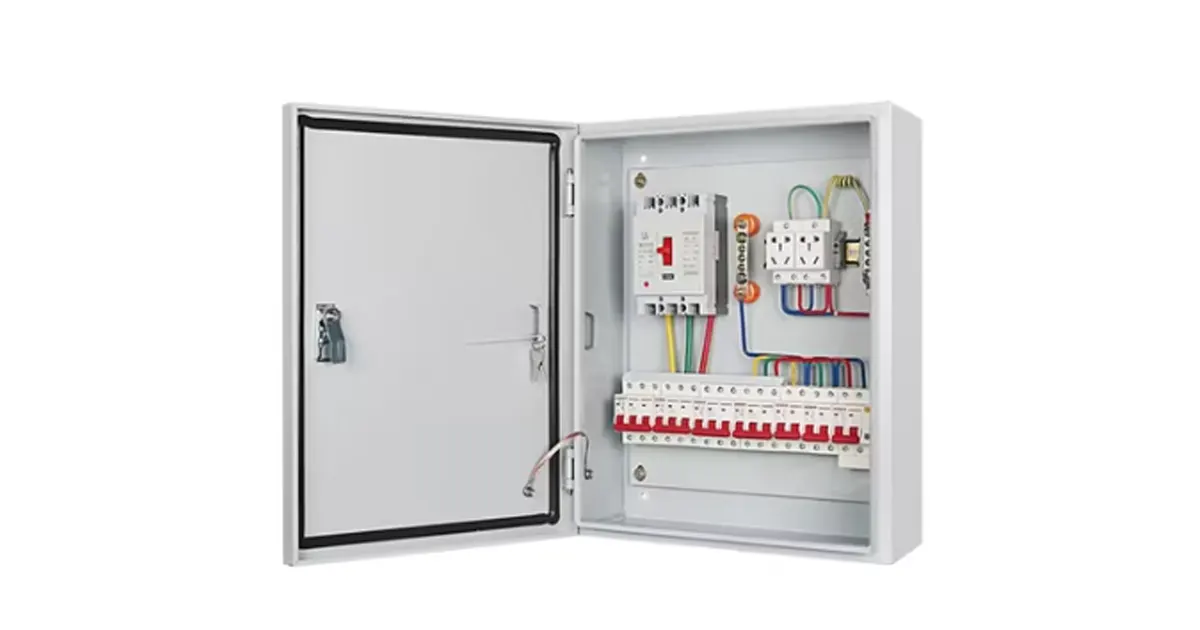
If you open a distribution box, you will see many parts. The box has a strong case to keep everything safe. Inside, there are circuit breakers, busbars, and wires for each circuit. The way it looks can change based on where it is used. A residential distribution box is simple and easy to use. It often uses single-phase or small three-phase power. Safety and ease are most important. An industrial distribution box is much tougher. It has thick copper busbars and many circuit breakers. It is made for hard jobs and big machines. Here is a quick comparison:
| Feature | Residential Distribution Box | Industrial Distribution Box |
|---|---|---|
| Internal Structure | Single-phase or small three-phase inputs | Large number of MCCBs, heavy copper busbars |
| Safety Features | Focus on safety and convenience | High fault-tolerance and mechanical strength |
| Compliance | Must comply with residential electrical standards | Designed for heavy machinery environments |
| Maintenance | Minimum access and maintenance required | Suitable for long-term continuous operation |
Role in Electrical Systems
You need a distribution box to keep your power safe and working well. It is the center that sends electricity from the main supply to each circuit. When you ask what is distribution box, you also want to know how it keeps you safe. The box holds circuit breakers and other safety devices. These can turn off the power if there is a problem. This stops damage and lowers fire risk. Here are some ways a distribution box protects you:
- It turns off circuit breakers or fuses if there is too much power or a short.
- It cuts off power by itself when it finds a problem or too much load.
- It has built-in safety like short circuit and overload protection.
- It stops electrical problems that could hurt things or start fires.
A distribution box is more than just a box. It is your first shield against electrical dangers. It keeps your system neat and makes upgrades or repairs easy. When you know what is distribution box, you can control your power and keep everyone safer.
Main Functions of Distribution Box
Power Distribution
You use a distribution box to control power in your building. The box is like a main station for electricity. It sends power from the main supply to each circuit. Think of it as a traffic controller for power. Each room or area gets the right amount of power. The distribution box splits up the electricity. This helps stop overloads and keeps things working well.
Inside, you might see different connectors. These connectors link the distribution box to your building’s power. The system is modular, so you can add or remove circuits. If you build a new room, you can connect it easily. You do not need to rewire the whole place. The box can handle many power levels, from 20 to 800 amps. It works inside and outside. You get a strong and lasting way to manage power.
Tip: If you want to upgrade your power system, check your distribution box first. It makes adding new circuits much easier.
Circuit Protection
A distribution box does more than send out power. It also keeps you safe by protecting each circuit. Inside, you will find circuit breakers and sometimes fuses. These devices watch for problems like too much current or shorts. If something goes wrong, the breaker trips or the fuse melts. This cuts off power to that circuit. It stops fires and protects your equipment.
You do not have to worry about faults hurting your appliances. The distribution box handles overcurrent, earth faults, and surges. For example, if you plug in too many things, the breaker trips before damage happens. You can reset the breaker after fixing the problem. This safety is why every modern building uses a distribution box.
- Overcurrent protection: Stops power if the current is too high.
- Earth fault protection: Finds leaks and cuts power to stop shocks.
- Short-circuit protection: Shuts down the circuit if wires touch.
Electrical Isolation
You need electrical isolation to keep your system safe. The distribution box gives you this by separating each circuit. If one circuit has a problem, the box can cut power to just that part. You do not lose power everywhere, only where the issue is. This lowers fire risk and makes repairs easy.
Electrical isolation also helps balance the load. The distribution box spreads power evenly. No single circuit gets too much power. You can check and fix your system without turning off everything. For example, if you need to fix lights in one room, you can turn off just that circuit. The rest of your house or office stays on.
Note: Always use the distribution box to isolate circuits before any electrical work. This keeps you safe and stops accidents.
Overload & Short-Circuit Protection
You want your electrical system to stay safe, right? That’s where overload and short-circuit protection come in. Your distribution box acts like a smart guard. It watches for problems and reacts fast.
When you plug in too many devices, the wires can get hot. This is called an overload. If two wires touch by mistake, you get a short circuit. Both problems can cause fires or damage your stuff. The distribution box uses circuit breakers or fuses to stop this.
Here’s how it works:
- Overload: You turn on too many things. The current gets too high. The breaker trips and cuts off power to that circuit.
- Short Circuit: Wires touch or a device fails. The current jumps up very fast. The breaker trips even faster to stop danger.
Tip: If your lights go out in one room, check your distribution box. You might see a breaker in the “off” position. Flip it back after you fix the problem.
You don’t have to worry about sparks or melted wires. The distribution box keeps you safe every day.
Centralized Management
You want to control your whole electrical system from one spot. The distribution box gives you that power. It brings all the circuits together in one place. You can see which circuits are on or off. You can add new circuits or remove old ones without a mess.
Think of your distribution box as the command center for your building’s electricity. You can:
- Turn off power to one room for repairs.
- Add a new circuit for a kitchen upgrade.
- Check which breaker controls which area.
This setup makes your life easier. You don’t have to search all over the house for wires. Everything is labeled and organized. If you call an electrician, they can find problems fast.
Note: Label each breaker in your distribution box. You’ll save time and avoid confusion during emergencies.
Grounding & Safety
You want to stay safe from electric shocks. The distribution box helps with that, too. It connects your system to the ground. This gives stray electricity a safe path to follow.
If a wire breaks or a device fails, the ground wire carries the extra electricity away. You won’t get shocked if you touch a metal part. The distribution box has special bars for grounding. Every circuit connects to these bars.
Here’s why grounding matters:
- Protects you from shocks.
- Stops damage to your appliances.
- Helps breakers trip faster during faults.
Safety Alert: Never remove or skip the ground wire. Always check that your distribution box has proper grounding. This small step can save lives.
You get peace of mind knowing your distribution box keeps you and your family safe.
Maintenance & Troubleshooting
You want your electrical system to work well every day. Sometimes, things break or stop working. Maybe a light goes out or a plug has no power. The distribution box helps you find and fix these problems fast.
When you open the distribution box, you see all the circuit breakers together. Each breaker controls a different part of your house or building. If something stops working, you can check which breaker is off. You do not have to guess or look everywhere.
Here’s how the distribution box helps with maintenance and troubleshooting:
- Quick Checks: You can see if a breaker is off just by looking.
- Easy Repairs: You can turn off only the circuit you need to fix. The rest of your house stays on.
- Safe Upgrades: You can add new circuits or change old ones without touching the main power supply.
- Clear Labels: Most boxes have labels for each breaker. You know which area each one controls.
Tip: Always label your breakers. If you call an electrician, clear labels help save time and stop mistakes.
To keep your system healthy, check your distribution box often. Look for loose wires, burnt smells, or signs of wear. If you see anything strange, call a professional. The distribution box gives you a safe way to keep your power running and your family safe.
Mobility & Temporary Use
Sometimes, you need power in places without a permanent setup. Maybe you are working at a construction site, having an outdoor event, or setting up a temporary office. The distribution box can help you in these situations.
You can use portable distribution boxes. These boxes are easy to move and set up. You plug them into a main power source. They give you safe, organized power for your tools or equipment. You do not need to use long, messy extension cords.
Here’s why you might use a distribution box for temporary needs:
- Construction Sites: Power tools and lights safely.
- Outdoor Events: Run sound systems, lights, and food stalls without risk.
- Emergency Repairs: Bring power to places that lost it during storms or accidents.
Note: Always use a distribution box with the right safety ratings for outdoor or temporary use. This keeps everyone safe and avoids electrical hazards.
A portable distribution box gives you flexibility. You can move it where you need it, set it up fast, and keep your work safe and organized.
Main Functions of a Distribution Box
| Function | What It Does | Why It Matters |
|---|---|---|
| Power Distribution | Sends electricity to different circuits | Keeps power organized and balanced |
| Circuit Protection | Uses breakers or fuses to stop faults | Prevents fires and protects devices |
| Electrical Isolation | Separates circuits for safety and repairs | Lets you fix problems without shutting off all power |
| Overload & Short-Circuit Protection | Stops power if wires get too hot or touch by mistake | Protects people and property from danger |
| Centralized Management | Groups all controls in one place | Makes upgrades and repairs simple |
| Grounding & Safety | Connects system to ground for safety | Reduces shock risk and helps breakers work |
| Maintenance & Troubleshooting | Makes it easy to check, fix, or upgrade circuits | Saves time and keeps your system healthy |
| Mobility & Temporary Use | Lets you bring safe power anywhere | Supports events, construction, and emergencies |
Summary: The distribution box is your all-in-one solution for safe, flexible, and easy-to-manage power.
How Electrical Distribution Box Works
Power Entry
When you look at how a distribution box works, everything starts with power entry. The main supply brings electrical power into your building. This power usually comes from the utility company or a generator. The wires from the main source connect directly to your distribution box. You can think of this as the front door for all the electrical power that your building will use.
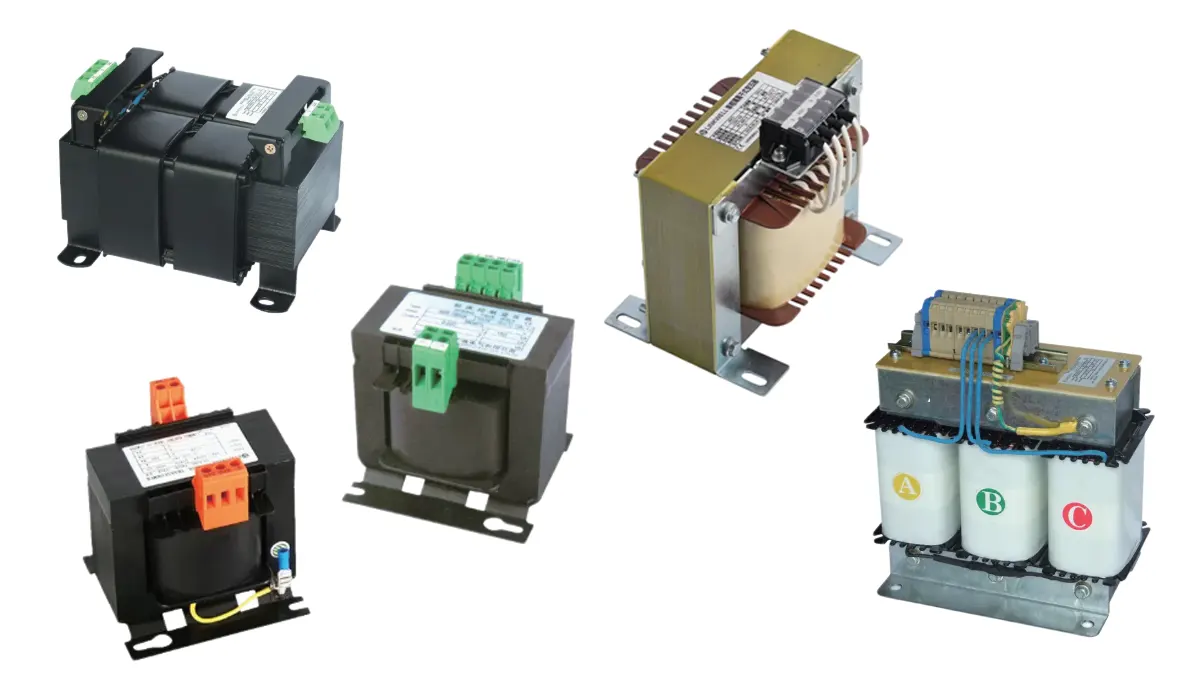
Once the electrical power enters the box, it may go through a transformer if your devices need a different voltage. This step makes sure your lights, appliances, and machines get the right amount of power. If the voltage is too high or too low, your equipment could get damaged. The transformer helps prevent that problem.
Here’s a simple breakdown of what happens during power entry:
- The main supply sends electrical power to the distribution box.
- The box receives this power and, if needed, adjusts the voltage.
- The power is now ready to be managed and sent to different circuits.
Tip: Always make sure your distribution box is rated for the amount of electrical power your building needs. This keeps everything running safely.
Main Switch Operation
After the electrical power enters the box, it meets the main switch. This switch acts like a big on/off button for your whole system. When you flip the main switch off, you cut off all electrical power to the circuits in your building. This is important for safety, especially during repairs or emergencies.
You use the main switch to:
- Turn off all electrical power quickly if there is a problem.
- Safely work on your electrical system without any risk.
- Reset the system after fixing an issue.
The main switch gives you control over your entire electrical setup. If you ever need to stop all power at once, this is the tool you use.
Note: Always turn off the main switch before opening the distribution box for inspection or maintenance.
Busbars & Circuit Breakers
Inside the distribution box, you will find busbars and circuit breakers. Busbars are thick metal strips, usually made of copper or aluminum. They act like highways for electrical power. The busbars carry the incoming power from the main switch and distribute it to each circuit breaker.
Circuit breakers connect to the busbars. Each breaker controls one circuit in your building. If there is too much current or a short circuit, the breaker trips and stops the flow of electrical power to that circuit. This protects your wires, devices, and keeps your building safe.
Here’s how busbars and circuit breakers work together:
- Busbars receive electrical power from the main switch.
- They distribute this power evenly to all the circuit breakers.
- Each circuit breaker monitors its own circuit for problems.
- If something goes wrong, the breaker trips and cuts off power only to that circuit.
If you ever see a breaker in the “off” position, it means it has protected your system from a problem. You can reset it after fixing the issue.
A good distribution box uses strong busbars and reliable breakers. This setup keeps your electrical power stable and your building safe.
Branch Circuit Output
Once the power passes through the main switch, busbars, and circuit breakers, it needs to reach the places where you actually use electricity. This is where branch circuit output comes in. The distribution box acts like a smart traffic director. It sends power from the main supply to each room, outlet, or device in your building.
You can think of each branch circuit as a separate road leading from the main highway (the busbar) to a specific destination. Each road has its own gatekeeper—a circuit breaker. This setup lets you control and protect every area of your home or business.
Here’s how branch circuit output works in your distribution box:
- Power leaves the circuit breaker: When you flip a switch or plug in a device, electricity flows from the busbar, through the circuit breaker, and out to the branch circuit.
- Wires carry power to each area: These wires run inside your walls, floors, or ceilings. They connect the distribution box to outlets, lights, and appliances.
- Each circuit stays separate: If one branch has a problem, only that area loses power. The rest of your building keeps working.
Tip: Label each circuit in your distribution box. You will know exactly which breaker controls which room or device. This makes repairs and upgrades much easier.
You might wonder why you need separate branch circuits. Here are some reasons:
- Safety: If a problem happens in one area, only that circuit shuts off. You avoid a total blackout.
- Convenience: You can turn off power to one room for repairs without affecting the rest of your home.
- Load management: Each circuit handles a certain amount of power. This stops wires from overheating and lowers fire risk.
- Customization: You can add new circuits for things like air conditioners, ovens, or outdoor lights. The distribution box makes this simple.
Let’s look at a quick example:
| Area | Typical Devices Connected | Circuit Breaker Size |
|---|---|---|
| Kitchen | Fridge, microwave, outlets | 20A |
| Living Room | TV, lamps, outlets | 15A |
| Bathroom | Lights, fan, outlet | 15A |
| Garage | Power tools, lights | 20A |
You see how each area gets its own circuit and breaker. This setup keeps your power organized and safe.
Note: Never overload a branch circuit. If you need more power in one area, ask an electrician to add a new circuit. This keeps your system safe and reliable.
Branch circuit output is the final step in delivering electricity where you need it. Your distribution box makes sure every room, outlet, and device gets the right amount of power—safely and efficiently.
Electrical Distribution Box Components
Enclosure
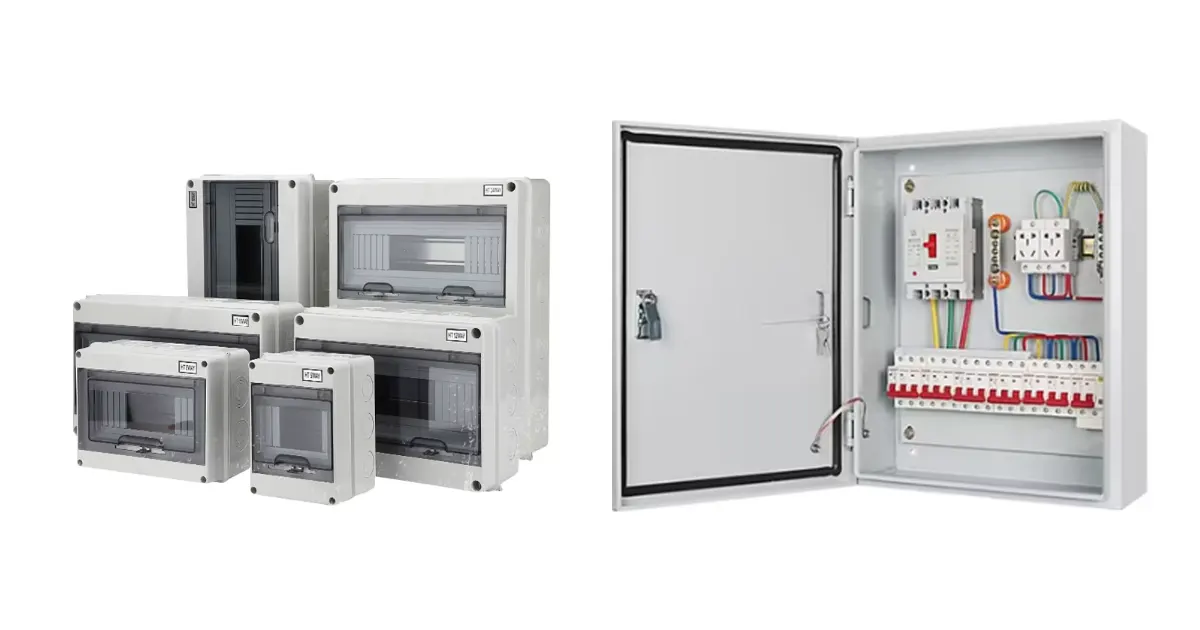
When you look at an electrical distribution box, the first thing you see is the enclosure. This is the outer shell that holds everything together. The enclosure keeps all the important parts safe from dust, water, and bumps. You want your electrical system to last a long time, right? The enclosure helps with that. It also protects you from touching live wires by accident.
Most enclosures are made from strong metal or plastic. They come in different sizes and shapes. Some have special seals to keep out moisture if you use them outside. You might see a door with a lock for extra safety. The enclosure is like a shield for your electrical distribution box.
Tip: Always keep the enclosure closed when you are not working inside. This keeps you and your family safe.
Main Switch
Inside the enclosure, you will find the main switch. This switch controls all the power that comes into your building. Think of it as the master on/off button for your whole electrical system. If you need to turn off all the electricity in your house, you use the main switch.
The main switch is important for safety. If there is an emergency, you can quickly cut off all the power. This helps prevent shocks or fires. You also use the main switch when you want to do repairs or maintenance. It makes sure no electricity flows while you work.
You might see the main switch labeled clearly inside the box. It is usually bigger than the other switches. Some main switches have a red handle or a special cover for easy spotting.
- Turns off all power in one move
- Helps during emergencies or repairs
- Easy to find and use
Circuit Breakers
Next, you will notice the circuit breakers. These are small switches lined up inside the electrical distribution box. Each breaker controls power to a different part of your home or building. For example, one breaker might control the kitchen, while another handles the living room.
Circuit breakers protect you from electrical problems. If too much electricity flows through a circuit, the breaker will “trip” and shut off the power. This stops wires from getting too hot and starting a fire. If there is a short circuit, the breaker reacts even faster. You can reset a breaker by flipping it back on after you fix the problem.
Here’s what circuit breakers do for you:
- Stop power if there is an overload or short circuit
- Protect your home from electrical fires
- Make it easy to find and fix problems
Note: If your lights go out in one room, check the circuit breakers first. You might just need to flip a switch!
You can see how the enclosure, main switch, and circuit breakers work together to keep your electrical distribution box safe and reliable.
Busbars
You might wonder what busbars do inside your distribution box. Busbars are thick metal strips, usually made of copper or aluminum. They act like highways for electricity. When power enters your box, busbars carry it to each circuit breaker. You get a strong and steady flow of electricity because busbars spread power evenly.
You can spot busbars by their shiny, flat shape. They sit inside the box and connect to the main switch and breakers. Busbars handle high currents without getting hot. You do not have to worry about them failing easily. If you want your electrical system to stay safe, busbars are key.
Tip: If you ever upgrade your distribution box, check the busbar size. Bigger busbars mean more power and better safety.
Here’s what busbars do for you:
- Distribute power to all circuits
- Handle large amounts of electricity
- Keep your system stable and reliable
Neutral & Ground Bars
You see neutral and ground bars in every distribution box. These bars look like metal strips with many screw terminals. Neutral bars collect the return current from each circuit. Ground bars give stray electricity a safe path to leave your system.
You connect every circuit’s neutral wire to the neutral bar. This keeps the power balanced. The ground bar connects to the earth. If a fault happens, the ground bar protects you from shocks. You do not have to worry about electrical accidents if your box has proper grounding.
Safety Alert: Always make sure your ground bar connects to a real earth point. This step keeps you and your devices safe.
Why do you need neutral and ground bars?
- Neutral bars balance the flow of electricity
- Ground bars protect against shocks and faults
- Both bars help circuit breakers trip faster during problems
Terminal Blocks
Terminal blocks make wiring neat and easy. You use terminal blocks to connect wires inside your distribution box. Each block has screw terminals where you fix wires tightly. You do not have to twist wires together or use tape.
Terminal blocks keep your circuits organized. If you want to add or remove a wire, you just loosen a screw. You can spot terminal blocks by their row of screws and plastic body. They help you avoid messy wiring and make repairs simple.
Note: Label each terminal block. You will know which wire goes where, saving time during troubleshooting.
Terminal blocks help you:
- Connect wires safely and securely
- Keep your distribution box tidy
- Make upgrades and repairs fast
You get a safer and more organized electrical system when you use busbars, neutral and ground bars, and terminal blocks. These parts work together to keep your power flowing and your building safe.
DIN Rails
You might notice a long metal strip inside your distribution box. That’s the DIN rail. It looks simple, but it does a big job. You use the DIN rail to hold and organize all the small devices, like circuit breakers, relays, and timers. The rail snaps these parts in place so they stay secure and don’t move around.
DIN rails make your life easier. You can add or remove devices without using special tools. Just clip them on or off. This saves you time when you want to upgrade or fix something. If you want your distribution box to look neat and work well, you need a good DIN rail.
Tip: If you plan to add smart devices or extra breakers, check that your DIN rail has enough space. A crowded rail makes things messy and hard to manage.
Wiring Ducts
Wiring ducts look like plastic channels with slots on the sides. You use them to guide and protect all the wires inside your distribution box. Imagine a bunch of wires running everywhere. It would look messy and could cause problems. Wiring ducts keep everything tidy and safe.
You run your wires through these ducts. The slots let you pull out wires where you need them. This setup helps you find and fix wires quickly. You also lower the risk of wires touching each other and causing shorts.
Here’s why wiring ducts matter:
- They keep wires organized and easy to trace.
- They protect wires from damage.
- They make your distribution box look professional.
If you want to add new circuits or change old ones, wiring ducts make the job simple. You just open the duct, add your wire, and close it again.
Cable Glands
Cable glands are small but important parts. You see them where wires enter or leave your distribution box. They look like round plastic or metal fittings. You use cable glands to hold cables tightly and seal the holes in the box.
Cable glands stop dust, water, and bugs from getting inside. They also keep the wires from pulling out or getting damaged. If you use your distribution box outdoors or in a dusty place, cable glands are a must.
Safety Alert: Always pick the right size cable gland for your wires. A loose gland can let water in and cause electrical problems.
You get a safer and longer-lasting distribution box when you use cable glands. They protect your system and keep everything working smoothly.
Labels & Indicators
Labels and indicators help you use your distribution box. Labels show what each switch or breaker controls. You can see which breaker is for the kitchen or garage. If something stops working, just check the label. You do not have to guess or flip every switch.
Always label every circuit in your distribution box. Use simple words like “Kitchen Outlets” or “Bedroom Lights.” When you add a new circuit, update the label right away. This keeps your system neat and saves time.
Indicators are also helpful. They are small lights or colored markers on the box. When a breaker trips, the indicator might turn red or stick out. Some boxes have LED lights to show if power is on. You can spot problems fast without opening the box.
Here’s why labels and indicators matter:
- Quick Troubleshooting: You find problems faster. If a light goes out, check the label and see which breaker to reset.
- Safety: You do not turn off the wrong circuit. This keeps you and your family safe during repairs.
- Easy Upgrades: When you add new circuits, you know where to put the label. No confusion later.
- Professional Look: A labeled box looks neat and shows you care about safety.
Tip: Use waterproof or smudge-proof labels. These last longer and stay easy to read, even outside or in damp places.
If you call an electrician, clear labels and indicators help them work faster. You save money and avoid mistakes. Good labeling is a small step that makes a big difference.
Common Distribution Box Components
Here’s a table to help you remember the main parts of a distribution box, what they do, and why you need them:
| Component | What It Does | Why It Matters |
|---|---|---|
| Enclosure | Protects all the inside parts | Keeps you safe from shocks and dust |
| Main Switch | Turns all power on or off | Lets you control power quickly |
| Circuit Breakers | Stops power during faults or overloads | Prevents fires and equipment damage |
| Busbars | Distributes power to each breaker | Gives steady, reliable electricity |
| Neutral Bar | Collects return current from circuits | Balances your electrical system |
| Ground Bar | Sends stray electricity safely to earth | Protects you from electric shocks |
| Terminal Blocks | Connects and organizes wires | Makes wiring neat and easy to change |
| DIN Rails | Holds breakers and devices in place | Lets you add or remove parts easily |
| Wiring Ducts | Guides and protects wires inside the box | Keeps everything tidy and safe |
| Cable Glands | Seals cable entry points | Blocks dust and water from getting in |
| Labels & Indicators | Show what each part does and signal problems | Help you troubleshoot and stay safe |
Remember: Every part in your distribution box has a job. When you know what each one does, you can keep your power system safe, organized, and easy to use.
Types of Distribution Boxes
Main Distribution Box
You start with the main distribution box. This box acts as the heart of your electrical system. It takes power from the main supply and sends it to different parts of your building. You find the main breaker inside, which lets you shut off all power in one move. If you want to protect your whole system, you use this box.
The main distribution box handles big jobs. It controls the highest amount of electricity coming into your building. You can think of it as the main control center. It keeps everything organized and safe. You use it to manage power for all floors, rooms, or zones.
Here’s a quick look at how the main distribution box compares to the sub-distribution box:
| Type | Capacity Description | Function Description |
|---|---|---|
| Main Distribution Box | Serves as the primary control center for incoming power. | Distributes power to multiple branches and includes a main breaker for protection. |
| Sub-Distribution Box | Manages smaller zones, typically fed by the main box. | Distributes power to specific areas like different floors while providing control. |
Sub-Distribution Box
You use sub-distribution boxes when you want to control power in smaller areas. These boxes get their power from the main distribution box. You might see them on different floors or in separate wings of a building. If you want to manage power for a single floor, you use a sub-distribution box.
Sub-distribution boxes help you keep things neat. You can turn off power to one area without affecting the rest of the building. This makes repairs and upgrades easier. You also get more control over each zone. If you run a business, you can shut down power in unused areas to save energy.
You see these boxes in schools, offices, and large homes. They make your electrical system flexible and safe. You can add more sub-distribution boxes if your building grows.
Tip: Label each sub-distribution box clearly. You will know which area it controls, making troubleshooting faster.
Single-Phase Box
Single-phase boxes work best in homes and small businesses. You use them when your power needs are simple. These boxes handle standard voltage and current levels. If you live in a house or run a small shop, you probably have a single-phase box.
You get easy installation and maintenance with single-phase boxes. They cost less and take up less space. You can connect lights, outlets, and small appliances without worry. If you need more power, you can upgrade to a three-phase box later.
Single-phase boxes keep your electrical system safe and reliable. You can add circuits for new rooms or devices. You do not need special tools or skills to use them.
Note: Always check the rating of your single-phase box before adding new appliances. This keeps your system safe and prevents overloads.
You see how distribution boxes come in different types. Each one fits a specific need, making your power system easy to manage and safe to use.
Three-Phase Box
You might need a three-phase box if you have bigger power needs. These boxes work best in places with heavy machines, large air conditioners, or commercial kitchens. A three-phase box handles more electricity than a single-phase box. You get smoother power and less chance of overload.
Three-phase boxes split the power into three separate lines. This setup keeps your equipment running steady. You will see these boxes in factories, big offices, and even some apartment buildings. If you want to add more machines or grow your business, a three-phase box gives you room to expand.
Here’s why you might choose a three-phase box:
- You run large motors or pumps.
- You need stable power for sensitive equipment.
- You want to avoid flickering lights or power drops.
Tip: Always ask an electrician if you’re not sure which box you need. Using the wrong type can cause problems for your devices.
Indoor Box
Indoor distribution boxes stay inside your building. You usually find them in hallways, closets, or utility rooms. These boxes do not need to handle rain, sun, or dust from outside. The design focuses on safety and easy access.
You get a neat look with indoor boxes. The enclosure often matches your wall or blends in with your décor. You can open the door and reach the breakers without trouble. If you need to reset a breaker or add a new circuit, you do it quickly and safely.
Here are some common places for indoor boxes:
- Inside homes, near the front door or garage
- In office buildings, close to the main entrance
- In schools, tucked away in a maintenance room
Note: Keep the area around your indoor box clear. You want to reach it fast during an emergency.
Outdoor Box
Outdoor distribution boxes protect your electrical system from weather and dirt. You use these boxes when you need power outside, like for garden lights, pool pumps, or security systems. The enclosure is tough and sealed tight. It keeps out rain, bugs, and dust.
You will see outdoor boxes made from strong plastic or metal. They often have a lock to stop tampering. The box might sit on a wall, a pole, or even underground. If you run a business with outdoor equipment, you need an outdoor box to keep everything safe.
Here’s a quick table to help you compare indoor and outdoor distribution boxes:
| Feature | Indoor Box | Outdoor Box |
|---|---|---|
| Location | Inside buildings | Outside, exposed to weather |
| Protection | Basic (dust, touch) | High (water, dust, tampering) |
| Material | Standard plastic or metal | Heavy-duty, weatherproof materials |
| Access | Easy, usually unlocked | May have locks or seals |
Safety Alert: Always choose the right box for your location. Using an indoor box outside can lead to dangerous problems.
You can see how different distribution boxes fit different needs. Picking the right one keeps your power safe and your building running smoothly.
Industrial Box
You find industrial distribution boxes in places like factories and warehouses. These boxes handle a lot of power. You need them when machines use lots of electricity or you want to control many circuits. Industrial distribution boxes look stronger than home boxes. They have thick metal cases and strong locks. This keeps out dust, water, and protects from bumps.
Industrial distribution boxes are important for safety. They protect your machines and workers. If a machine uses too much power, the box shuts off the breaker fast. This helps stop fires and saves money by avoiding long repairs. You can turn off just one part of your factory if needed. You do not have to shut down everything. This makes fixing things easier.
Inside industrial distribution boxes, you usually see:
- Large main switches for quick shut-off
- Many circuit breakers for each area or machine
- Heavy-duty busbars for big currents
- Extra grounding bars for more safety
- Room for meters and sensors
Industrial distribution boxes have more features than regular ones. Some boxes show voltage and current on a screen. Others have alarms to warn you about problems. You can connect them to your building’s automation system. This helps you watch power use and find issues early.
Here is a table to compare industrial and standard distribution boxes:
| Feature | Industrial Box | Standard Box |
|---|---|---|
| Enclosure Material | Thick steel or strong plastic | Basic plastic or metal |
| Circuit Capacity | High (many circuits, big loads) | Low (few circuits, small loads) |
| Safety Features | Advanced (alarms, sensors) | Basic (breakers, fuses) |
| Application | Factories, warehouses, plants | Homes, small offices |
Tip: If you use heavy machines, check your distribution box rating. The wrong box can break your equipment or cause safety problems.
Industrial distribution boxes make your electrical system safer and stronger. You can relax knowing your power is safe, even when machines work hard.
Distribution Box Applications
Residential
You use distribution boxes at home every day, even if you do not see them. These boxes are usually in a hallway or garage. They make sure your lights, outlets, and appliances get the right power. When you plug in your phone or turn on the TV, the distribution box sends safe power to each place. If something goes wrong, like a short circuit, the breaker turns off that part and keeps your family safe.
You can add new rooms or upgrade your kitchen without changing all the wires. The distribution box lets you add circuits for things like air conditioners or ovens. You also feel better because everything is neat and labeled. If you need to fix a light or outlet, you just flip the right breaker. You do not have to turn off power to the whole house.
Tip: Always check your distribution box labels before you do any electrical work. This keeps you safe and saves time.
Commercial
Distribution boxes are very important in places like offices, shops, schools, and hospitals. These boxes split the power into many circuits, so every area gets what it needs. You can run computers, lights, and machines at the same time without worrying about too much power.
In commercial buildings, you need more control and safety. Distribution boxes help you watch power use and find problems fast. If something goes wrong in one part, only that area loses power. The rest of your business keeps working. You can also add backup generators or solar panels. The distribution box makes sure everything works together.
Here is how you benefit in a commercial place:
- Manage power for different floors or groups.
- Add or remove circuits as your business grows.
- Keep important things, like security or data, running all the time.
Industrial
Factories and warehouses need strong distribution boxes. You use them for big machines, heavy motors, and many circuits. These boxes keep your system safe, even when machines run all day and night. If a machine uses too much power, the distribution box trips the breaker before anything gets hurt.
You can control power for each part of your factory. If you need to fix a conveyor or upgrade a line, you just turn off that section. The rest of your work keeps going. Distribution boxes in factories often have extra safety features. You might see alarms, sensors, or even remote checks. This helps you find problems before they stop your work.
Note: In places where power cannot go out, like hospitals or phone centers, distribution boxes work with backup systems to keep everything running.
You can see that distribution boxes work in every place, from homes to factories. They keep your power safe, organized, and easy to use.
Automation
You see automation in many places today. It works in factories, smart homes, and farms. Machines can do jobs by themselves. You need a safe way to control power for them. Distribution boxes help you manage electricity for robots and other devices.
When you build an automated system, you want it to work well. Distribution boxes let you put all your control devices together. You can connect sensors, relays, timers, and PLCs inside the box. This keeps your wires neat and helps you find problems fast.
Here are some ways you use distribution boxes in automation:
- Factory Automation: You control machines and lights from one spot. If a sensor finds a problem, the box can turn off power to that machine.
- Smart Buildings: You use distribution boxes to manage lights and alarms. You can add smart modules to control things from your phone.
- Agriculture: You run pumps and fans with the box. It keeps everything safe, even in wet or dusty places.
Tip: Label every wire and device in your distribution box. You will save time when you fix or upgrade something.
You might ask why you need a special box for automation. Here is a table to show the benefits:
| Feature | Why It Matters in Automation |
|---|---|
| Centralized Control | You manage all devices from one place |
| Safety | You protect machines and people |
| Easy Upgrades | You add new devices without a mess |
| Fast Troubleshooting | You find and fix problems quickly |
Distribution boxes help you keep your system flexible. If you want to add a new robot or sensor, just connect it to the box. You do not need to rewire everything. This saves you time and money.
You can use distribution boxes in small projects too. Maybe you want a smart garden at home. You can use a small box to control lights and pumps. Everything stays neat and safe.
If you want to automate your business or home, start with the right distribution box. It makes your system safer and easier to manage.
Data Centers
You might know that data centers are like the internet’s brain. They hold websites, apps, and lots of digital files. These places use a lot of electricity to keep servers on all day and night. To keep a data center safe and working, you need distribution boxes.
Distribution boxes help control power for each row of servers. Every server rack gets its own circuit. This keeps things neat and stops one problem from shutting down everything. You can pick which racks get power. You can turn off just one area if you need to fix it.
You also need to keep your equipment safe from surges and overloads. Distribution boxes do this job well. They have circuit breakers that trip if something is wrong. This keeps your servers safe from damage. You do not want to lose data because of a small electrical problem.
Here are some ways you use distribution boxes in data centers:
- You split power between different server rooms.
- You add backup power, like generators or batteries, to keep things running during blackouts.
- You watch each circuit for problems, so you can fix them before they get worse.
Here’s a table to show why distribution boxes matter in data centers:
| Benefit | What It Means for You |
|---|---|
| Organized Power | Easy to manage each server rack |
| Fast Troubleshooting | Find and fix problems quickly |
| Safety | Protects servers from surges |
| Flexibility | Add or remove racks easily |
Tip: Always label each circuit in your distribution boxes. This helps you and your team know which breaker controls each server rack.
You can see that distribution boxes are not just for homes or factories. They are very important for keeping the digital world working well. If you work in IT or run a data center, you should know how these boxes keep everything safe and organized.
Distribution Box vs Distribution Board
Terminology
You might hear people say “distribution box” and “distribution board” when talking about electricity. These words sound similar, but they are not the same. Let’s look at what makes them different.
A distribution board is the main part that controls and protects all the electrical circuits in a building. You find it in homes, offices, or factories. It has circuit breakers, busbars, and a main switch. You use it to manage all the power in your space.
A distribution box is a smaller case. You use it to hold electrical connections in one spot. It does not always have protection inside. Sometimes, you just need a safe place for wires or switches. You might see a distribution box where you want things neat and safe, but you do not need to control all the circuits.
Here’s a table to show the differences:
| Feature | Distribution Board (DB) | Distribution Box (DB) |
|---|---|---|
| Function & Purpose | Sends out power and protects all circuits. | Keeps electrical connections safe in one place. |
| Components | Has circuit breakers, RCDs, busbars, main switch. | Just an empty case, mounting spots, and terminals. No built-in protection. |
| Installation & Application | Used as the main control for a whole building. | Used for small jobs like wiring junctions or switches. |
| Size & Capacity | Big and complex, handles lots of power. | Small and simple, holds just a few parts. |
| Cost & Maintenance | Costs more and needs a pro to check inside. | Cheaper and easy to take care of, just check the case and wires. |
Tip: If you want to control and protect all the circuits in your building, you need a distribution board. If you only want to keep some wires safe in one spot, a distribution box is enough.
Overlapping Functions
You might ask if these two things ever do the same job. Sometimes, they do. Both help keep your electrical system safe and neat. You use them to manage power and protect wires.
A distribution board gives you full control. You can turn off circuits, stop overloads, and manage power for the whole building. You use it when you have lots of circuits and need to handle big power.
A distribution box helps protect connections in small areas. You use it for local wiring, switches, or junctions. It keeps things tidy and safe, but it does not control everything.
Here’s how you might use both:
- Put a distribution board in your main electrical room.
- Use distribution boxes for outdoor lights, sheds, or small rooms.
- Keep your system neat by using boards for big jobs and boxes for small ones.
Note: You can use both together. The board controls the main power, and the boxes keep local connections safe. This setup keeps your building safe and makes fixing things easier.
Now you know the difference. Next time you hear these words, you will know which one you need. If you want full control, pick a distribution board. If you just need a safe case for wires, choose a distribution box.
Distribution Box vs Junction Box
Distribution Box Functions
You use a distribution box to control and protect electricity in your building. This box is like the main center for your electrical system. It takes power from the main supply and sends it to different circuits. Each circuit might go to a room, a group of outlets, or a big machine.
Inside the distribution box, you find safety devices. These include circuit breakers, fuses, and busbars. Circuit breakers stop the power if something goes wrong, like too much current or a short. Fuses do the same job, but you must replace them if they blow. Busbars help share the electricity evenly to each breaker.
A distribution box gives you lots of control. You can turn off power to one area without turning off the whole building. You can add new circuits if you build a new room or get new equipment. The box keeps everything neat and safe. You also lower the risk of fires and shocks because the box protects each circuit.
Tip: Always check your distribution box labels before doing any electrical work. This keeps you safe and saves time.
Junction Box Functions
A junction box does a different job. You use a junction box to join or split wires together. It acts like a meeting spot for wires inside your walls or ceilings. You do not find circuit breakers or fuses inside. Instead, you see wire connectors or splices that hold the wires tight.
Junction boxes keep your wire connections safe and hidden. They protect wires from dust, water, and bumps. You use them when you need to split power to different lights or outlets in one area. For example, if you want to add a new light in your hallway, you connect the wires inside a junction box.
Junction boxes are smaller than distribution boxes. You see them in many places around your home or office. They do not control or protect circuits. They just keep connections neat and safe.
Note: Never leave wire connections uncovered. Always use a junction box to cover them.
Key Differences
You might wonder how these two boxes are different. The main difference is what they do. A distribution box manages and protects your circuits. A junction box just joins wires together.
Distribution boxes are bigger and sit in a main spot, like an electrical room. They have safety devices inside. Junction boxes are smaller and spread out across your building. They only hold wire connections.
Here’s a quick look at how they compare:
| Feature | Distribution Box | Junction Box |
|---|---|---|
| Primary Purpose | Distributes power to many circuits and protects | Joins or splits wires, protects connections |
| Components Inside | Circuit breakers, fuses, busbars | Wire connectors, splices |
| Size | Larger, made for many circuits | Smaller, for local connections |
| Installation Location | Central spot (like electrical rooms) | Spread out through the building |
| Protection Level | High (overcurrent, short circuit) | Medium (keeps wires safe) |
If you want to control and protect your whole electrical system, you need a distribution box. If you just want to connect wires safely, a junction box is enough. Both boxes help keep your power system safe, but they do very different jobs.
[Table: Distribution Box vs Junction Box]
You might not know which box to use for your project. Here is a simple way to compare them. Look at the table below to see the main features, uses, and benefits of each box. This table helps you pick the right one fast.
| Feature | Distribution Box | Junction Box |
|---|---|---|
| Main Purpose | Distributes power to multiple circuits and protects each one | Joins or splits wires, keeps connections safe |
| Components Inside | Circuit breakers, fuses, busbars, main switch | Wire connectors, splices |
| Size | Larger, often mounted in a central spot | Smaller, hidden in walls or ceilings |
| Location | Electrical rooms, garages, utility spaces | Throughout the building, near outlets or lights |
| Protection Level | High – protects against overloads, short circuits, and faults | Medium – protects wire connections from dust and moisture |
| Control | Lets you turn off power to specific areas | No control, just keeps wires safe |
| Expansion | Easy to add new circuits or upgrade | Not designed for expansion |
| Labeling | Usually labeled for each circuit | Rarely labeled, sometimes marked for maintenance |
| Cost | Higher, needs professional installation | Lower, easy for basic wiring jobs |
| Maintenance | Needs regular checks, easy to troubleshoot | Minimal, only checked during repairs |
A distribution box gives you more control and safety. You use it to manage power for many circuits. You can add new circuits and label each breaker. It protects your home or business from electrical problems. If you need to fix something, just turn off the right breaker.
A junction box is smaller and easier to use. You use it to connect wires in one place. It keeps wires safe from dust and water. There are no circuit breakers or switches inside. You use it to join wires and hide them. If you want to add a new light or outlet, use a junction box to make the connection neat.
Tip: Always check what you need before picking a box. If you want to control and protect circuits, use a distribution box. If you only need to connect wires safely, a junction box is best.
You can use both boxes in the same building. The distribution box handles the main power and protection. Junction boxes keep local wire connections safe and tidy. When you know the difference, you can make your electrical system safer and easier to use.
If you are not sure, ask a qualified electrician for help. You want your electrical system to work well and keep everyone safe. Picking the right box is the first step.
Choosing a Distribution Box
When you pick a distribution box, you want to make sure it fits your needs. The right choice keeps your electrical system safe and easy to manage. Let’s break down the first things you should check.
Voltage & Current
Start by looking at the voltage and current your building uses. You need to match the box to your supply voltage. For example, homes often use 230V, while factories might use 400V. Check the maximum current your system will draw. This helps you pick a box that won’t overheat or fail.
You also want to know the available fault current. This tells you how strong your box and breakers need to be if something goes wrong. If you choose a box with the wrong rating, you risk damage or even fire. Always check the label on your main supply or ask your electrician for these numbers.
Here’s a handy table to help you remember what to look for:
| Required Information | Why It Matters |
|---|---|
| Supply voltage and phase | Decides box type and layout of protective devices |
| Maximum demand | Sets the incoming current rating and heat limits |
| Available fault current | Picks the right breaking capacity for safety |
Tip: Never guess your voltage or current. Always check before you buy a distribution box.
Circuit Number
Think about how many circuits you need. Each circuit controls a different part of your building, like lights, outlets, or machines. If you have too few circuits, you might overload your system. Too many can make things messy.
Count up all the rooms, devices, and special equipment you want to power. Add a few extra spaces for future upgrades. This way, you won’t run out of room if you add a new air conditioner or workshop later.
The number of circuits also decides the size of your enclosure. More circuits mean a bigger box. You want enough space inside so wires don’t get crowded. This keeps your electrical system safe and easy to work on.
| Required Information | Why It Matters |
|---|---|
| Number of circuits | Sets the enclosure size and layout |
| Future expansion | Avoids overcrowding and extra costs |
If you plan to grow your home or business, pick a box with extra slots. You’ll thank yourself later.
Phase Type
Now, check your phase type. Most homes use single-phase power. This works well for lights, TVs, and small appliances. Some businesses and factories use three-phase power. This handles bigger machines and heavy loads.
You need to match your distribution box to your phase type. If you use the wrong one, your electrical system won’t work right. Single-phase boxes are smaller and simpler. Three-phase boxes have more space for breakers and busbars.
Not sure what you have? Look at your main supply or ask your electrician. Picking the right phase type keeps your power steady and your devices safe.
Note: If you plan to add big machines or expand your building, consider a three-phase box. It gives you more options for the future.
Choosing the right distribution box starts with these basics. You want a box that matches your voltage, current, circuit number, and phase type. This keeps your electrical system safe, flexible, and ready for anything.
Installation Location
You need to decide where you want to install your distribution box. The location matters a lot for safety and convenience. If you put the box inside your house, you want it somewhere easy to reach. Many people choose a hallway, garage, or utility room. You should avoid places with lots of moisture, like bathrooms or kitchens. Moisture can damage the box and cause electrical problems.
If you need power outside, you must pick a spot that stays dry and safe. Outdoor boxes work well for gardens, pool areas, or sheds. You want to keep the box away from direct sunlight and heavy rain. Try to mount it high enough so water cannot reach it during storms. You also want to make sure the box is not blocked by furniture or storage. Easy access helps during emergencies.
Tip: Always check local building codes before you install your distribution box. Some places have rules about where you can put it.
IP Rating
You might see the term “IP rating” when you shop for a distribution box. IP stands for “Ingress Protection.” This rating tells you how well the box keeps out dust and water. You want a high IP rating if you plan to use the box outside or in dusty places.
Here’s a quick guide:
- IP20: Good for indoor use. Keeps out fingers and some dust.
- IP44: Works for damp rooms or covered outdoor spots. Stops splashing water.
- IP65: Best for outdoor use. Keeps out dust and heavy rain.
If you use the box in a workshop or garage, you might need IP44 or higher. For gardens or construction sites, IP65 is safer. You do not want water or dirt getting inside. That can cause shorts or damage.
| IP Rating | Where to Use | Protection Level |
|---|---|---|
| IP20 | Indoors, dry rooms | Basic dust, touch |
| IP44 | Damp, covered areas | Splashing water, dust |
| IP65 | Outdoors, harsh | Heavy rain, full dust |
Safety Alert: Never use a low IP rating box outside. Always check the label before you buy.
Material
You need to pick the right material for your distribution box. Most boxes come in metal or plastic. Metal boxes are strong and last a long time. You use them in factories, garages, or places with heavy equipment. Metal resists bumps and keeps your system safe.
Plastic boxes work well in homes and offices. They are light and easy to install. Plastic does not rust, so it works in damp rooms. You want to check if the plastic is fire-resistant. Some boxes use special plastic that does not melt easily.
Here’s a simple list to help you choose:
- Metal: Tough, good for heavy jobs, resists impacts.
- Plastic: Light, easy to mount, resists moisture, safe for homes.
Note: If you use the box outside, pick a material that handles weather. Metal boxes need a good coating. Plastic boxes need UV protection.
You want your distribution box to last for years. Pick the right material for your location and needs. If you are not sure, ask an electrician for advice.
Protection Requirements
You want your distribution box to keep you and your property safe. That means you need to think about protection features before you buy. Start by asking yourself, “What could go wrong in my building?” Maybe you worry about power surges, short circuits, or even fire risks. The right box can help prevent these problems.
Look for these protection features:
- Circuit Breakers: These stop the flow of electricity if something goes wrong. You don’t want wires to overheat or catch fire.
- Surge Protection: This feature guards your devices against sudden spikes in voltage. It’s important if you live in an area with lots of storms.
- Residual Current Devices (RCDs): These cut off power if they sense a leak of electricity. They help protect you from electric shocks.
- Overload Protection: This stops the system if you plug in too many things at once.
Tip: Always check the labels on the distribution box. Make sure it lists all the protection features you need. If you’re not sure, ask an electrician for advice.
You should also think about the environment. If you have kids or pets, pick a box with a lockable door. This keeps curious hands away from danger. For outdoor or workshop use, choose a box with extra sealing to keep out dust and water.
Compatibility
You want your new distribution box to work with your existing electrical system. Compatibility means everything fits together and works as it should. If you pick the wrong box, you might have trouble connecting wires or installing breakers.
Here’s what you should check:
- Breaker Type: Make sure the box supports the same type and brand of breakers you already use.
- Wiring Size: The box should have enough space for your wires. Thick wires need bigger terminals.
- Mounting Style: Some boxes mount on the wall, while others fit inside it. Pick the style that matches your space.
- Accessories: If you want to add timers, meters, or smart modules, check that the box has room and the right slots.
Note: Bring a list of your current breakers and wires when you shop. This helps you find a box that matches your setup.
If you plan to upgrade your system later, choose a box that lets you add more circuits or smart features. This saves you time and money in the future.
Installation Method
You need to think about how you will install your distribution box. The installation method affects safety, looks, and convenience. There are two main ways to install a box: surface mounting and flush mounting.
- Surface Mounting: The box sits on top of the wall. You see the whole box. This method is easy and quick. It works well in garages, workshops, or places where looks don’t matter much.
- Flush Mounting: The box fits inside the wall. Only the door shows. This looks neat and tidy. You see this style in homes, offices, and places where you want a clean finish.
Ask yourself these questions:
- Where do I want to put the box?
- Do I want it hidden or visible?
- Is there enough space inside the wall for a flush mount?
Safety Alert: Always turn off the main power before you install or move a distribution box. If you’re not sure how to do it, call a licensed electrician.
Pick the installation method that fits your space and style. A good installation keeps your system safe and easy to use.
Space & Expansion
You want your distribution box to work now and later. Think about how much space is inside the box. If you put too many wires and breakers in a small box, it gets crowded and unsafe. You might have trouble adding new circuits in the future. Always pick a box with extra space for upgrades.
Imagine you add an air conditioner or build a workshop. If your box is full, you will need a new one. That costs more money and takes more time. Planning ahead now saves you problems later.
Here are things to check for space and expansion:
- Count your circuits now. Add a few more for later.
- Look for boxes with extra slots or knockouts.
- Make sure there is room for wires to move easily.
- Check if you can add smart modules or surge protectors.
Tip: If you think you will grow your home or business, choose a bigger box now. It is easier and cheaper than changing it later.
Certification
You want your distribution box to be safe. Certification means the box passed important safety tests. It shows the box can handle heat, fire, and electrical problems. Certified boxes keep you, your family, and your things safe.
Look for marks like UL, CE, or IEC. These labels mean the box follows strict rules. Some countries have their own marks, like CSA in Canada or CCC in China.
Why does certification matter?
- Certified boxes lower the chance of fires.
- Insurance companies may want certified boxes.
- Inspectors look for certification when checking buildings.
- Certified boxes last longer and work better.
Safety Alert: Never buy a distribution box without a certification mark. If you do not see a label, ask the seller or pick a different box.
Distribution Box Selection Checklist
Here is a simple checklist to help you choose the right distribution box. Use this table when you shop or talk to your electrician:
| Selection Factor | What to Check | Why It Matters |
|---|---|---|
| Voltage & Current | Matches your supply and demand | Prevents overload and damage |
| Circuit Number | Enough slots for now and future | Supports upgrades and avoids crowding |
| Phase Type | Single-phase or three-phase | Ensures compatibility |
| Installation Location | Indoor or outdoor, easy access | Improves safety and convenience |
| IP Rating | Right protection from dust and water | Keeps box safe in all conditions |
| Material | Metal or plastic, fire-resistant | Lasts longer, resists damage |
| Protection Features | Breakers, surge, RCDs | Guards against faults and shocks |
| Compatibility | Fits your breakers and wires | Makes installation easier |
| Installation Method | Surface or flush mount | Matches your space and style |
| Space & Expansion | Extra room for new circuits | Prepares for future needs |
| Certification | UL, CE, IEC, or local marks | Proves safety and quality |
Remember: Take this checklist with you when you shop. It helps you ask good questions and pick a box that keeps your power safe and ready for anything.
Installation & Safety
Qualified Electrician
You want your electrical system to work well and stay safe. The best way to do this is to hire a qualified electrician. A trained professional knows how to install a distribution box the right way. They understand the rules and can spot problems before they start. You might think you can do it yourself, but working with electricity is risky. One small mistake can lead to shocks, fires, or broken equipment.
A qualified electrician brings the right tools and knowledge. They know how to read wiring diagrams and follow local codes. They can also help you pick the right size and type of distribution box for your needs. If you want peace of mind, always call a pro for installation.
Tip: Ask your electrician to show their license and experience. This helps you trust their work and keeps your home safe.
Power Isolation
Before you touch anything inside a distribution box, you need to isolate the power. This means turning off the main switch or breaker. You want to make sure no electricity flows while you work. Power isolation keeps you safe from shocks and burns.
Here’s how you can do it:
- Find the main switch in your distribution box.
- Turn it to the “off” position.
- Use a voltage tester or multimeter to check that the power is really off.
- Lock the box if you can, so no one turns it back on by mistake.
Never skip this step. Even a small amount of electricity can hurt you. If you are not sure how to isolate power, ask your electrician to show you. It is always better to be safe than sorry.
Component Ratings
You want every part inside your distribution box to match your system’s needs. This is where component ratings come in. Each breaker, wire, and busbar has a rating for voltage and current. Using the wrong rating can cause overheating, damage, or even fire.
Check the labels on all components. Look for safety marks like UL or CE. These show that the parts passed important tests. Only use certified components for your distribution box. This gives you better safety and protection for your home or business.
When you install or upgrade your box, follow these steps:
- Make sure all wires are secure and insulated.
- Test the system with a multimeter to check voltage and continuity.
- Follow local electrical codes, like the NEC in the U.S. or IEC 60364 in other countries.
- Keep records of your installation and inspections.
If you use the right ratings and certified parts, your distribution box will last longer and keep everyone safe.
Regulations
You want your electrical system to work well and keep everyone safe. That’s why you need to follow important rules, called regulations, when you install a distribution box. These rules help you avoid mistakes and make sure your setup meets the law.
Every country has its own electrical code. In the United States, you follow the National Electrical Code (NEC). Other places use the IEC standards or local building codes. These rules tell you how to wire, where to put your box, and what parts you need. You can’t just guess or do things your own way. If you skip the rules, you might face fines or have to redo your work.
Here’s what you need to check before you start:
- Location: The rules say where you can put your distribution box. You can’t hide it behind furniture or in a bathroom. You need to keep it easy to reach in case of an emergency.
- Wiring: You must use the right size and type of wire. The code tells you how thick the wires should be for each circuit. This keeps your wires from getting too hot.
- Breaker Ratings: The regulations say what size breakers you need for each circuit. You can’t use a breaker that’s too big or too small.
- Grounding: You must connect your box to a ground. This step gives extra safety if something goes wrong.
- Labels: The rules say you need to label each breaker. This helps you know which switch controls each room or device.
Tip: Always ask your electrician if you’re not sure about the rules. They know the latest codes and can help you avoid problems.
You also need to get permits before you start. The city or town checks your plans and gives you permission. After you finish, an inspector comes to look at your work. If you follow the rules, you pass the inspection and can use your new system.
Regulations are not just about paperwork. They give you safety and protection. When you follow the rules, you lower the risk of fire, shocks, or damage. You also make sure your insurance covers you if something goes wrong.
If you ever sell your house or business, the new owner will want to see that you followed the rules. This makes your property worth more and keeps everyone safe.
You don’t have to remember every rule. Just work with a licensed electrician and ask questions. They will help you meet all the regulations and keep your electrical system strong.
Conclusion
You now know why a distribution box matters for safety and smooth power flow. When you understand how it works, you can keep your home or business safe and ready for anything. Picking the right box makes a big difference. If you want expert help, check out LINKWELL. They offer trusted advice and quality products for every need.
Tip: Reach out to LINKWELL for the best distribution box solutions and friendly support!
FAQ
What is the main job of a distribution box?
You use a distribution box to send electricity from one place to many circuits. It keeps your power organized and safe. You can control each area with switches or breakers.
Can I install a distribution box by myself?
You should not install a distribution box on your own. Electricity can be dangerous. Always call a licensed electrician for this job. This keeps you and your home safe.
How do I know if my distribution box is overloaded?
You might notice flickering lights or breakers that trip often. Sometimes, outlets feel warm. These signs mean your box could be overloaded. Call an electrician to check it.
What is the difference between a distribution box and a junction box?
A distribution box controls and protects many circuits. A junction box only joins wires together. You use a distribution box for safety and control. You use a junction box for neat wire connections.
How often should I check my distribution box?
You should check your distribution box at least once a year. Look for loose wires, burnt smells, or labels that are hard to read. If you see problems, call a pro.
Can I add more circuits to my distribution box?
Yes, you can add more circuits if your box has space. Always ask an electrician to do this. They will make sure everything stays safe and follows the rules.
What does IP rating mean for a distribution box?
IP rating shows how well your box keeps out dust and water. Higher numbers mean better protection. For outdoor use, pick a box with a high IP rating like IP65.
Why do I need to label the breakers in my distribution box?
Labels help you find the right breaker fast. If something stops working, you know which switch to flip. This saves time and keeps you safe during repairs.