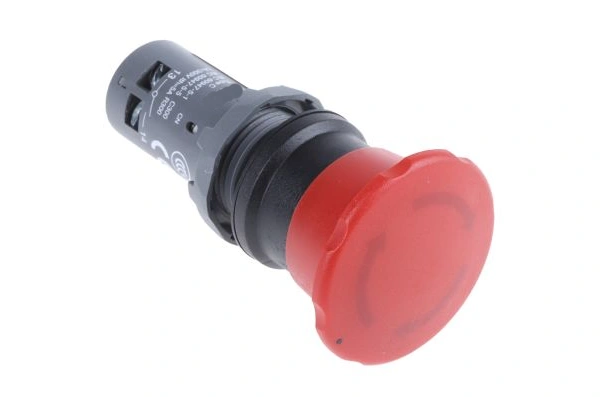
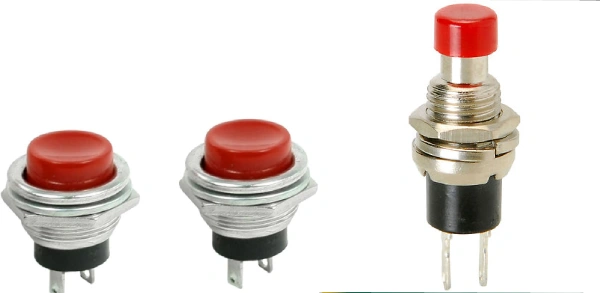
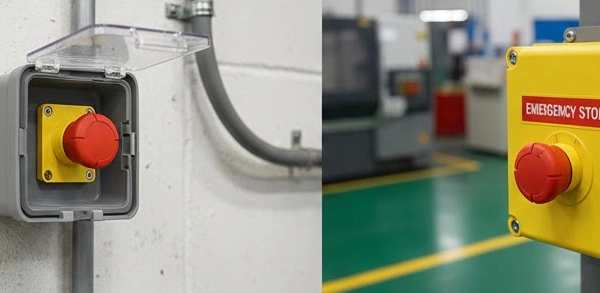
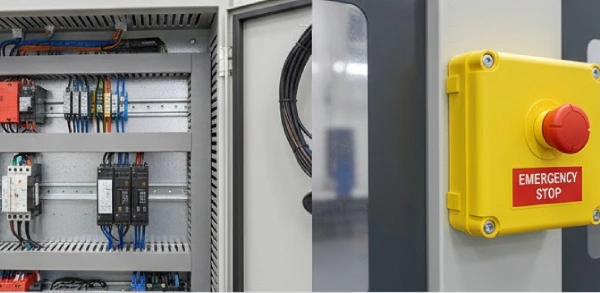
Emergency Push Button Switches Red Mushroom · Positive Opening

Certified fail-safe components for machinery, conveyors & automated lines. Twist‑release, pull‑release, key‑release.

ISO 13850

IEC 60947-5-5

UL 508

EN 418

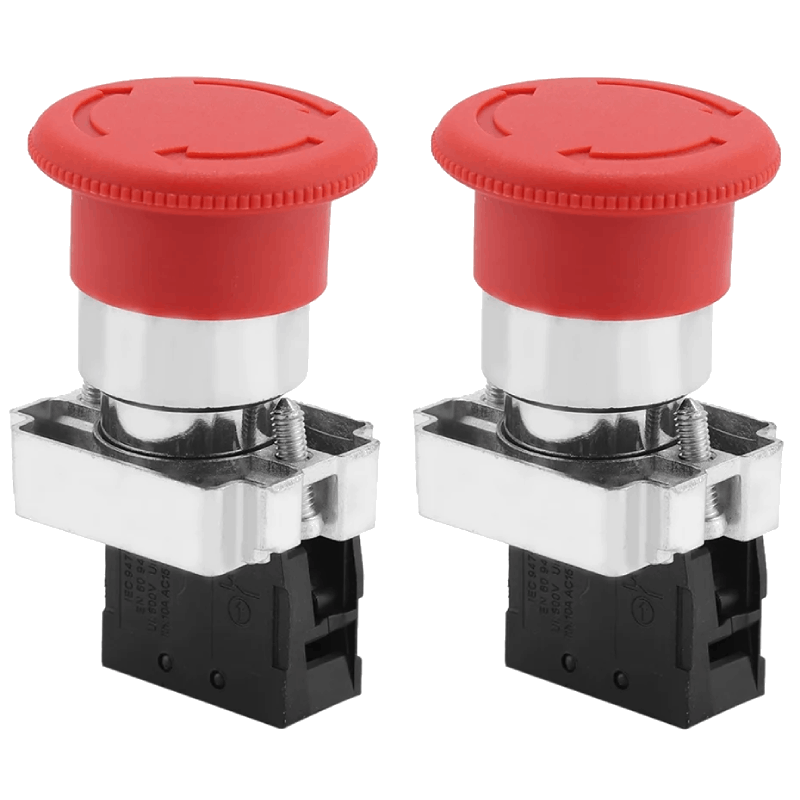
emergency push button

Why Choose Linkwell Emergency Stops

Engineered for demanding B2B industrial environments, our Emergency Push Buttons deliver reliable safety control to protect personnel, machinery, and electrical systems from unexpected hazards. Built with durable components and precision contact mechanisms, they ensure immediate response in critical situations.

Our solutions help minimize operational risks, prevent equipment damage, and support compliance with international safety standards across manufacturing, energy, and automation industries.

100% Tested

Every switch undergoes force & contact continuity test.

Custom Engraving

Red mushroom with "STOP" / "EMERGENCY" lettering.

Rapid samples

5 days for pre-production samples.

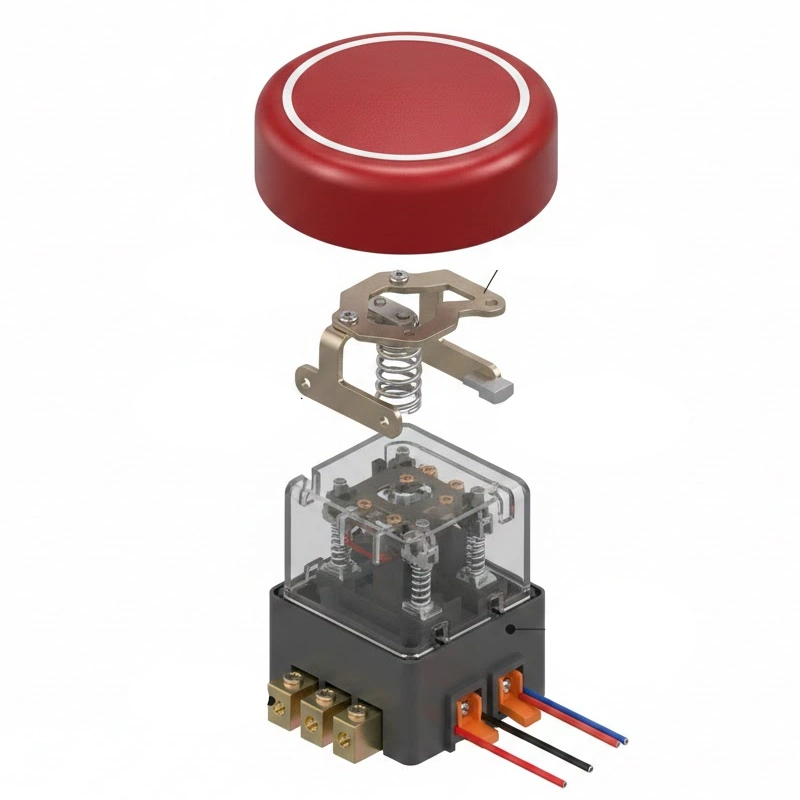
Anatomy of an Emergency Switch

anatomy of an emergency switch

Classification by Function

emergency shut off button

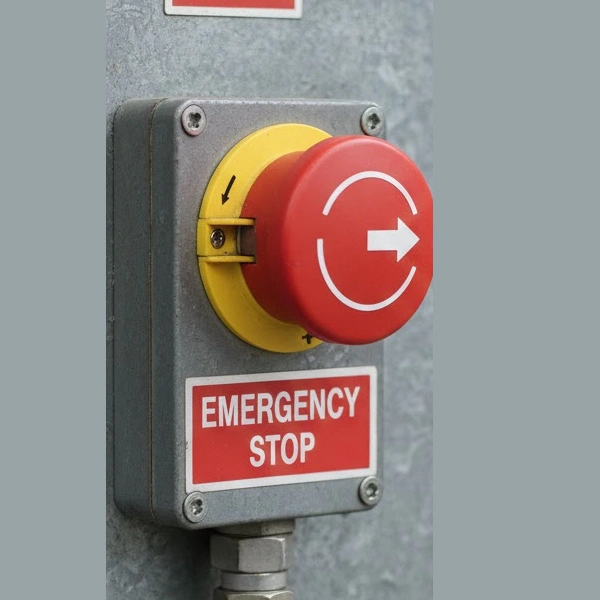
Emergency Stop Push Button (E-Stop)

Used to immediately stop machinery or electrical systems in hazardous situations.

emergency power off (epo) button

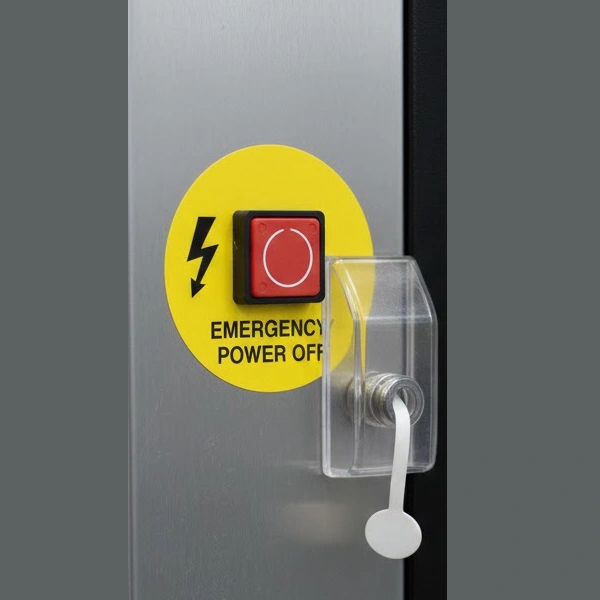
Emergency Power Off (EPO) Button

Designed to cut main electrical power supply, commonly used in data centers and control rooms.

emergency stop push button (e stop)

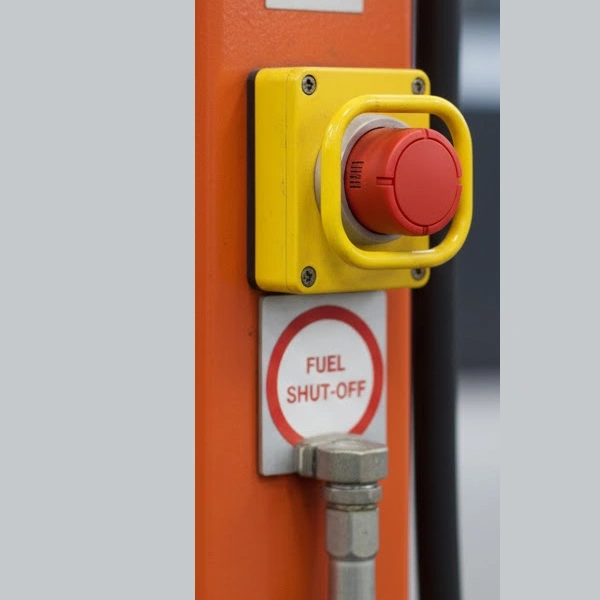
Emergency Shut-Off Button

Used in fuel stations, HVAC systems, and gas lines to stop energy flow.

Classification by Actuator Design (Head Shape)

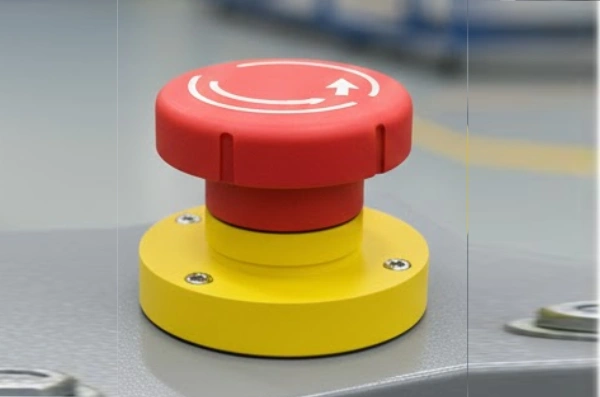
mushroom head type

Mushroom Head Type

Large red head for quick and easy pressing.

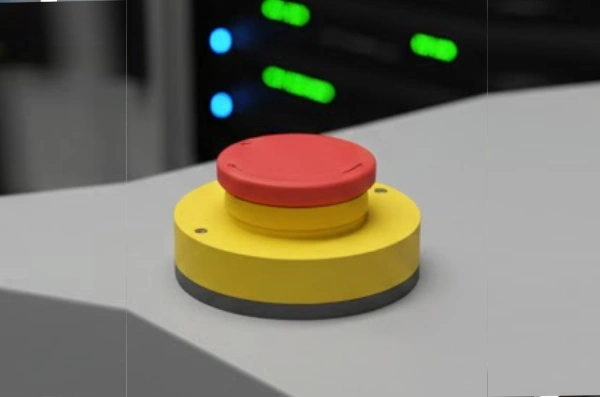
flush type

Flush Type

Low-profile design to prevent accidental activation.

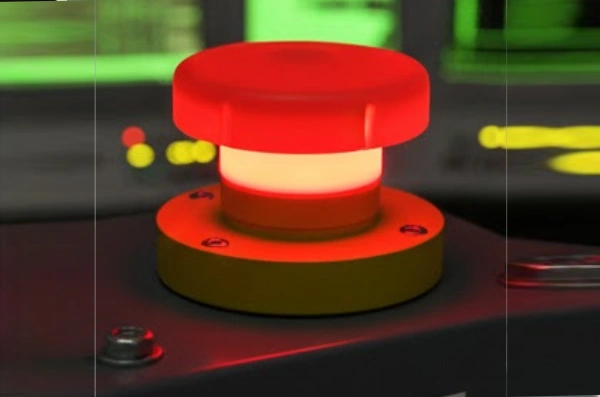
illuminated type

Illuminated Type

Includes LED lighting for visibility in low-light environments.

Classification by Reset Mechanism

push pull reset

Push-Pull Reset

Pull the button outward to reset

twist to release

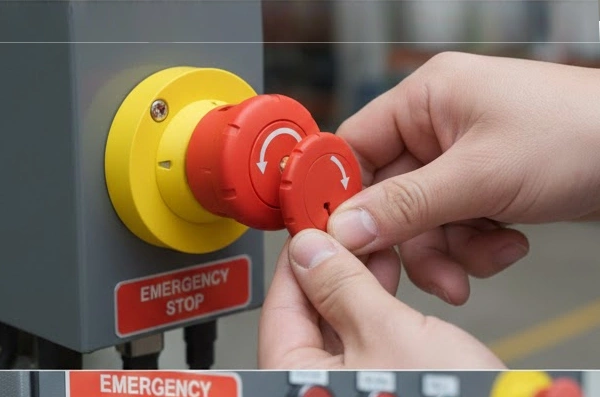
Twist-to-Release

Rotate the head to reset after activation.

key reset

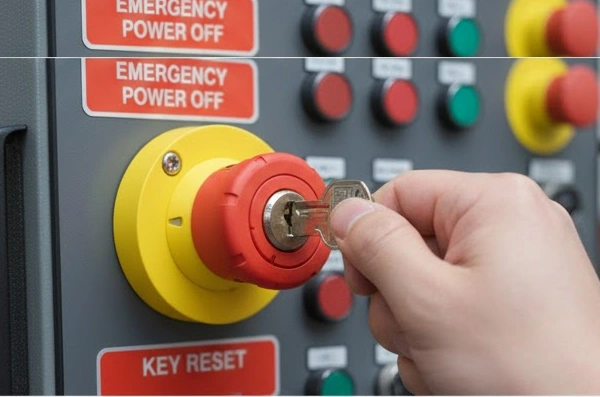
Key Reset

Requires a key to unlock and reset.

Classification by Mounting Method

panel mount

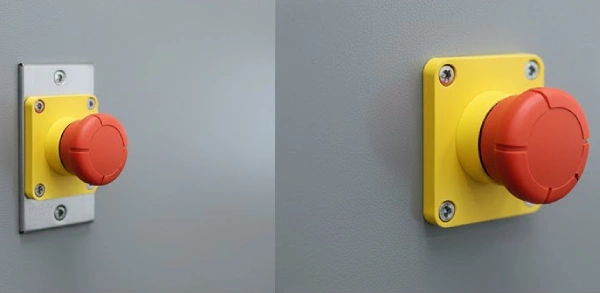
Panel Mount

Installed directly into control panels.

surface mount

Surface Mount

Installed on walls or machine frames.

emergency stop station (box type)

Emergency Stop Station (Box Type)

Pre-assembled in protective enclosure for industrial environments.

rail mounted (din rail compatible)

Rail Mounted (DIN Rail Compatible)

Used inside electrical cabinets.

Classification by Protection Level

Classification by Application Industry

Classification by Compliance Standard

Emergency Stop Applications

Robotic cells

Perimeter safety, E‑stop on pendants

Conveyor lines

Accessible emergency stops every 10m

Packaging machinery

High-speed lines – instant cut‑off

CNC & woodworking

Emergency mushroom on control panel

Materials & Durability

Actuator

PA66 / zinc alloy, red/yellow, UV resistant, impact IK08

Contacts

Fine silver, positive opening, <10mΩ, up to 10A/12V or 250V

Temperature

-40°C to +85°C, salt spray tested (metal versions)

Why Choose Linkwell?

Linkwell combines 15+ years of engineering expertise with strict quality control. 

Choose our Emergency Push Button for dependable performance, certified safety compliance, and long-term durability. As a professional manufacturer, we use high-quality materials, precision contact structures, and strict quality control to ensure stable operation under critical conditions. Our products support multiple voltage ratings, contact configurations, and customization options for OEM projects. With competitive pricing, fast delivery, and international standard compliance, we help you build safer and more reliable systems.

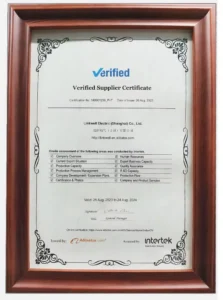
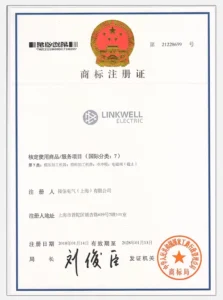
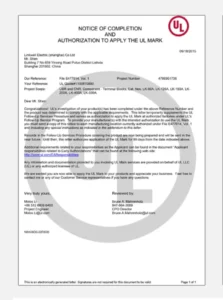
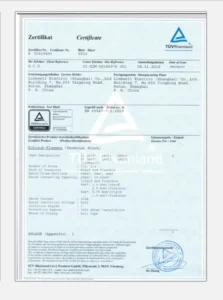
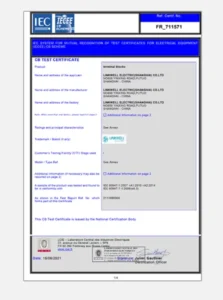
Certificate

Our Emergency Push Button meets CE, UL, and ISO standards for global compliance.

FAQ of Emergency Push Button

What is the difference between an Emergency Push Button and an Emergency Stop Button?

An Emergency Stop Button (E-Stop) specifically shuts down machinery or interrupts electrical circuits to prevent hazards, usually using normally closed (NC) safety contacts. An Emergency Push Button is a broader term that may include alarm activation, emergency call systems, or power shutdown functions. In short, all emergency stop buttons are emergency push buttons, but not all emergency push buttons are designed to stop machinery.

Most emergency push buttons operate using mechanical latching mechanisms combined with electrical contacts. When pressed, the internal contacts either open or close a circuit depending on configuration (NO, NC, or both). In safety applications, normally closed contacts are commonly used so that pressing the button interrupts power. Many designs require manual reset, such as twist-to-release or pull-to-reset, to prevent accidental system restart after activation.

Emergency push buttons are typically available in several contact configurations, including 1NO (Normally Open), 1NC (Normally Closed), 1NO+1NC, and 2NC safety configurations. Industrial machinery often requires dual NC contacts for redundancy and compliance with safety standards. Voltage ratings may range from low-voltage DC control circuits to 110V, 220V, or even three-phase systems depending on application requirements.

Emergency push buttons are widely used in manufacturing equipment, packaging lines, CNC machinery, elevators, HVAC systems, data centers, gas stations, access control systems, and healthcare facilities. In industrial environments, they protect workers from mechanical hazards. In commercial buildings, they may trigger door release systems or emergency alarms. Their application depends on whether the function is power isolation, machine stopping, or emergency signaling.

For industrial machinery applications, emergency push buttons should comply with international safety standards such as ISO 13850 for emergency stop function and IEC 60947-5-5 for control devices. In North America, UL certification is often required for electrical safety compliance. Proper compliance ensures mechanical reliability, direct opening action contacts, manual reset capability, and safe integration into certified machinery systems.

Ask for Samples Now