Wiring a terminal block correctly is a fundamental skill in electrical work, ensuring safe and reliable connections. This guide will walk you through the essential steps, from preparing your wires to securing them properly within various terminal block types.
Mastering this process is crucial for preventing loose connections, electrical faults, and potential hazards. Let’s dive into how to achieve secure and efficient wiring for your terminal blocks.
2026 UPDATE: Latest Standards for Terminal Block Wiring
This guide has been updated to reflect the latest requirements for terminal block wiring in 2026, including:
- UL 1059 (7th Edition) – Flame retardance and temperature rise testing for US market compliance
- IEC 60947-7-1 (2025 Amendment) – Requirements for copper conductors, voltage ≤1000V AC or 1500V DC
- NEC 2026 (NFPA 70) – Grounding requirements (Article 250.8) and box fill calculations
- RoHS 3 (EU) and RoHS 5/6 (China) – Environmental compliance for global export
What are Terminal Blocks?
Recommended Terminal Blocks
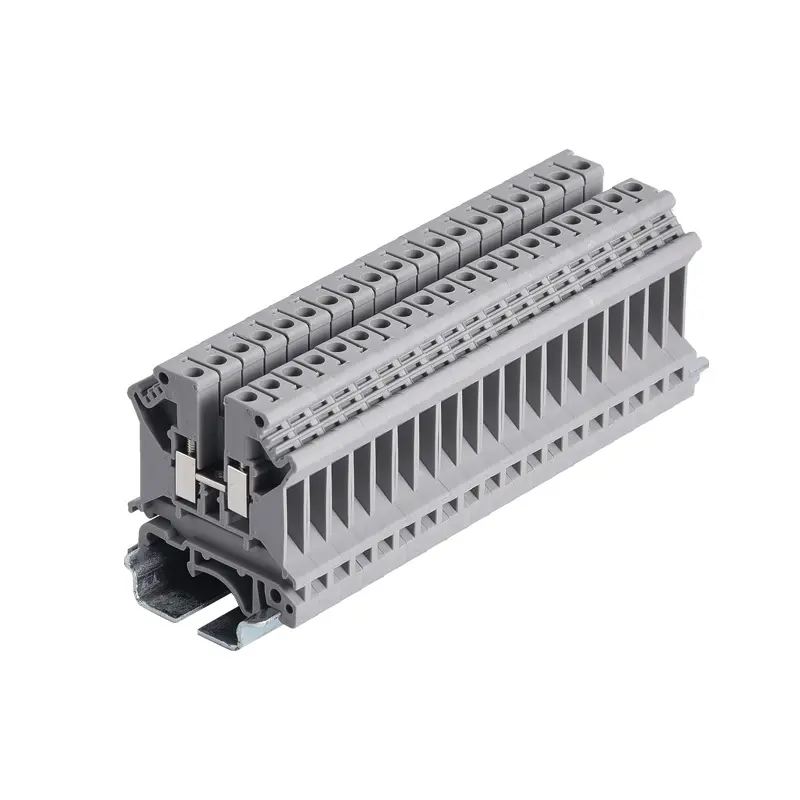
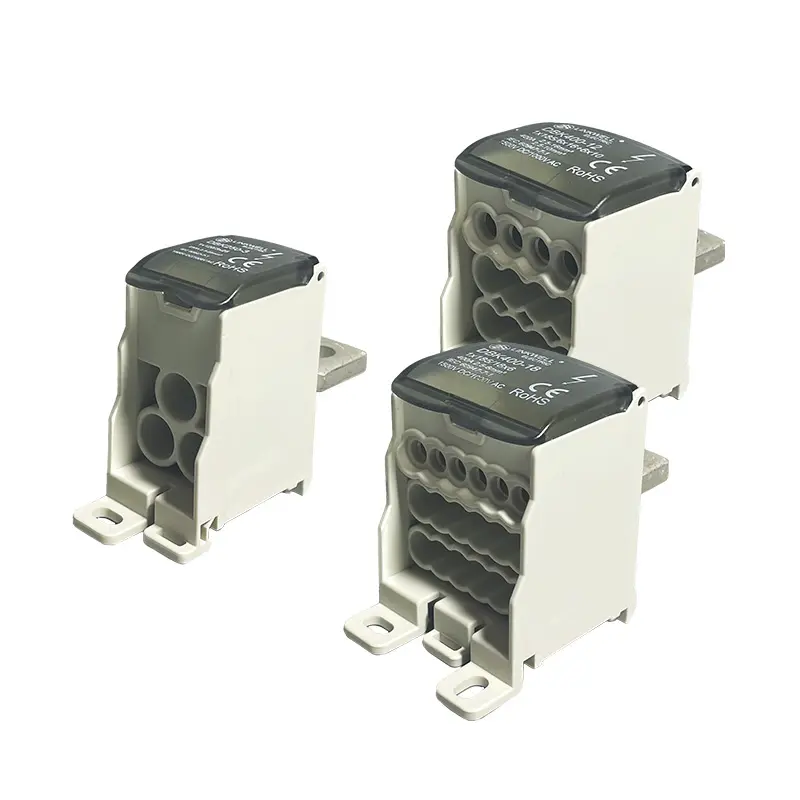
Terminal blocks are modular, insulated electrical connectors designed to secure and connect two or more wires together. They provide a safe, organized, and reliable way to manage complex electrical circuits, facilitating power distribution, signal routing, and control wiring. Essentially, they serve as a central hub where multiple wires can be easily connected, disconnected, and maintained without the need for soldering or direct splicing.
Comprising an insulating body (often plastic or ceramic) and a current-carrying element (typically copper or a corrosion-resistant metal), terminal blocks ensure electrical isolation between adjacent connections. Key characteristics include:
- Modular Design: They can be assembled side-by-side on a DIN rail to create banks of connections.
- Insulation: The housing prevents accidental contact between conductors and provides protection against electrical shock.
- Clamping Mechanisms: Wires are secured using various methods, such as screws, springs, or push-in designs, offering different levels of ease of use and vibration resistance.
- Variety of Types: Available in numerous configurations, including feed-through, grounding, disconnect, and multi-level, to suit diverse application needs.
- Organization: They provide a neat and structured way to terminate wires, simplifying installation, troubleshooting, and maintenance of electrical panels and systems.
Terminal Block Connection Types: A Complete Comparison (2026)
Different applications require different connection methods. Here’s how the five main types compare:
| Connection Type | How It Works | Key Advantages | Best Applications |
|---|---|---|---|
| Screw Connection | Screw tightens a clamp or collar directly onto the wire | High clamping force, accepts wide wire range, familiar to all electricians | Industrial control panels, power distribution, general wiring |
| Spring Clamp | Stainless steel spring applies constant pressure to hold wire | Vibration-resistant, tool-less operation, consistent pressure | Railway systems, industrial machinery, high-vibration environments |
| Push-In (Direct Plug) | Wire inserts directly; spring locks automatically | Ultra-fast installation, “click” confirmation, space-saving | Factory automation, lighting systems, high-volume production |
| IDC (Insulation Displacement) | Contacts pierce insulation to contact conductor | No stripping required, consistent contact, gas-tight connection | Telecom equipment, data transmission, PCB connections |
| Plug-In (Pluggable) | Male plug inserts into female socket | Modular, pre-assembly possible, easy maintenance/disconnect | Automation systems, power supplies, PLCs, modular equipment |
Quick Selection Guide:
- Need maximum reliability in vibration? → Spring Clamp
- Speed is your priority for thousands of connections? → Push-In
- Traditional, rugged, field-proven? → Screw Connection
- No-strip, high-density data wiring? → IDC
- Modules that need frequent disconnection? → Plug-In
Terminal Block Application Scenarios
| Application Scenario | Description |
|---|---|
| Electrical Cabinets | Used for power distribution, control circuits, and equipment connections. Ensures safe wiring and organized layout. Guarantees stable connections for cabinet components, fans, and air conditioners. |
| Telecommunication Cabinets | Supports stable signal transmission, structured wiring, and modular cable management. |
| Industrial Control Panels | Connects PLCs, sensors, relays, and automation devices in factories and production lines. |
| Power Distribution Boxes | Handles branching, grounding, and protection circuits for low-voltage and medium-voltage systems. |
| Machine Equipment Terminals | Provides connection points for motors, drives, pumps, and mechanical equipment wiring. |
| Building Automation Systems | Used in HVAC control, lighting systems, and smart building wiring interfaces. |
| Transportation Equipment | Applied in railway control boxes, vehicle wiring systems, and signaling equipment. |
| Residential Wiring | Provides organized, re-workable connections in junction boxes, smart home systems, HVAC controls, and low-voltage lighting. Offers a neater, more easily identifiable alternative to traditional wire nuts, simplifying future modifications and troubleshooting. |
| Renewable Energy Systems | Used in solar PV combiner boxes, wind control cabinets, and energy storage systems. |
| Wiring Type | Connection Method | Advantages | Typical Applications |
|---|---|---|---|
| Screw Terminal Wiring | Wire is inserted and tightened with a screw | Strong connection, reliable, suitable for high current | Industrial panels, power distribution systems |
| Spring Clamp Wiring | Wire is held by a spring mechanism | Fast installation, vibration-resistant, low maintenance | Automation systems, machinery |
| Push-in Wiring | Wire is pushed directly into the terminal | Quick installation, tool-free, space-saving | Control cabinets, compact electrical systems |
Universal Applications
Beyond the specific scenarios listed above, terminal blocks are fundamental components across virtually any application requiring organized, secure wire connections. Their versatility makes them indispensable in:
- Industrial Control Panels – Organizing wiring for PLCs, motor starters, relays, and automation systems
- Building Automation – Connecting sensors, actuators, and controllers in HVAC, lighting, security, and fire alarm systems
- Power Distribution – Safely distributing power from a main source to multiple circuits or loads
- HVAC Systems – Wiring thermostats, motors, sensors, and control boards
- Telecommunications – Managing signal and power cables in network cabinets and data centers
- Industrial Machinery – Integrating power, control, and signal wiring in equipment
- Residential & Commercial Wiring – Organizing connections in junction boxes, panels, and lighting fixtures
- Renewable Energy – Managing DC/AC connections in solar and wind installations
- Automotive & Transportation – Wiring complex electrical systems in vehicles, trains, and marine vessels
- Test & Measurement – Providing reliable connection points for sensors and instruments
- OEM Applications – Facilitating external connections in manufactured products and electronic devices
How to Wire a Terminal Block?

Wiring a terminal block correctly is a fundamental skill in electrical work, ensuring both the functionality and safety of your circuits. This process involves more than just inserting a wire; it requires careful preparation and adherence to proper techniques. A well-wired terminal block minimizes resistance, prevents shorts, and guarantees reliable connections.
Step 1: Choose the Right Terminal Block and Wire
The first crucial step is to select the appropriate terminal block and wire for your specific application. Consider the voltage and current ratings of your circuit, as these will dictate the size and type of terminal block and the gauge of the wire needed. Using undersized components can lead to overheating and potential hazards, while oversized components may be unnecessarily bulky or difficult to work with.
Beyond electrical specifications, think about the environment where the terminal block will be used. Factors like temperature, humidity, and vibration can influence your choice. Similarly, select the correct wire type – solid or stranded – based on flexibility requirements and whether ferrules will be used for termination. Compatibility between the wire type and the terminal block’s clamping mechanism is also vital for a secure connection.
Step 2: Prepare the Wire
Proper wire preparation is paramount for a reliable connection and often overlooked. Begin by cutting the wire to the appropriate length, ensuring there’s enough slack for future maintenance but not so much that it creates clutter. Next, carefully strip the insulation from the end of the wire. The stripped length should match the terminal block’s design, typically allowing the conductor to fully enter the clamping mechanism without exposed insulation or bare conductor extending beyond the block.
For stranded wires, especially in screw-clamp or spring-clamp terminals, consider using a ferrule. A ferrule is a small metal tube crimped onto the end of the stripped wire, which bundles all the strands together. This prevents fraying, improves contact consistency, and creates a more robust connection that resists pull-out and vibration, significantly enhancing the long-term reliability of the termination.
Step 3: Insert the Wire into the Terminal Block
With the wire prepared, it’s time to insert it into the terminal block. For screw-clamp terminals, fully loosen the screw to open the clamping mechanism. Insert the stripped end of the wire (or ferruled wire) into the designated wire entry hole until it bottoms out or reaches the stopper. Then, tighten the screw firmly. Ensure the screw is snug but avoid overtightening, which can damage the wire strands or the terminal block itself. A gentle tug on the wire after tightening confirms a secure connection.
For spring-clamp terminals, use a small flathead screwdriver or the manufacturer’s specific tool to depress the spring mechanism, opening the wire entry port. Insert the wire fully into the opening while holding the spring open, then release the tool to allow the spring to clamp down on the wire. For push-in terminals, simply push the stripped wire firmly into the designated hole until it clicks or reaches a stop. Always double-check each connection by gently pulling on the wire to ensure it is securely held and won’t easily come loose under normal operating conditions.
How Do You Connect Wires to Terminal Blocks?

Connecting wires to terminal blocks is a fundamental practice in electrical wiring, essential for creating organized, secure, and reliable circuits. This process ensures proper current flow and facilitates easier troubleshooting and maintenance. While specific applications may vary, the general steps involve preparing your components and carefully making each connection.
Step 1: Mount the terminal block to board.
Before making any electrical connections, the terminal block itself needs to be securely mounted. This typically involves attaching it to a DIN rail or directly screwing it onto a mounting surface, such as a control panel or a project board. Proper mounting ensures stability and prevents the terminal block from moving or being dislodged during wiring or operation, which could lead to loose connections or damage.
Ensuring the terminal block is firmly mounted provides a stable base for all subsequent wiring. It also helps to maintain an organized layout, crucial for managing multiple wires and preventing accidental short circuits. Always use the appropriate mounting hardware and follow the manufacturer’s guidelines for installation to ensure a secure and long-lasting setup.
Step 2: Attach wire from battery terminal and terminal.
This step initiates the power supply connection to your terminal block setup. You will take a wire, typically from the positive terminal of your battery or power source, and connect it to a designated input terminal on your terminal block. This establishes the primary power feed into your circuit.
Carefully strip the insulation from the end of the wire to the appropriate length as recommended by the terminal block manufacturer. Insert the bare wire into the terminal block’s clamping mechanism (e.g., screw-down, spring-clamp, or push-in) and secure it firmly. A gentle tug test should confirm that the wire is securely held and won’t easily pull out, ensuring reliable power transmission.
Step 3: Attach spade connector from terminal to LED.
Now you begin extending the circuit from the terminal block to your load, in this case, an LED. Take a wire that has a spade connector crimped onto one end. Connect the other end of this wire to an output terminal on your terminal block, which is intended to carry power to your LED. The spade connector provides a convenient and secure way to attach the wire to the LED’s terminal.
Ensure the wire is properly stripped and secured in the terminal block as in the previous step. Then, connect the spade connector firmly to the corresponding terminal on your LED. This connection effectively links the power supplied through the terminal block to the LED, preparing it to illuminate when the circuit is complete.
Step 4: Attach other spade connector to SAME terminal.
This step suggests creating a parallel connection or branching off power from the same terminal block point. If you need to power another component or create a parallel branch from the same power source output, you can attach another wire with a spade connector to the same terminal block connection point that is already powering the first LED. This is typically done if the terminal block is designed for multiple wire entries per pole, or if you are using a specific type of terminal block like a distribution block.
It’s crucial to confirm that your specific terminal block is rated for multiple wires per connection point before attempting this. Overloading a terminal not designed for multiple wires can lead to loose connections, overheating, and potential safety hazards. If multiple connections from one point are needed, using a multi-port terminal block or a dedicated distribution block is the safest and most reliable solution.
Step 5: Attach remaining alligator clip to remaining LED.
At this stage, you’re preparing for the final connection of another component, specifically an LED, often for testing or temporary setup. Take a wire with an alligator clip attached to one end. Connect this wire to the remaining terminal on your second LED. The alligator clip provides a convenient and temporary connection point, often used in prototyping or testing phases where quick and easy attachment and detachment are desired.
This step typically involves connecting the negative or ground side of the LED, or another input if the LED is part of a more complex circuit. Ensure the alligator clip makes good contact with the LED terminal to allow for proper current flow once the circuit is complete.
Step 6: Complete the circuit!
The final step is to complete the electrical circuit, allowing current to flow and your components, like the LEDs, to function. This usually involves connecting the return path (negative or ground) from your LEDs or other components back to the power source, often via another terminal block or directly to the battery’s negative terminal.
Once all connections are made and verified, you can apply power to the circuit. If everything is wired correctly, your LEDs should illuminate, indicating a successful circuit completion. Always perform a final visual inspection to ensure all wires are securely fastened and there are no loose connections or potential shorts before powering up.
How to Insert Wire Into Terminal Block?
Inserting a wire into a terminal block correctly is essential for ensuring a secure and reliable electrical connection. This process, while seemingly simple, requires attention to detail to prevent loose connections, electrical faults, and potential safety hazards.
Step 1: Prepare the Wire
First, use a wire stripper to carefully remove the appropriate amount of insulation from the end of the wire. The length of the stripped portion should match the depth of the terminal block’s clamping mechanism. This ensures no bare wire extends beyond the block and no insulation is caught under the clamp. Avoid nicking or damaging the conductor strands during this process, as this can weaken the wire.
Step 2: Open the Clamping Mechanism
For screw-type terminal blocks, use the correct size screwdriver to loosen the screw sufficiently, opening the internal clamping plate or jaw. If it’s a spring-clamp or push-in type, activate the release lever or push button to open the clamping point. Make sure the opening is wide enough to easily insert the prepared wire without forcing it.
Step 3: Insert the Wire
Carefully insert the stripped end of the wire fully into the opened clamping mechanism of the terminal block. Ensure that all strands of the conductor are inserted and no stray strands are left outside the clamping area. The wire should be pushed in until it firmly bottoms out against the back of the terminal block’s conductor housing.
Step 4: Secure the Connection
Once the wire is fully inserted, secure it by tightening the screw firmly (for screw-type blocks) or by releasing the lever/button (for spring-clamp/push-in types). For screw terminals, tighten until the wire is snug and cannot be pulled out. However, avoid over-tightening, which can damage the wire or the block. For spring or push-in types, a firm click or resistance indicates a secure connection.
Step 5: Verify the Connection
Finally, gently tug on the inserted wire to ensure it is securely held within the terminal block and cannot be easily pulled out. Visually inspect the connection to confirm that no bare wire is exposed beyond the block’s body and that the insulation is properly seated against the terminal block. This verification step is crucial for preventing shorts and ensuring long-term reliability
How to Release Wires From Terminal Block?

Releasing wires from a terminal block is a common task in electrical maintenance or modification. It’s crucial to understand the specific type of terminal block you’re working with, as the method for releasing wires varies significantly between designs. Proper technique ensures the wire and the terminal block remain undamaged for future use.
Step 1: Identify the Terminal Block Type
Before attempting to remove any wire, it’s essential to correctly identify the type of terminal block. The most common types are screw-clamp, spring-clamp, and push-in (also known as push-wire) terminal blocks. Each type has a unique mechanism for securing the wire, which in turn dictates the correct method for releasing it.
Step 2: Ensure Power is Disconnected
Safety is paramount. Always ensure that the power supply to the circuit connected to the terminal block is completely disconnected before attempting to remove any wires. This means turning off the relevant circuit breaker or unplugging the device. Failure to do so can result in electrical shock or damage to the equipment.
Step 3: Gather the Correct Tools
Having the right tools for the job is critical for efficient and safe wire removal. For screw-clamp terminals, you’ll need the appropriate size of flathead or Phillips screwdriver. For spring-clamp terminals, a small flathead screwdriver or a specialized spring-clamp tool is required. Push-in terminals often require a small tool or have a release button.
Step 4: Release Wires from Screw-Clamp Terminal Blocks
For screw-clamp terminals, simply insert the correct screwdriver into the screw head and turn it counter-clockwise to loosen the clamping plate or collar that holds the wire. Once the screw is sufficiently loosened, the wire can be gently pulled out of the terminal. Avoid excessive force to prevent damage to the wire strands or the terminal itself.
Step 5: Release Wires from Spring-Clamp Terminal Blocks
To release a wire from a spring-clamp terminal, insert a small flathead screwdriver or the specialized release tool into the designated opening next to the wire entry point. Push down or twist the tool (depending on the design) to depress the internal spring, which will release the wire. While holding the spring open, gently pull the wire free, then remove the tool.
Step 6: Release Wires from Push-In Terminal Blocks
Releasing wires from push-in terminal blocks can vary. For some, a simple firm pull while twisting the wire can release it, especially with solid conductors. However, many modern push-in terminals have a small button, lever, or a small slot for a release tool. Depress the button/lever or insert and twist the tool to open the internal clamp, then pull the wire out. Always refer to the manufacturer’s instructions if unsure.
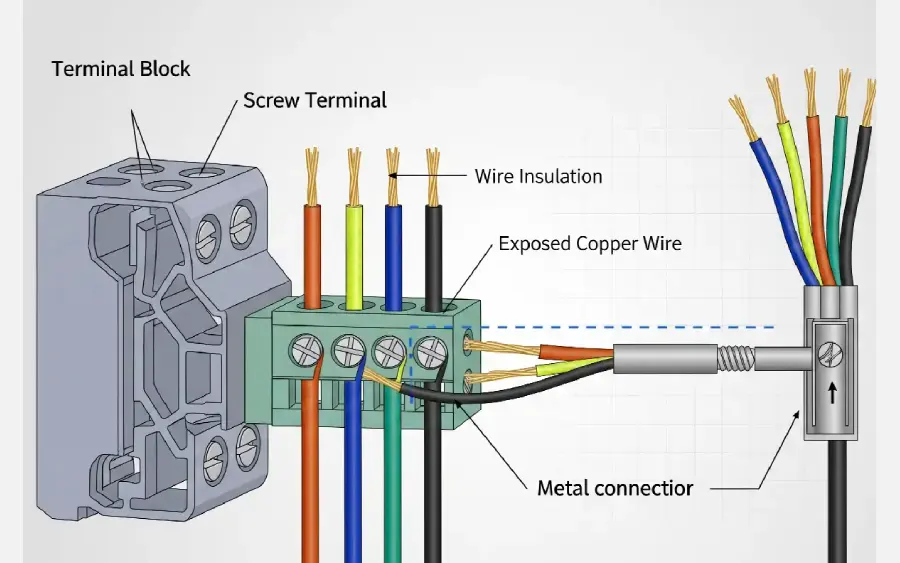
Terminal Block Wiring Diagram
Common Wiring Mistakes & Troubleshooting Guide
Common Mistakes
| Incorrect strip length | Too long → exposed conductor risk; Too short → poor contact |
| No ferrule on stranded wire | Frayed strands, loose connection, overheating |
| Under-tightened screw | Loose connection, arcing, fire hazard |
| Over-tightened screw | Damaged strands, cracked terminal body |
| Wire not fully inserted | Partial contact, high resistance, heat buildup |
| Wrong wire gauge | Too small → not gripped; Too large → terminal damage |
| Multiple wires in single terminal | Uneven contact, one wire may be loose |
Troucbleshooting Guide
Problem: Connection feels loose after tightening
→ Check: Correct wire gauge? Ferrule used? Screw torque sufficient? Terminal damaged?
Problem: Terminal running hot
→ Check: Loose connection? Overloaded circuit? Correct wire gauge? Multiple wires sharing terminal?
Problem: Intermittent connection
→ Check: Vibration loosening screw? Stranded wire without ferrule fraying? Corrosion present?
Problem: Wire pulls out easily
→ Check: Stripped too short? Wrong terminal type for application? Screw not tightened?
Problem: Visual damage/discoloration
→ Check: Overheating from overload or loose connection; replace terminal immediately
Troubleshooting Flowchart
Step 1: Disconnect power immediately
Step 2: Visually inspect for loose wires, discoloration, melting, or damage
Step 3: Check all connections with gentle pull test
Step 4: Use multimeter to test continuity and voltage (ensure proper settings)
Step 5: Verify wire gauge matches terminal rating
Step 6: Check for correct ferrule usage on stranded wires
Step 7: If issue persists, consult manufacturer or qualified electrician
Grounding, Isolation & Safety Requirements (NEC 2026)
Grounding Requirements (NEC Article 250.8)
- Equipment grounding conductors must terminate using UL-listed pressure connectors, terminal blocks, or other approved means
- Grounding terminal blocks must be clearly identified (typically green color or “⏚” symbol)
- Do not use grounding terminal for current-carrying neutral conductors
- Grounding path must be permanent and continuous
Circuit Isolation
- Separate voltage levels: High voltage and low voltage (e.g., 480V and 24V control) must be in separate compartments or clearly separated with barriers
- Creepage and clearance distances: Follow IEC 60947-1 requirements based on working voltage and pollution degree
- Wire segregation: Power, control, and communication wires should be routed separately to prevent interference
Fire Prevention
- Terminal blocks must meet UL 94 V-0 flammability rating (materials self-extinguish within 10 seconds)
- Maintain proper spacing between terminals to prevent arc tracking
- Use finger-safe terminal blocks to prevent accidental contact with live parts (IP20 protection)
How Terminal Blocks Improve Electrical Safety
Safer Than “Wire-Nut” Connections
- Secure clamping: Mechanical clamp holds wire firmly, won’t loosen with vibration
- No exposed conductors: Insulated housing prevents accidental shorts
- Standardized torque: Consistent pressure every time (vs. hand-tightened wire nuts)
Better Than Direct Splicing
- Test points: Easy voltage measurement without disturbing connections
- Modular troubleshooting: Isolate circuits by removing individual wires
- Future modifications: Add or remove connections without cutting wires
Organized Panels = Safer Panels
- Clear identification of circuits reduces wiring errors
- Proper separation of power, neutral, and ground prevents miswiring
- Easier to spot loose connections during inspections
Vibration Resistance
- Spring clamp terminals maintain constant pressure regardless of vibration
- Screw terminals with anti-vibration features (e.g., screw with spring washer)
- Critical for transportation, industrial machinery, and renewable energy applications
How Do You Properly Screw a Wire to a Terminal?
Properly screwing a wire to a terminal is a crucial step in electrical wiring, ensuring a secure, low-resistance connection that is both safe and reliable. This process is common in many electrical devices, panels, and terminal blocks. Incorrect technique can lead to loose connections, overheating, and potential hazards.
Step 1: Prepare the Wire End
Before connecting the wire, it must be properly prepared. Using a wire stripper, carefully remove the insulation from the end of the wire. The length of the stripped insulation should match the depth of the terminal’s screw-down mechanism, ensuring that all the conductor is under the screw without any excess bare wire exposed. For stranded wires, it is highly recommended to use a ferrule, a small metal tube crimped onto the stripped end. This bundles the strands, preventing fraying and providing a solid contact point.
Step 2: Form a Hook (if applicable)
For terminals that use a screw with a separate clamping plate or a direct screw-down onto the wire (not a cage clamp), it’s often best to form a small hook or “U” shape in the stripped wire end using needle-nose pliers. The hook should be sized to fit snugly around the screw. This ensures maximum contact area with the screw and prevents the wire from slipping out when tightened.
Step 3: Position the Wire on the Terminal
If using a hook, place the wire around the screw in a clockwise direction. This is critical because as you tighten the screw (which turns clockwise), it will naturally pull the wire further under the screw head, tightening the connection. If placed counter-clockwise, the wire could be pushed out as the screw is tightened. For cage-clamp terminals (where the screw presses a plate onto the wire), simply insert the straight stripped or ferruled wire fully into the terminal’s opening beneath the screw.
Step 4: Tighten the Screw
Using the correct size screwdriver (flathead or Phillips, depending on the screw type), begin to tighten the screw. For hook connections, ensure the wire remains properly wrapped around the screw as you tighten. For cage-clamp terminals, the screw will press down on the internal plate, clamping the wire securely. Tighten until the wire is firmly held and cannot be easily pulled out with a gentle tug. Avoid overtightening, as this can strip the screw, damage the wire strands (especially with solid wire), or crack the terminal block.
Step 5: Verify the Connection
After tightening, always perform a visual and mechanical check. Visually inspect the connection to ensure no bare wire strands are exposed outside the terminal and that the insulation is not pinched under the screw. Gently tug on the wire to confirm it is securely fastened and does not move. A properly screwed connection will feel solid and secure, providing optimal electrical conductivity and minimizing the risk of failure or overheating.
Can You Put More Than One Wire in a Terminal Block?
Generally, standard terminal blocks are designed to accommodate one wire per connection point. This design ensures optimal contact, secure clamping pressure, and reliable electrical conductivity. Attempting to insert multiple wires into a single terminal connection point that isn’t specifically designed for it can lead to several significant issues.
These include poor electrical contact for one or more wires, leading to increased resistance, localized overheating, and potential fire hazards. It also makes troubleshooting difficult, as it’s harder to isolate individual circuits.
However, there are specialized terminal blocks on the market that are explicitly designed to accept more than one wire per connection point. These are often referred to as “multi-conductor” or “multi-wire” terminal blocks. They feature larger clamping areas or multiple distinct wire entry points within a single pole, ensuring that each wire can be securely terminated without compromising the integrity of the connection.
When working with such blocks, it is absolutely crucial to adhere strictly to the manufacturer’s specifications and local electrical codes, which will dictate the maximum number of wires, their gauges, and whether techniques like using ferrules are required for safe and compliant connections.
FAQ
Can I put two wires in one terminal block?
Standard terminal blocks are designed for ONE wire per connection. Some specialized “multi-conductor” terminals are rated for 2-3 wires – always check manufacturer specifications. For multiple connections, use a distribution block or jumper bars instead.
Do I need to use ferrules on stranded wire?
YES, absolutely recommended. Ferrules bundle all strands together, prevent fraying, ensure consistent contact, and meet UL and IEC requirements for stranded wire terminations in most industrial applications.
What torque should I use for screw terminals?
Always follow manufacturer specifications. Typical values range from 0.5 Nm to 3.5 Nm depending on terminal size and wire gauge. Using a torque screwdriver ensures consistent, code-compliant connections.
How do I know which terminal block type to choose?
A: Consider your application:
– High vibration? → Spring clamp
– High-volume production? → Push-in
– Traditional field wiring? → Screw connection
– Frequent disconnection needed? → Plug-in
– PCB/dense wiring? → IDC
What amp terminal block should I use for lighting?
The correct amperage depends on your lighting circuit’s total current draw. Calculate this by dividing the total wattage of all connected fixtures by the operating voltage. For example, a 100W LED fixture on a 120V circuit draws less than 1A, while multiple older incandescent fixtures can draw significantly more.
Recommended practice: Select terminal blocks with an amperage rating at least 125% of the maximum continuous current the circuit is expected to carry. This provides a safety margin against overheating.
For most residential and commercial lighting circuits (typically 15A or 20A breakers), terminal blocks rated for 20A to 30A are generally sufficient. For low-voltage LED lighting (e.g., 12V or 24V), currents can be higher for the same wattage, so always calculate the actual amperage and verify local electrical code requirements.
Conclusion
Wiring a terminal block correctly is essential for ensuring safe and reliable electrical connections. By following the proper steps—from selecting the right wire and preparing it accurately to securely inserting it into the terminal—you create a robust and efficient electrical pathway.
Adhering to best practices, such as proper wire stripping, using ferrules for stranded wires, and ensuring tight connections, minimizes the risk of shorts, loose contacts, and potential hazards, leading to a more stable electrical system.
For all your wholesale terminal block needs, ensuring quality and variety, please contact us. We supply a comprehensive range to meet diverse industrial and commercial requirements.
Last Updated: March 2026