
Custom Terminal Blocks Solutions
One‑in multiple‑out power distribution, engineered for safety and flexibility. Trusted by global panel builders.
UL Recognized
CE / RoHS
IEC 60947-7-1
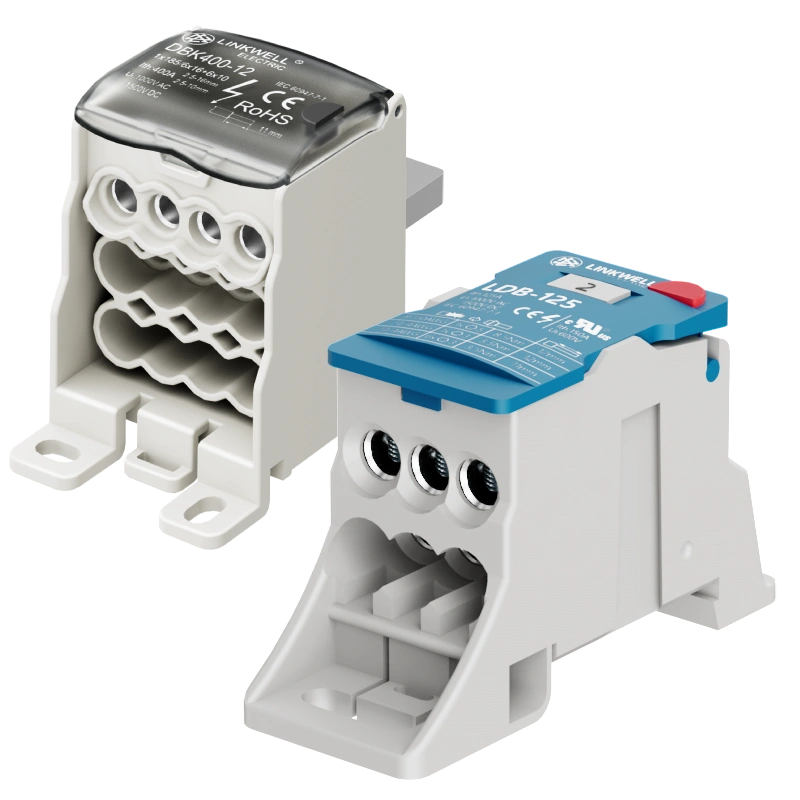
DIN Rail Terminal Blocks
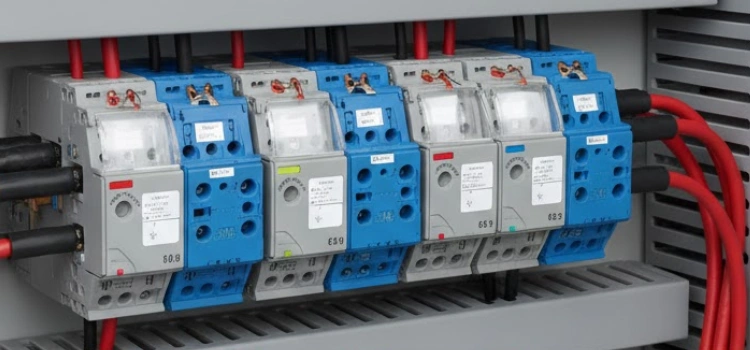
din rail power distribution terminal blocks
Designed for centralized power distribution, these terminal blocks mount on DIN rails, supporting multiple outgoing circuits with high current capacity and organized, safe panel wiring.
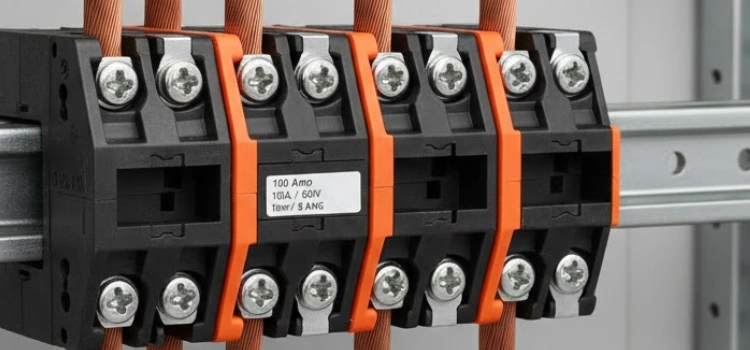
din rail terminal blocks 100 amp
These heavy-duty DIN rail terminal blocks handle up to 100 amp current loads, suitable for high-power industrial systems requiring secure, stable, and reliable connections.
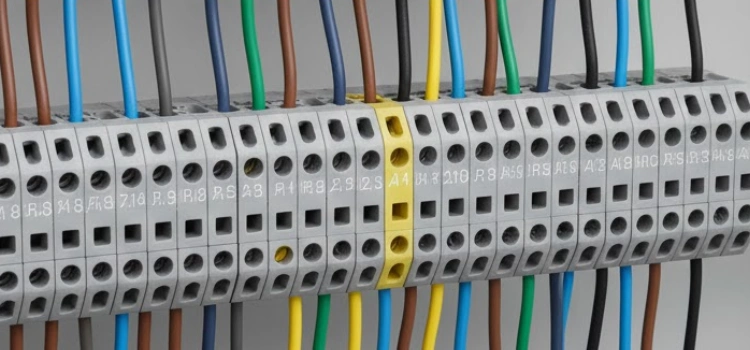
din rail terminal blocks 10mm
10mm DIN rail terminal blocks accommodate larger conductor sizes, providing strong clamping force and efficient current transmission in industrial control and power distribution panels.
By Terminal Type / Function
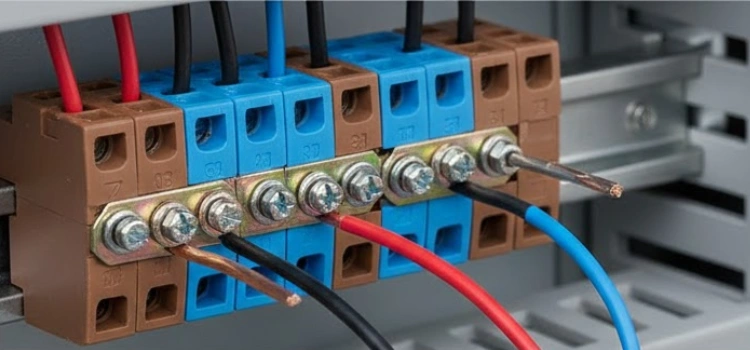
screw terminal blocks
Screw terminal blocks use mechanical screws to clamp wires securely, offering reliable connections, easy installation, and strong vibration resistance in industrial electrical applications.
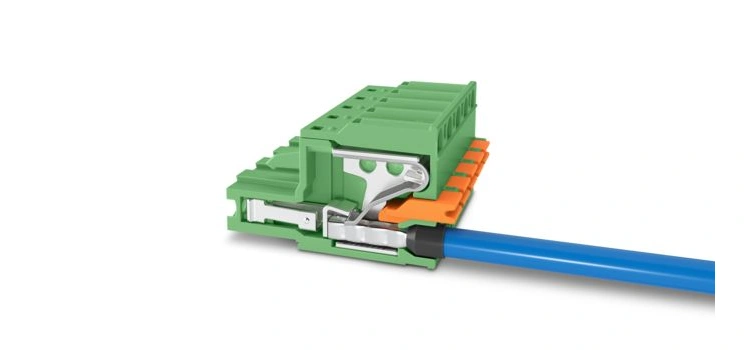
push in terminal blocks
Push in terminal blocks allow tool-free wire insertion, enabling fast installation, compact design, and consistent clamping force for efficient industrial and automation wiring systems.
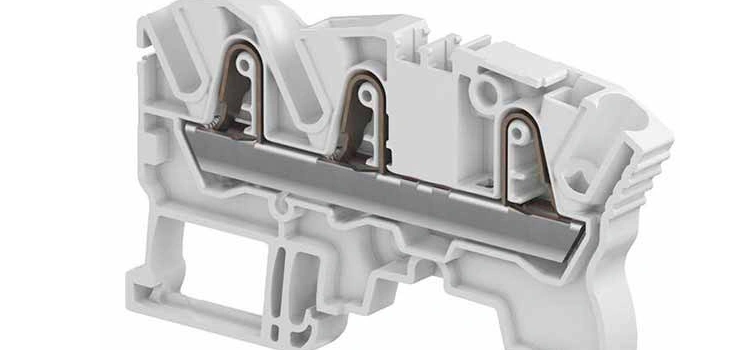
spring clamp terminal blocks
Spring clamp terminal blocks use tension springs to maintain constant pressure on conductors, ensuring vibration-resistant, maintenance-free connections in dynamic industrial environments.
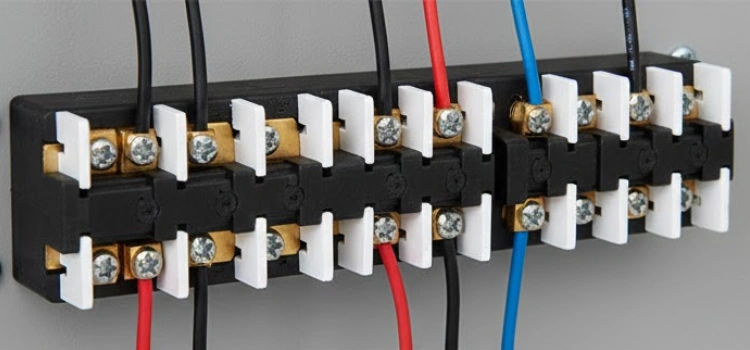
barrier terminal blocks
Barrier terminal blocks feature insulated partitions between terminals, preventing short circuits and enhancing safety in high-voltage, high-current, and panel-mounted applications.
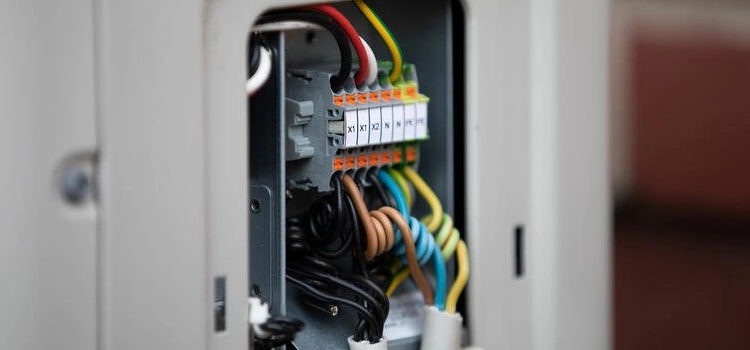
miniature terminal blocks
Miniature terminal blocks provide compact wiring solutions for space-limited equipment, delivering reliable electrical connections in small control devices and electronic assemblies.
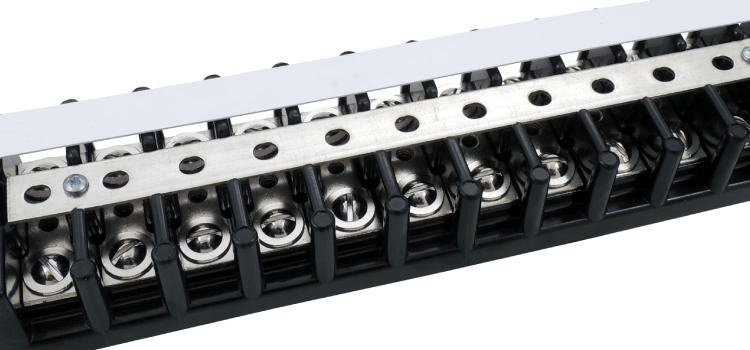
double row terminal blocks
Double row terminal blocks offer two levels of connection points, maximizing wiring density while maintaining organized, secure connections within control panels and distribution systems.
how do terminal blocks work
Terminal blocks work by providing a secure and insulated connection point for electrical wires. Inside the terminal block, a conductive metal component—usually copper or brass—creates the electrical path between connected wires. The wires are inserted into designated openings and fixed in place using a screw clamp, spring clamp, or push-in mechanism. Once tightened or locked, the clamping system applies consistent pressure to ensure stable electrical conductivity and prevent loosening due to vibration.
The outer housing is typically made of flame-retardant insulating material to protect users from electric shock and to prevent short circuits between adjacent terminals. Terminal blocks are often mounted on DIN rails or panels, allowing multiple circuits to be organized neatly in control cabinets. This modular design simplifies wiring, troubleshooting, and future expansion. By centralizing connections, terminal blocks improve safety, efficiency, and maintenance convenience in industrial and commercial electrical systems.
how to use terminal blocks wiring
To use terminal blocks for wiring, first select the correct type based on current rating, voltage, and wire size. Ensure the power supply is turned off before starting installation. Strip the insulation from the wire ends according to the recommended length, taking care not to damage the conductor. Insert the stripped wire into the appropriate terminal opening.
For screw-type terminal blocks, tighten the screw to the manufacturer’s specified torque to ensure a secure connection. For spring clamp or push-in types, press the release mechanism if necessary and insert the wire fully. After securing the wires, gently pull them to confirm proper clamping. Mount the terminal block onto a DIN rail or panel if required, and organize multiple blocks logically for clear circuit identification.
Finally, label each connection for easy maintenance. Proper installation ensures reliable electrical contact, reduces risk of loose wiring, and supports safe long-term system operation
LDB Series – 7 Models for Every Application
From basic feed‑through to high‑current busbar connection, our terminal blocks cover control cabinets, renewables, and automation.
LDB80
8 mm²
LDB125
jumper ready
LDB160
U‑type jumper
LDB200
200 A
LDB250
cable lug
LDB400
for copper nose
LDB500
copper busbar
- Expandable: LDB125 & LDB160 accept U‑type jumpers (sold separately) for daisy‑chaining.
- High current: LDB250/400 designed for cable lugs / copper noses, up to 400 A.
- Busbar integration: LDB500 directly mounts on copper busbar – ideal for main distribution.
- All models share modular snap‑together design for secure rail mounting.
Where Linkwell Terminal Blocks Excel
Trusted in wind, solar, EV charging, and industrial automation – thanks to rugged construction and global certs.
Wind power
Terminal blocks in wind power systems ensure secure connections between generators, control cabinets, and monitoring devices, providing vibration resistance, long-term reliability, and simplified maintenance in harsh outdoor environments.
Photovoltaic
In photovoltaic systems, terminal blocks connect solar panels, inverters, and distribution units, offering stable current transmission, high temperature resistance, and safe operation under continuous DC power conditions.
Charging piles
For EV charging piles, terminal blocks manage power distribution and internal wiring, ensuring high current capacity, electrical safety, and durable performance under frequent use and outdoor installation requirements.
Automation robots
Automation robots rely on terminal blocks for organized wiring between sensors, controllers, and actuators, enabling compact layouts, easy troubleshooting, and stable signal transmission in dynamic industrial environments.
Transportation
In transportation systems such as rail and infrastructure, terminal blocks provide reliable electrical connections for signaling, control equipment, and power circuits, ensuring safety, durability, and resistance to vibration.
Control panels
Control panels use terminal blocks to centralize and organize wiring, simplifying installation, improving maintenance efficiency, and ensuring secure connections between circuit breakers, relays, and field devices.
Materials & Safety
V-0 flame retardant
Housing meets UL94 V-0: extinguishes within 10 seconds – highest safety for industrial control.
Tin‑plated copper alloy
Internal conductor: high‑purity brass with hot tin dip. Excellent conductivity & corrosion resistance.
Positive clamping
Reinforced screw connections with anti‑vibration design. Reliable even under continuous operation.
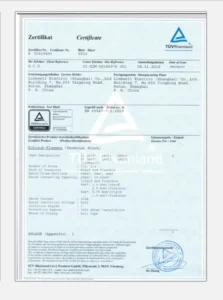
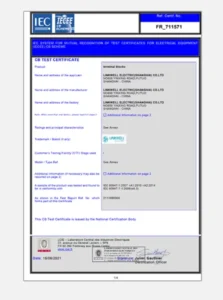
Certificate
Our Terminal Blocks meet CE, UL, and ISO standards for global compliance.









FAQ of Terminal Blocks
What are terminal blocks used for?
Terminal blocks are used to securely connect and organize electrical wires in industrial and commercial systems. They simplify wiring, improve safety, and allow easy maintenance. Common applications include control panels, power distribution systems, machinery, HVAC equipment, and automation systems requiring reliable electrical connections.
Jumpers for Terminal Blocks
Jumpers for terminal blocks are conductive links used to electrically connect adjacent terminals, allowing shared power or signal distribution across multiple circuits. They simplify wiring by eliminating the need for external wire bridges. Jumpers improve installation efficiency, maintain organized layouts, and ensure consistent electrical connections within control panels.
What are the main types of terminal blocks?
The main types include screw terminal blocks, spring clamp terminal blocks, push-in terminal blocks, barrier terminal blocks, and DIN rail mounted terminal blocks. Each type is designed for specific applications, current ratings, installation methods, and environmental requirements in industrial or commercial systems.
How do I choose the right terminal block?
Choosing the right terminal block depends on current rating, voltage, wire size, mounting method, and environmental conditions. Consider whether you need DIN rail mounting, PCB mounting, or panel mounting. Also evaluate vibration resistance, temperature range, and compliance with industry standards.
Are terminal blocks safe for industrial applications?
Yes, terminal blocks are safe when properly selected and installed according to electrical standards. High-quality terminal blocks provide strong insulation, secure clamping force, and reliable conductivity. Correct torque, appropriate wire sizing, and regular inspection further ensure long-term operational safety.
Can terminal blocks handle high current applications?
Certain terminal blocks are specifically designed for high current applications. Power terminal blocks and heavy-duty DIN rail terminal blocks can handle large conductors and higher amperage ratings. Always verify manufacturer specifications to ensure the block meets your system’s electrical requirements.