Can a 100W heater for the enclosure really stop condensation? You want your electrical cabinets to stay dry and safe. The answer depends on several things—like the size of your enclosure, the local climate, and how well you install your heater. Here’s what usually causes condensation in industrial enclosures:
- Temperature changes between inside and outside
- High humidity in the environment
- Sudden temperature shifts
- Opening and closing the enclosure often
- Poor ventilation
- Installation mistakes
Linkwell specializes in reliable Enclosure Heaters for all kinds of industrial needs. Think about what your setup looks like and what you really need before you pick your heater.
Key Takeaways
- A 100W heater can prevent condensation by keeping the enclosure’s temperature above the dew point, stopping moisture from forming.
- Choose the right heater size based on your enclosure’s dimensions and insulation. A 100W heater works best for medium-sized cabinets.
- Use a thermostat or hygrostat to control temperature and humidity. This helps maintain a dry environment and protects your equipment.
- Regularly check for signs of moisture inside your enclosure. If you see condensation, reassess your heater’s placement or wattage.
- Linkwell offers expert support for selecting and installing the right heater. Don’t hesitate to ask for help to ensure your setup is effective.
How a 100W heater for the enclosure prevents condensation
Temperature Control and Dew Point
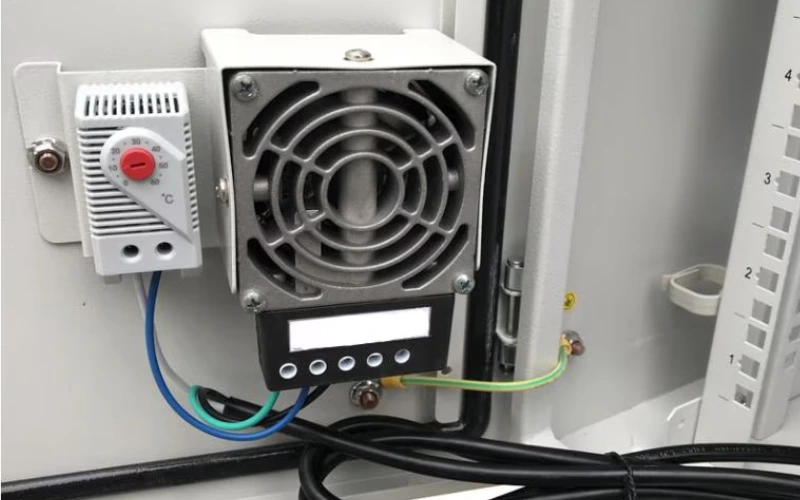
You want your electrical enclosure to stay dry, right? That’s where a 100W heater for the enclosure comes in. This heater works by keeping the inside temperature just a bit higher than the dew point. When the temperature inside the enclosure stays above the dew point, water vapor in the air can’t turn into droplets. That means no condensation forms on your sensitive equipment.
Here’s a quick look at how the process works:
| Function | Description |
|---|---|
| Heat Generation | The heater generates heat to maintain a temperature above the dew point. |
| Temperature Regulation | It keeps the internal temperature several degrees higher than the outside air. |
| Moisture Prevention | By stopping the temperature from dropping below the dew point, it blocks moisture buildup. |
You don’t have to worry about guessing the right temperature. Linkwell Enclosure Heaters come with precise thermostats. These thermostats turn the heater on and off as needed, so you get steady protection without wasting energy.
Moisture Risks in Control Cabinets
Condensation is more than just a little water. It can cause big problems in your control cabinets. Moisture can lead to rust, corrosion, and even short circuits. That’s why you need a reliable solution.
A 100W heater for the enclosure helps you avoid these risks by keeping humidity under control. Take a look at what the heater does for you:
| Function | Description |
|---|---|
| Humidity Regulation | The heater keeps relative humidity low to stop condensation. |
| Temperature Control | It makes sure the temperature never drops below the dew point. |
| Damage Prevention | It protects your equipment from corrosion and electrical shorts. |
You also want to know your heater is safe and built for tough jobs. Linkwell Enclosure Heaters hold top certifications for industrial use:
| Certification | Description |
|---|---|
| UL | Ensures safety and compliance |
| CE | Shows conformity with EU standards |
| RoHS | Restricts hazardous substances |
With these features, you can trust your enclosure stays dry and your equipment stays safe.
Heater effectiveness factors
Enclosure Size and Material
You need to match your heater to your enclosure. A small box heats up fast, but a large cabinet needs more power. Metal enclosures lose heat quicker than plastic ones. If you use a 100W heater for the enclosure, it works best in medium-sized cabinets made of metal or plastic. Always check the size and material before you choose your heater.
Ambient Conditions and Humidity
Your environment matters a lot. If you place your enclosure in a damp or cold area, condensation becomes a bigger problem. Condensation forms when the temperature drops below the dew point. This usually happens when humidity is around 65% or higher, especially if the enclosure surface is colder than the air. You should always think about where you install your cabinet and how much moisture is in the air.
Tip: If your enclosure sits outdoors or in a factory with lots of temperature swings, you need to pay extra attention to humidity and temperature changes.
Insulation and Airflow
Good insulation keeps the heat inside your enclosure. If you have high-quality insulation, your heater does not need to work as hard. This helps your 100W heater for the enclosure keep a steady temperature and protect your electronics from moisture and frost. Make sure you seal any gaps and check for drafts. Airflow also matters. If air moves well inside the cabinet, heat spreads evenly and keeps all your components safe.
Comparing Linkwell Enclosure Heater types
Linkwell offers a wide range of enclosure heaters. You can pick from 10W for small boxes up to 500W for large cabinets. If you need something special, Linkwell can customize the heater for your project. Here’s a quick look:
| Power Range | Best For | Features |
|---|---|---|
| 10W–50W | Small enclosures | Compact, energy-saving |
| 100W–250W | Medium enclosures | Balanced power, easy to install |
| 400W–500W | Large or outdoor units | High output, robust design |
You get options for mounting, thermostats, and even smart controls. Linkwell helps you find the right fit for your needs.
Is 100W enough for your enclosure?
Sizing Calculation and Rule of Thumb
You want to know if a 100W heater for the enclosure will do the job. The answer depends on your cabinet’s size, how much you want to raise the temperature, and how well your enclosure holds heat. You can use a simple formula to estimate the wattage you need:
Wattage (W) ≈ Cabinet Volume (m³) × Temperature Rise (°C) × Insulation Factor
- Cabinet Volume: Measure the inside length, width, and height in meters. Multiply them together.
- Temperature Rise (ΔT): Figure out how many degrees warmer you want the inside compared to the coldest outside temperature.
- Insulation Factor: Use 10 for well-insulated cabinets, 15 for average, and 20 for poor insulation.
Here’s a quick reference table to help you see how much wattage you might need based on temperature rise and insulation:
| Temperature Rise (°F) | Insulated Wattage (W) | Uninsulated Wattage (W) |
|---|---|---|
| 20°F | 10 | 30 |
| 40°F | 15 | 55 |
| 60°F | 20 | 90 |
| 80°F | 30 | 110 |
| 100°F | 35 | 135 |
| 120°F | 40 | 165 |
| 140°F | 45 | 190 |
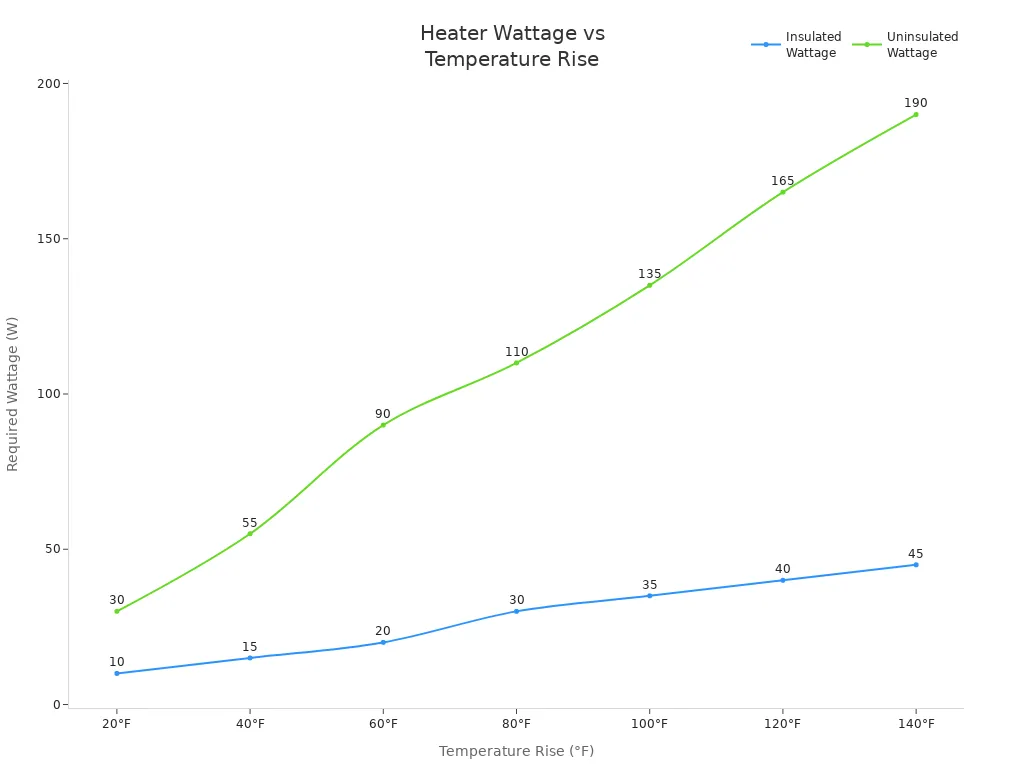
Tip: If you’re not sure, Linkwell’s team can help you with wattage calculations and guide you through the process.
Example Scenarios: Small, Medium, Large Cabinets
Let’s look at some real-world examples. This will help you see where a 100W heater for the enclosure fits best.
- Small Cabinet (up to 0.2 m³):
- Example: 600mm x 400mm x 800mm
- Typical Need: 20–50W heater
- A 100W heater is more than enough. You can use a thermostat to save energy.
- Medium Cabinet (0.3–0.6 m³):
- Example: 800mm x 600mm x 800mm
- Typical Need: 80–150W heater
- A 100W heater works well for most medium cabinets, especially if you have some insulation.
- Large Cabinet (over 0.7 m³):
- Example: 2000mm x 800mm x 600mm
- Typical Need: 200W or more
- You may need a higher wattage heater or even multiple heaters.
Here’s a quick look at a typical 100W heater:
| Feature | Value |
|---|---|
| Heater Model | IP-H100 |
| Heating Capacity | 100W |
| Dimensions (HxWxD) | 140x59x61 mm |
If your enclosure is exposed to outdoor weather, has poor insulation, or holds a lot of sensitive electronics, you might need to size up.
When to Choose Higher Wattage (400W, 800W)
Sometimes, you need more power. Here’s when you should consider a higher wattage heater:
- Your enclosure is very large or has multiple compartments.
- The cabinet sits outdoors in freezing weather.
- You need a big temperature rise (over 40°F/20°C).
- The enclosure has poor insulation or lots of air leaks.
- You store critical or high-value electronics that can’t risk any moisture.
If you’re unsure, don’t guess. Linkwell offers tailored solutions for every project. You get:
- Custom wattage calculations for your exact enclosure
- Advice on insulation and placement
- Installation guidance from start to finish
Choosing the right heater means you protect your equipment, avoid costly repairs, and keep your system running smoothly. Linkwell’s experts are ready to help you pick the perfect fit for your needs.
Installation tips for Linkwell Enclosure Heater
Placement and Mounting Options
Getting the placement right makes a big difference for your enclosure’s protection. You want your 100W heater for the enclosure to spread heat evenly and keep condensation away. Here are some best practices:
- Mount the heater in the lower third of your enclosure. Warm air rises, so this helps heat reach every corner.
- Place the thermostat in the upper third. This setup gives you balanced temperature control.
- Choose between convection heaters for smaller spaces or fan-assisted heaters for larger cabinets.
- Use a hygrotherm to monitor humidity. Set it to activate the heater when humidity goes above 65%. This keeps moisture from building up.
- Always calculate the wattage you need before installation. Pick the right heater size for your enclosure.
Avoid common mistakes like mounting the heater too high or blocking airflow. Make sure nothing covers the heater element. This keeps heat moving and prevents cold spots.
Thermostat and Hygrostat Integration
Adding a thermostat or hygrostat boosts your heater’s performance and safety. You get precise control over temperature and humidity. Take a look at how humidity affects your enclosure:
| Relative Humidity | Effect on Moisture and Corrosion |
|---|---|
| Below 60% | Moisture and corrosion remain low |
| Above 65% | Significant increase in moisture and corrosion problems |
A thermostat keeps the temperature steady. A hygrostat turns the heater on when humidity rises. This combo helps you avoid condensation and protects your electronics.
Maintenance and Safety
You want your heater to last and work safely. Linkwell Enclosure Heaters come with an IP65 rating. This means they are dust-tight and resist water jets. You can use them in tough industrial environments without worry. No dust gets inside, and rain or cleaning won’t hurt the heater.
For easy maintenance, check the heater regularly. Clean off any dust or buildup. Make sure the thermostat and hygrostat work properly. Always follow the installation guide. If you need help, Linkwell’s support team is ready to assist you.
Tip: Proper installation and regular checks keep your enclosure dry and your equipment safe.
Signs your 100W heater for the enclosure is working
Checking for Condensation
You want to make sure your heater is doing its job. The easiest way is to check for any signs of moisture inside your enclosure. Open the door and look for water droplets on the walls, wiring, or equipment. If everything feels dry and there’s no fog on the surfaces, your heater is likely working well.
You can also use a thermostat and a humidistat to keep an eye on the temperature and humidity. These tools help you know if the inside stays above the dew point, which stops condensation from forming. Here’s a quick table to show you some reliable ways to check if your heater is preventing condensation:
| Method | Description |
|---|---|
| Thermostats and Humidistats | Use these to control and monitor temperature and humidity, making sure conditions stay safe. |
| Temperature Maintenance | Keep the inside temperature above the dew point to avoid water droplets. |
| Forced Ventilation | Be careful with fans, as they can bring in cold, damp air and cause condensation. |
Tip: If you see no moisture and your temperature and humidity readings look good, your 100W heater for the enclosure is doing its job.
Troubleshooting Persistent Moisture
Sometimes, you might still spot moisture even with a heater running. Don’t worry—there are steps you can take to fix this. Start by checking if your heater stays on when it should. Make sure your thermostat is set right and working. If you use a non-adjustable thermostat, it helps keep the heater running unless the temperature gets too high.
Here’s a table with some steps to help you troubleshoot:
| Step | Recommendation |
|---|---|
| 1 | Keep the heater powered on to maintain the right temperature. |
| 2 | Use non-adjustable thermostats for steady heating. |
| 3 | Watch how temperature and humidity change together. |
| 4 | Know that quick weather changes outside can sometimes cause condensation. |
If you still have trouble, Linkwell has your back. You can reach out for help with layout optimization, installation tips, thermal simulation, and more. Their team offers remote setup advice and quick service, so you never have to face moisture problems alone.
Note: Regular checks and a little help from Linkwell’s support team keep your enclosure dry and your equipment safe.
Conclusion
You’ve learned a lot about using a 100W heater for your enclosure. Now, let’s wrap things up and help you make the right choice.
A 100W heater can stop condensation in your enclosure—if you pick the right size and install it well. You need to think about your cabinet’s size, the material, and where you put it. If you have a medium-sized enclosure in a normal environment, a 100W heater usually does the trick. For bigger cabinets or harsh weather, you might need more power.
Tip: Always check for moisture after you install your heater. If you see any, you may need to adjust your setup or go for a higher wattage.
Here’s a quick checklist to help you decide:
- Measure your enclosure’s size.
- Check the insulation and airflow.
- Think about the local temperature and humidity.
- Choose the right heater wattage.
- Use a thermostat or hygrostat for better control.
- Ask for expert advice if you’re not sure.
You want your equipment to last. Condensation can ruin electronics, cause rust, and lead to expensive repairs. With the right heater, you protect your investment and keep your system running smoothly.
Linkwell makes it easy for you. You get:
| Benefit | What You Get |
|---|---|
| Quality | CE, UL, and RoHS certified heaters |
| Customization | Power ratings from 10W to 500W |
| Support | 24/7 expert help and installation guidance |
| Durability | IP65-rated, tough aluminum housing |
If you want peace of mind, choose a Linkwell Enclosure Heater. You get reliable protection, energy savings, and support every step of the way.
Ready to stop condensation for good? Visit Linkwell’s Enclosure Heater page or reach out for a custom solution. Your equipment deserves the best!
You can stop condensation in your enclosure with a 100W heater when you match it to your cabinet and install it right. These heaters work in hazardous areas, control temperature swings, and protect against frost. Linkwell offers custom solutions that fit your unique needs and keep your electronics safe.
| Benefit | Description |
|---|---|
| Maintains stable internal temperature | Keeps your equipment running smoothly. |
| Prevents condensation and moisture | Cuts down on corrosion and damage. |
| Maximizes uptime and reliability | Helps your system last longer. |
Take time to assess your requirements. Choose quality, customization, and ongoing support for the best results.
FAQ
How do I know if my enclosure needs a heater?
If you see moisture, rust, or fog inside your cabinet, you probably need a heater. You should also consider one if your enclosure sits in a cold or humid place.
Can I leave my enclosure heater on all the time?
You can, but using a thermostat or hygrostat saves energy. These devices turn the heater on only when needed. This keeps your equipment safe and your power bill low.
What’s the difference between a fan heater and a convection heater?
A fan heater moves warm air quickly. It works best in large or unevenly loaded enclosures. A convection heater heats the air slowly and suits smaller cabinets.
Are Linkwell Enclosure Heaters safe for outdoor use?
Yes! Linkwell Enclosure Heaters have an IP65 rating. They resist dust and water. You can use them outdoors or in washdown areas without worry.
Who can help me choose the right heater size?
You don’t have to guess. Linkwell’s support team offers 24/7 advice. Just share your enclosure details, and they’ll recommend the perfect heater for your needs.