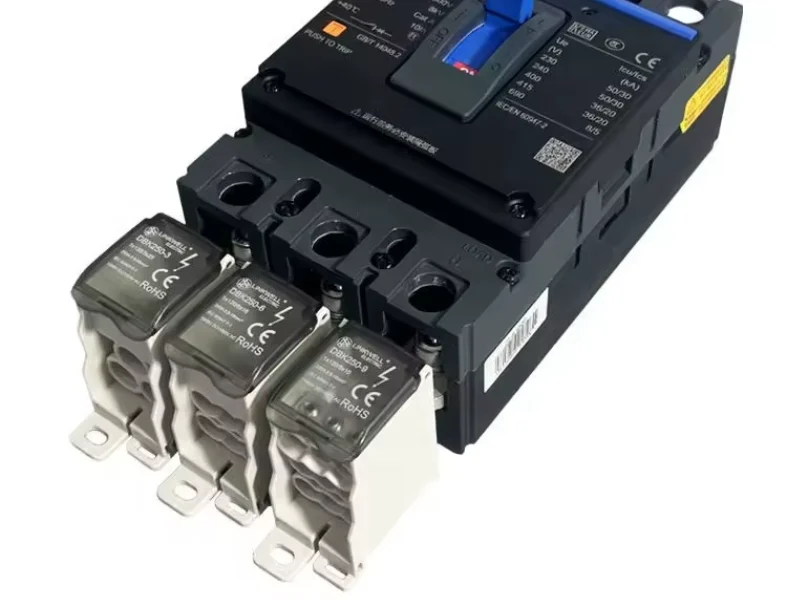
When you work with mccb terminals, you deal with choices that affect safety every step of the way. Each mccb terminal type supports electrical connections in a unique way, whether you need a line-sequence color marker block or a rail-mounted installation with firm fastening and no tripping. Safety matters most, so you want terminals with a flame-retardant nylon shell, tin-plated copper alloy conductor, and a grey semi-transparent PC flip-cover. The insulation and withstand voltage rating keep your electrical system safe and stable. Linkwell’s DBK series distribution terminals offer strong distribution selectivity and compatibility with most mccb models. All materials meet safety standards and support reliable electrical performance. If you want to learn more, check out MCCB Terminals: A Deep Dive into Types.
Key Takeaways
- MCCB terminals connect wires to circuit breakers, providing essential protection against overloads and short circuits.
- Choose the right terminal type based on your electrical needs: screw terminals for reliability, plug-in for speed, and bolt-on for heavy-duty applications.
- Linkwell’s DBK series terminals offer safety features like a flame-retardant shell and high conductivity, ensuring reliable performance.
- Consider environmental factors when selecting terminals; indoor setups may need different specifications than outdoor ones.
- Always check for certifications like CE and RoHS to ensure the quality and safety of your MCCB terminals.
MCCB Terminals: A Deep Dive into Types
What Are MCCB Terminals?
You use MCCB terminals to connect wires to a molded case circuit breaker. These terminals help you manage electrical connections safely and efficiently. MCCB terminals play a big role in protecting your electrical system. They keep circuits safe from overloads, short circuits, and ground faults. You can switch circuits on and off with MCCB terminals, making maintenance easier. The terminals also help you isolate parts of your system for repairs.
MCCB terminals: a deep dive into types shows you how these components keep your electrical system running smoothly.
Here’s a quick look at what MCCB terminals do:
- Protection against overload
- Electric fault protection
- Switching the circuits on and off
| Protection Type | How MCCB Addresses It | Benefit to System |
|---|---|---|
| Overload Protection | Thermal trip unit senses prolonged overcurrents | Prevents insulation damage and overheating |
| Short Circuit Protection | Magnetic trip unit responds instantly to high currents | Limits arc flash energy and fault damage |
| Ground Fault Protection | Sensors detect current leakage to ground | Prevents shock hazards and equipment damage |
| Isolation Capability | Visible contact position and positive break indication | Ensures safe maintenance and servicing |
| Selective Coordination | Adjustable trip settings | Limits outages to affected circuits only |
Main Types of MCCB Terminals
Recommended products
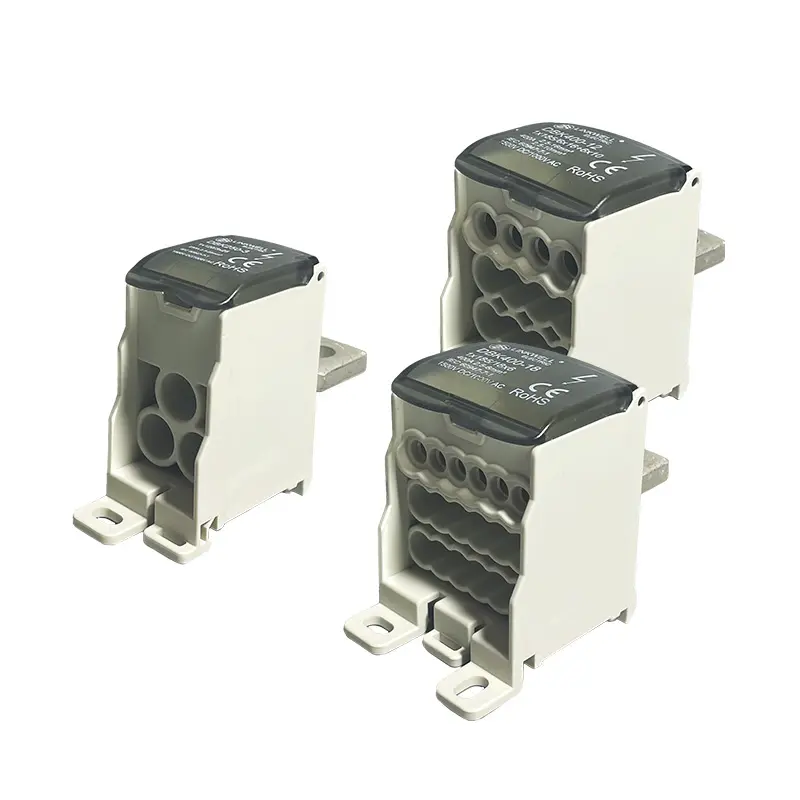
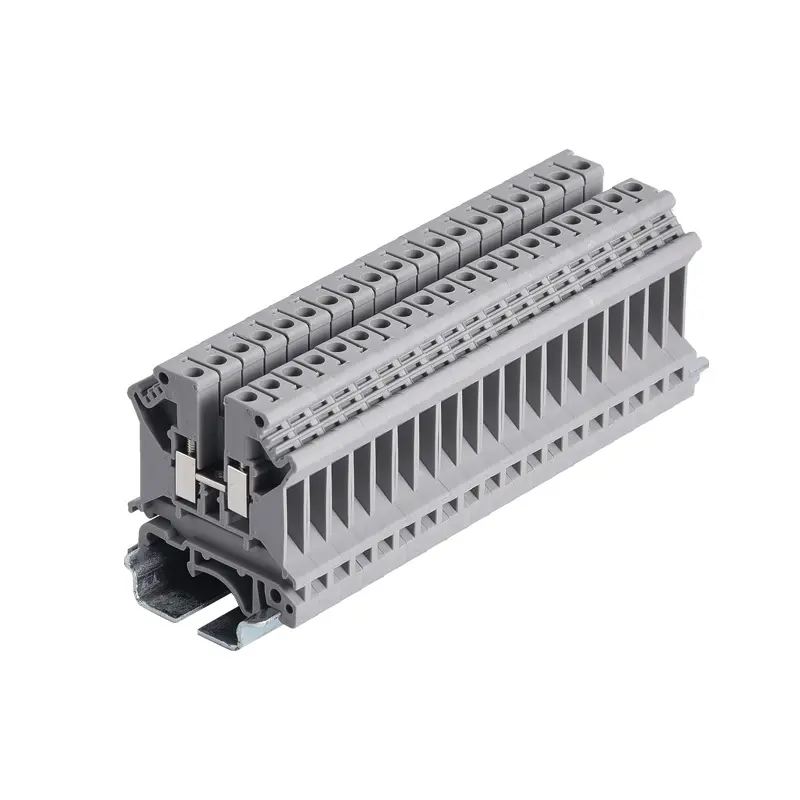
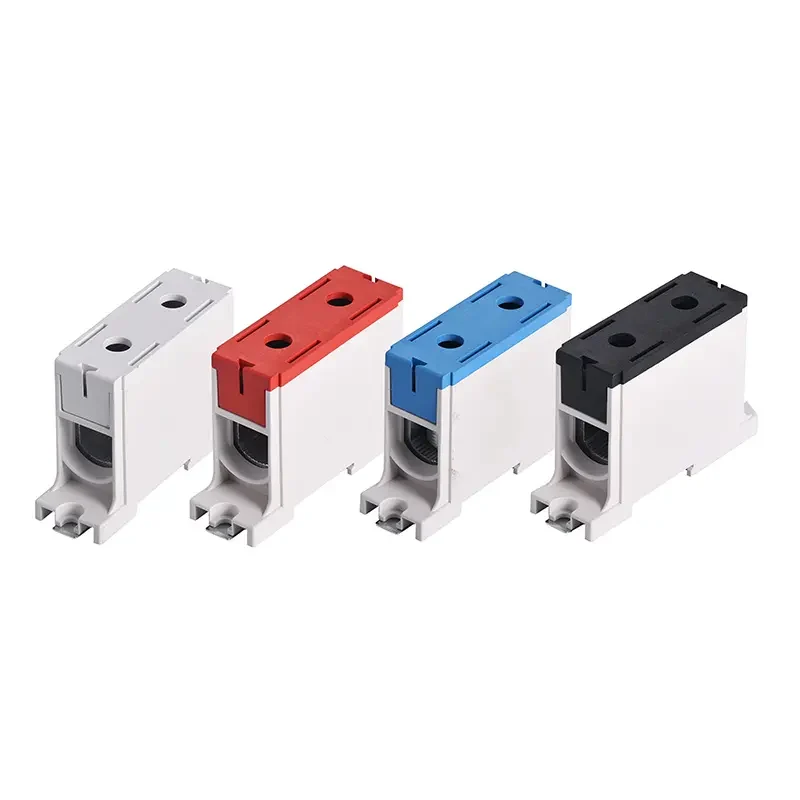
When you explore MCCB terminals: a deep dive into types, you’ll find several options. Each type fits a different need in your electrical setup.
- Screw Terminals
You tighten a screw to hold the wire in place. These terminals work well for solid and stranded wires. You see them in control cabinets and industrial panels. - Plug-in Terminals
You push the wire into a slot. Plug-in terminals make installation quick. You often use them for temporary setups. - Bolt-on Terminals
You secure the wire with a bolt. These terminals handle higher currents. You find them in heavy-duty electrical systems. - Spring Clamp Terminals
You insert the wire, and a spring holds it tight. Spring clamp terminals save time and reduce wiring errors. - Terminal Block Connectors
You use these for organized wiring. Terminal block connectors offer modular designs and color-coded markers. Linkwell’s DBK series includes line-sequence color marker blocks, a grey semi-transparent PC flip-cover, and a tin-plated conductor of copper alloy. The environment-friendly and flame-retardant nylon shell keeps your system safe. The rail-mounted installation gives you firm fastening with no tripping.
Key Differences Among Terminal Types
MCCB terminals: a deep dive into types reveals that material and design matter. You want terminals that last and keep your electrical system safe.
| Terminal Type | Voltage Rating | Current Rating | Wire Gauge Range |
|---|---|---|---|
| Screw Terminals | 150V | 6A | 30 to 18 AWG |
| Plug-in Terminals | Varies | Varies | Varies |
| Bolt-on Terminals | High | High | Large wires |
| Spring Clamp | Varies | Varies | Varies |
| Terminal Block | High | High | Wide range |
Material differences also affect performance:
| Feature | Tinned Copper Terminals | Bare Copper Terminals |
|---|---|---|
| Coating | Tin coating prevents corrosion | No coating, prone to oxidation |
| Appearance | Silver color with yellow copper core | Yellow copper |
| Corrosion Resistance | High, due to tin layer | Low, susceptible to corrosion |
| Stability in Air | Stable due to tin | Unstable, oxidizes quickly |
Linkwell’s DBK series distribution terminals offer various specifications. They work with most molded case circuit breaker models, including type b mccb and type d mccb. The tin-plated copper alloy conductor gives you good conductivity and high current-carrying capacity. The flame-retardant nylon shell and grey semi-transparent PC flip-cover add safety. The rail-mounted installation lets you fasten terminals firmly without tripping. You can choose from five line-sequence color marker blocks to prevent wiring errors. All materials meet CE, Rohs2.0, and REACH certification standards.
If you want to know more about mccb vs mcb, you’ll see that MCCB terminals: a deep dive into types helps you pick the right solution for your electrical needs.
Types of MCCB Terminals and Their Applications
You have many choices when it comes to mccb terminals. Each type brings its own strengths to your electrical setup. Let’s break down how these terminals work and where you might use them.
Screw Terminals by Linkwell
Screw terminals are a classic choice for mccb connections. You secure wires by tightening a screw, which gives you a strong and reliable grip. These terminals work well in control cabinets, telecom signal boxes, and industrial panels. You can use them with both solid and stranded wires.
Linkwell screw terminals stand out because they combine safety, durability, and ease of use. You get a flame-retardant nylon shell that resists corrosion and heat. The tin-plated copper alloy conductor offers high conductivity and long-lasting performance. You can reuse these terminals for over 10,000 connect/disconnect cycles, which makes them perfect for setups that need frequent changes.
Tip: Linkwell screw terminals are certified to meet UL508A and IEC61439 standards. You can trust them for safety and quality in any electrical project.
Key Features of Linkwell Screw Terminals:
- Flame-retardant, corrosion-resistant housing
- Tin-plated copper alloy conductor for high conductivity
- Modular design for easy installation and expansion
- Compatible with solid and stranded wires
- UL, CE, and RoHS certifications
You often see screw terminals in electrical panels for HVAC systems, industrial automation, and telecom enclosures. You can loosen and retighten them, which makes maintenance simple. If you need bulk orders or custom layouts, Linkwell supports flexible solutions and fast delivery.
Terminal Block Connectors by Linkwell
Terminal block connectors help you organize wiring in mccb setups. You use them to join multiple wires inside control cabinets, switchgear, and telecom signal enclosures. These connectors make wiring changes and maintenance much easier.
Linkwell terminal block connectors offer more than just basic function. You get a product from a company with years of experience in the electrical industry. Linkwell provides sustainable quality and competitive pricing. You also receive full support before and after your purchase, plus options for customized products.
The DBK series from Linkwell brings advanced features to your electrical system:
- Line-sequence color marker blocks for easy wire identification
- Grey semi-transparent PC flip-cover for quick inspection
- Tin-plated conductor of copper alloy for high conductivity and corrosion resistance
- Environment-friendly and flame-retardant nylon shell for safety
- Rail-mounted installation with firm fastening and no tripping
- Compatibility with most molded-case circuit breakers
- Wide distribution range and strong selectivity
- Five kinds of line-sequence identification color marker blocks to prevent phase-sequence errors
- High-strength nylon shell and convenient rail-mounted installation
- Insulation and withstand voltage grade: Ui AC1000V DC1500V
- Grey transparent PC upper cover for easy observation
- Certifications: CE, Rohs2.0, REACH
You can use Linkwell terminal block connectors in power panels, large control cabinets, and renewable energy systems. The modular design lets you expand or customize your setup. You get reliable performance even in harsh environments.
Plug-in and Bolt-on Terminals
Plug-in and bolt-on terminals give you different options for mccb installation and maintenance. Plug-in terminals let you push wires into slots, which saves time and effort. Bolt-on terminals use bolts to secure wires, making them ideal for heavy-duty electrical systems.
Here’s a quick comparison:
| Type | Advantages | Disadvantages |
|---|---|---|
| Bolt-on MCCB | – Provides a strong and steady connection. | – Requires more time and tools for installation and maintenance. |
| – Suitable for heavy-duty applications. | – Needs careful work to ensure a tight fit. | |
| – Lowers the chance of loose parts and danger. | – More complex and costly than plug-in types. | |
| – Passes strict safety rules like UL and CSA. | – May require power to be turned off for repairs. | |
| Plug-in MCCB | – Allows for quick, tool-free installation. | – May not perform well in high-vibration environments. |
| – Easier maintenance and upgrades. | – Spring-clip can get loose over time, causing potential issues. | |
| – Designed to prevent mistakes and save time. | ||
| – Molded barriers enhance safety from live parts. | ||
| – Quick swaps reduce downtime during repairs. |
Plug-in terminals work best when you need fast installation and easy upgrades. Bolt-on terminals are your go-to for high-current electrical systems, like large industrial machines or power distribution panels.
Spring Clamp and Other Specialized Terminals
Spring clamp terminals use a spring to hold wires tight. You don’t need to tighten screws, which makes installation faster and easier. These terminals are great for mccb setups where you want to save time and avoid wiring mistakes.
Check out some unique safety features:
| Feature | Description |
|---|---|
| Shorter wiring time | Significantly reduces the time required for installation. |
| No screw-tightening skills required | Eliminates the need for specialized skills to secure connections. |
| No risk of loose terminal screws | Ensures a secure connection without the risk of screws loosening over time. |
| No retightening during delivery/inspection | Reduces maintenance efforts and ensures reliability during transport. |
You often use spring clamp terminals in electrical systems that need quick changes or where vibration might loosen screws. These terminals help you keep your mccb connections safe and reliable with less effort.
Other specialized terminals include PCB pluggable connectors and spade connectors. You might use these in custom electrical projects or automation systems. They offer flexibility and can handle different wire sizes and types.
Note: When you choose an mccb terminal, think about your electrical system’s needs. Consider installation speed, maintenance, safety, and compatibility with your equipment.
You have many options for mccb terminals. Screw terminals and terminal block connectors from Linkwell give you certified safety and reliable performance. Plug-in and bolt-on terminals offer different installation styles. Spring clamp terminals save you time and reduce errors. Pick the type that fits your electrical project best.
How to Choose the Right MCCB Terminal
Factors to Consider (Current, Wire, Environment)
When you start choosing the right type of mccb terminal, you need to look at several key considerations when choosing an mccb. First, think about your electrical load profile. You want a terminal that matches your system’s current and voltage needs. Check the interrupting capacity, especially if you need protection against short circuit or protection against overloading. Precision trip settings help you tune the mccb for your application.
| Factor | Description |
|---|---|
| Load Profile | Match terminal to your system’s current and voltage needs |
| Interrupting Capacity | Ensure the mccb can handle fault currents, often above 100 kA |
| Trip Settings | Adjust for accurate protection against overloading and short circuit |
| Environmental Conditions | Use rugged enclosures for harsh environments |
You also need to consider the operating environment. Indoor mccbs work well in factories or data centers, where dust and moisture are controlled. Outdoor mccbs need robust materials to resist weather, UV rays, and temperature swings. Linkwell’s DBK series offers a flame-retardant nylon shell, tin-plated conductor of copper alloy, and a grey semi-transparent PC flip-cover. The rail-mounted installation gives you firm fastening with no tripping. You get five line-sequence color marker blocks to prevent wiring mistakes.
Pros and Cons of Each Type
You have many types of mccb terminals to choose from. Each type has its own strengths and weaknesses.
| Feature | Screw Terminals | Spring Clamp Terminals |
|---|---|---|
| Wiring Time | Takes more time | Much faster wiring |
| Ease of Operation | Depends on your skill | Self-clamping, easy connections |
| Maintenance Needs | Needs regular checking | No re-tightening needed |
| Reliability | Can loosen with vibration | High reliability, less downtime |
Screw terminals from Linkwell give you strong connections and modular design. Spring clamp terminals save you time and reduce errors. Terminal block connectors, like the DBK series, offer high current-carrying capacity, corrosion resistance, and easy wire identification with color marker blocks.
Application Scenarios for Different Types of MCCBs
You see different types of mccbs in many places. Industrial panels need protection against overloading and protection against short circuit. Commercial buildings use mccb terminals for safe electrical distribution. Harsh environments, like offshore wind power, require terminals with high-strength nylon shells and tin-plated copper alloy conductors. The DBK series from Linkwell meets CE, Rohs2.0, and REACH certifications. You get insulation and withstand voltage up to Ui AC1000V DC1500V. The grey transparent PC cover lets you check the terminal’s condition easily.
If you feel unsure about choosing the right type of mccb, Linkwell supports you with custom solutions and expert advice. Their terminals help organize wires, reduce errors, and make maintenance simple. You avoid common mistakes like mismatching conductor size or ignoring cable bending space. Always select conductors based on load, use the right lugs, and perform a pull test after tightening.
Tip: When you choose among types of mccb terminals, always match your selection to your electrical system’s needs and environment. Linkwell’s support and customization options make the process easier.
Conclusion
You’ve learned a lot about mccb terminals and how each type can make a difference in your electrical setup. Picking the right terminal isn’t just about connecting wires. You want safety, reliability, and features that help you avoid mistakes.
If you’re looking for a solution that checks all the boxes, the LINKWELL DBK series stands out. You get a line-sequence color marker block that helps you identify wires and prevent phase-sequence errors. The grey semi-transparent PC flip-cover lets you see inside the terminal without opening it. The tin-plated conductor of copper alloy gives you strong conductivity and resists corrosion. The environment-friendly and flame-retardant nylon shell keeps your system safe. You’ll appreciate the rail-mounted installation with firm fastening and no tripping, making setup quick and secure.
Here’s a quick recap of what makes the DBK series a smart choice for mccb applications:
- Wide range of specifications to fit most molded-case circuit breakers
- Strong distribution selectivity for different wiring needs
- Five kinds of line-sequence identification color marker blocks
- High-strength nylon shell for durability
- Rail-mounted design for easy and stable installation
- Tin-plated copper alloy conductor for high current-carrying capacity
- Grey transparent PC cover for easy inspection
- Insulation and withstand voltage grade: Ui AC1000V DC1500V
- All materials meet CE, Rohs2.0, and REACH certification standards
Tip: When you choose an mccb terminal, always check for certifications and long-term reliability. LINKWELL offers expert advice and custom solutions, so you can feel confident about your decision.
You want your mccb setup to be safe, efficient, and easy to maintain. Take time to review technical documentation and think about your project’s future needs. If you need help, reach out to LINKWELL for support and guidance. Your electrical system deserves the best.
You’ve seen how each MCCB terminal type fits a unique role. Screw terminals work well for solid and stranded wires, while spring clamp terminals save you time. Plug-in and bolt-on terminals suit heavy-duty jobs. Linkwell’s DBK series stands out with line-sequence color marker blocks, a grey semi-transparent PC flip-cover, tin-plated copper alloy conductors, and a flame-retardant nylon shell. The rail-mounted installation keeps everything secure. Always check technical documentation for ratings and inspect connections. If you want expert advice or reliable solutions, Linkwell helps you choose the best MCCB terminal for long-term safety and performance.
FAQ
What makes Linkwell DBK series terminals safe for my MCCB setup?
You get a flame-retardant nylon shell, tin-plated copper alloy conductor, and a grey semi-transparent PC flip-cover. These features help prevent overheating and allow you to inspect connections easily. All materials meet CE, Rohs2.0, and REACH certifications.
How do line-sequence color marker blocks help during installation?
Line-sequence color marker blocks let you identify wire colors and sequence quickly. You avoid phase-sequence errors and make wiring much simpler. Each DBK terminal includes five color markers for clear organization.
Can I use Linkwell DBK terminals with any molded-case circuit breaker?
Yes! The DBK series offers various specifications. You can use them with most MCCB models on the market. Their wide distribution range and strong selectivity make them a flexible choice.
Why should I choose rail-mounted installation for my terminals?
Rail-mounted installation lets you fasten terminals firmly without tripping. You save time during setup and get a secure fit. The high-strength nylon shell and buckle design keep everything stable.
What is the insulation and voltage rating for DBK series terminals?
You get insulation and withstand voltage up to Ui AC1000V DC1500V. This keeps your system safe and stable, even in demanding environments. The grey transparent PC cover lets you check the terminal’s condition anytime.