When you pick radiator fans for your enclosure, understanding how much static pressure for radiator fan applications makes all the difference. If you want safe cooling and reliable performance, you need the right amount of static pressure to push air through dense radiators, filters, or grills. For example, typical cores work best with 7–15 mmH2O, while dense radiators need at least 3.5 mmH2O. Check out this quick guide:
| Component | Recommended Static Pressure Range (in. WC) |
|---|---|
| Filters/grills | 0.1 – 0.2 |
| Optimal TESP | ~0.5 |
Linkwell specializes in high-performance fan solutions for electrical cabinets and radiators. Always check static specs before you decide which fan to use—your system’s safety depends on it.
Key Takeaways
- Static pressure is crucial for radiator fans to push air through dense radiators and filters, ensuring effective cooling.
- Choose the right static pressure based on your radiator type: low-density requires 1.5-3 mmH2O, medium-density needs 7-15 mmH2O, and high-density demands 3.5 mmH2O or more.
- Using a fan with insufficient static pressure can lead to overheating and inefficient cooling, risking equipment failure.
- Always check both static pressure and airflow ratings on fan datasheets to ensure compatibility with your cooling system.
- Linkwell offers a range of fans tailored to different radiator needs, providing reliable cooling and expert support.
Why Static Pressure Matters for Radiator Fans
Airflow Resistance in Radiators and Cabinets
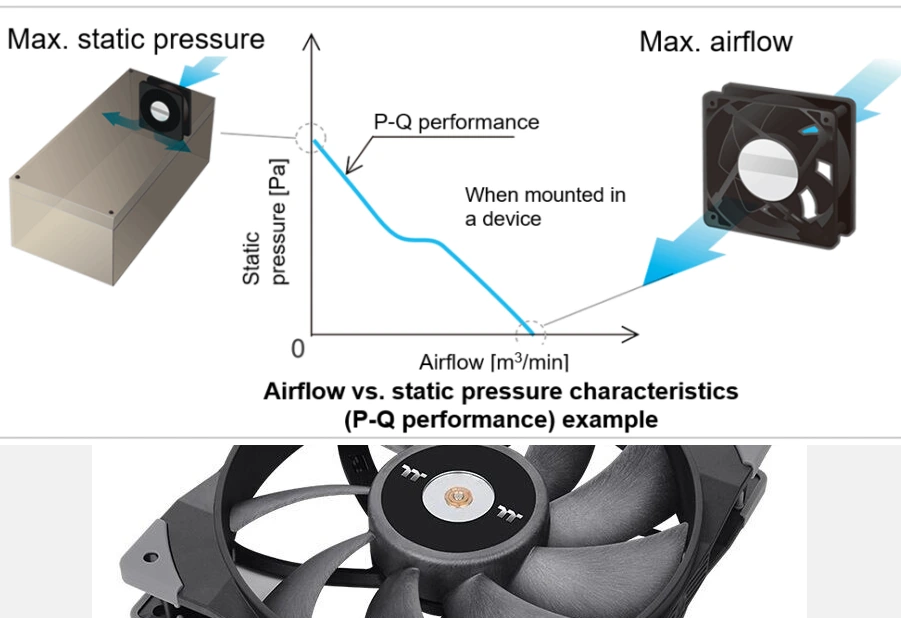
When you look at radiator fans, you might wonder why static pressure is such a big deal. The answer is simple: radiators, filters, and cabinet grills create resistance that blocks air flow. If your fan can’t push air through these obstacles, your cooling system won’t work as it should. Static pressure measures how much force your fan uses to move air through tight spaces. In engineering, static pressure is the potential energy of air at a certain spot in a duct or enclosure. When a fan blows into a closed cabinet or a dense radiator, it needs enough static pressure to overcome the resistance and keep air moving.
- Static pressure helps your fan push air through radiators and filters.
- Airflow drops if the fan doesn’t have enough static pressure.
- Radiator fans with higher static pressure keep cooling performance steady, even when the system gets more restrictive.
The pressure drop in screens and filters shows how much resistance your system faces. If your fan can’t handle this, cooling suffers.
Safe Cooling and System Protection
You want your equipment to stay cool and run safely. If your radiator fans don’t have enough static pressure, airflow drops, and heat builds up. This can cause uneven temperatures and lower efficiency. Over time, your system might overheat or even shut down. Fans with strong static pressure characteristics keep air flow steady, protect your radiator, and make sure your cooling stays reliable.
Linkwell knows how important this is. As a factory with decades of experience, Linkwell designs enclosure cooling fans that deliver tested static pressure and airflow. You get fans that match your radiator needs, keep your cabinets cool, and protect your equipment. When you choose a fan with the right static pressure, you avoid common problems and keep your system running smoothly.
How Much Static Pressure for Radiator Fan Is Needed?
Recommended Values for Different Radiator Types
You might wonder how much static pressure for radiator fan setups you actually need. The answer depends on your radiator’s design. Radiator fin density and thickness play a big role in how much resistance your fan must overcome. If you use a thin radiator with wide fin spacing, you need less pressure. If you use a thick or dense radiator, you need more.
Here’s a quick guide to help you match your radiator to the right static pressure:
- Low-density radiators (thin, wide fin spacing): Aim for 1.5–3 mmH2O. These radiators let air flow through easily, so you don’t need much pressure.
- Medium-density radiators (standard control cabinet cores): Go for 7–15 mmH2O. Most electrical enclosures use these, and they need more force to push air through.
- High-density radiators (thick, tight fin spacing or compact heat exchangers): Choose fans with 3.5 mmH2O or higher. These setups block air flow the most, so you need maximum static pressure.
Tip: If your system has tall RAM heatsinks, fine mesh dust filters, or extra grills, you need higher static pressure. High static pressure fans can run at lower speeds and still move enough air, which keeps things cool and quiet.
When you pick radiator fans, always check the radiator’s thickness and fin density. Thicker and denser radiators create more resistance. You need to match your fan’s static pressure to that resistance for safe cooling.
Matching Linkwell Fan Specs to Radiator Needs
You want a fan that fits your radiator and keeps your system safe. Linkwell offers several options, each with different static pressure characteristics. Here’s how they compare:
| Fan Type | Airflow Performance | Static Pressure Performance |
|---|---|---|
| Computer Chassis Fan | High | Maximum in tight spaces |
| PWM Fan | Adjustable and efficient | High, with precise speed control |
| Cabinet Fan | Balanced | Moderate, for general enclosures |
If you need to know how much static pressure for radiator fan applications is right for you, start with your radiator type. For dense or thick radiators, the Computer Chassis Fan gives you maximum static pressure. For standard enclosures, the PWM Fan lets you adjust speed and pressure for the best balance. For general cabinet cooling, the Cabinet Fan offers reliable airflow and moderate pressure.
You can always check the fan’s datasheet for the exact static pressure rating. Linkwell tests every fan for real-world performance, so you get numbers you can trust. When you match the right fan to your radiator, you protect your equipment and keep your system running smoothly.
Note: Static pressure is not the same as airflow. You need both for safe cooling. High static pressure helps push air through obstacles, while good airflow keeps temperatures down.
If you want help choosing, Linkwell’s engineering team can recommend the best fan for your radiator and enclosure. You get tested performance, reliable specs, and support from a factory that knows cooling inside and out.
Reading and Comparing Static Pressure Specs
Finding Ratings on Linkwell Fan Datasheets
When you look at Linkwell fan datasheets, you’ll see numbers for static pressure and airflow. These specs help you figure out if a fan can handle your radiator’s resistance. You want to check the static pressure rating first. This tells you how much force the fan can use to push air through tight spaces, like radiators or filters. The airflow rating shows how much air flow the fan can move in open areas.
Here’s a quick way to read static pressure specifications:
- Find the static pressure value, usually listed in mmH2O or Pa.
- Look for the airflow rating, shown in CFM (cubic feet per minute).
- Check the pressure vs. flow curve. This graph shows how the fan’s airflow drops as static pressure increases. If your radiator creates a lot of resistance, you need a fan with strong static pressure characteristics.
Tip: Don’t pick a fan based only on high airflow numbers. If your radiator is dense, you need static pressure to keep cooling safe.
You’ll notice that Linkwell fans come with tested static pressure specs. These ratings help you match the right fan to your radiator, so your system stays reliable.
Understanding mmH2O and Pa Units
Static pressure specs use units like mmH2O and Pa. You might wonder what these mean. Here’s a simple table to help you compare:
| Unit | Conversion to Pa |
|---|---|
| 1 mm H2O | 9.8 Pa |
| 1 in H2O | 25.4 mm H2O |
If you see a fan rated at 10 mmH2O, that’s about 98 Pa. This helps you compare different fans and make sure you get enough pressure for your radiator.
Static pressure fans are built to push air through obstacles. Airflow fans work best in open spaces. If you use an airflow fan in a restrictive setup, cooling drops and overheating can happen. Here’s a table to show the difference:
| Feature | Airflow Fans | Static Pressure Fans |
|---|---|---|
| CFM Rating | High, for open environments | Lower, for confined spaces |
| Noise Levels | Quieter at low RPMs | Louder at high RPMs |
| Performance in Restrictive Settings | Drops, risk of overheating | Maintains performance |
When you match the fan’s pressure vs. flow curve to your radiator’s resistance, you get safe cooling and steady air flow. Linkwell’s engineering team tests every fan for real-world static pressure performance, so you can trust the specs.
Note: Always check both static pressure and airflow before you choose a fan. This keeps your radiator cool and your system safe.
Choosing the Right Radiator Fan from Linkwell
Assessing Radiator and System Requirements
Picking the right radiator fans for your setup starts with understanding your system’s needs. You want safe cooling, steady air flow, and reliable pressure. Here’s a simple step-by-step guide to help you choose the best fan for your radiator:
- Figure out how much heat your equipment produces.
- Decide what temperature you want inside your cabinet.
- Calculate the air flow needed to remove that heat and reach your target temperature.
- Check the air flow and pressure specs for different fans.
- Select a fan that meets your air flow needs and can handle the pressure from your radiator and cabinet.
You’ll notice that radiator thickness and fin density play a big part in your decision. If your radiator has wide gaps between the fins, most fans can push air through easily. When the gaps are narrow, you need radiator fans with higher pressure to keep air flow steady. Airflow fans work well at higher speeds, but their cooling drops off at lower RPMs if resistance is high.
When you look at AC, DC, or EC fan options, think about your cabinet’s power supply and control needs. AC fans offer simple operation and durability. DC fans give you more control over speed and noise. EC fans combine efficiency with smart speed regulation, making them great for 24/7 operation.
Balancing Static Pressure, Airflow, and Noise
You want radiator fans that balance pressure, air flow, and noise. High pressure helps push air through dense radiators, but it can make fans louder. More air flow keeps your system cool, but you don’t want excess noise or wasted energy. Fan size and speed also affect performance. Larger fans can move more air at lower speeds, which helps reduce noise.
Reliability matters, especially if your system runs nonstop. Linkwell tests every fan for long-term stability, so you get consistent cooling and safe operation. If you buy in bulk, you can customize your fan to fit your project. Here’s what Linkwell offers:
| Feature | Details |
|---|---|
| Voltage Options | Available from 5V to 48V for various applications. |
| Connector Types | Options include 2-pin, 3-pin, and 4-pin connectors, with OEM-specific terminations. |
| Waterproof Designs | IP67 and IP68 waterproof fans designed for extreme environments. |
| Minimum Order Quantity (MOQ) | Standard MOQ is 500 units, with smaller trial orders accepted for first-time collaborations. |
| OEM/Private Label Support | Customization of fan labels, packaging, and colors is available. |
| Technical Support | Specialists provide installation guidance and optimization tips. |
Tip: If you need help with fan selection or customization, Linkwell’s engineering team can guide you through every step. You get tested performance, reliable specs, and support from a factory that specializes in enclosure cooling fans.
Risks of Incorrect Static Pressure Selection
Overheating and Inefficient Cooling
Choosing the wrong static pressure for your fan can cause big problems for your cooling system. If the pressure is too low, your fan struggles to push air flow through the radiator or filters. This means less air flow reaches your components, and heat starts to build up. You might notice your equipment running hotter than usual or even shutting down to prevent damage. When a fan operates under the wrong load, the motor can overheat or fail. You also risk getting stuck in the “knee” of the fan curve, where air flow becomes unstable and unpredictable. This makes it hard to keep your system cool and reliable.
Many engineers make the mistake of using standard axial fans instead of pressure-optimized fans for radiators. Others ignore the extra resistance from filters and grilles, or they pick fans with high air flow but not enough pressure. These choices can lead to poor cooling and even shorten the life of your equipment. Matching the fan’s pressure curve to your radiator’s resistance ensures steady air flow and keeps your system safe.
Excessive Noise and Power Use
Selecting a fan with too much static pressure can also cause issues. Here’s what you might experience:
- Increased noise from the fan and other parts, which can be distracting in offices or quiet spaces.
- Higher power use, since the fan works harder to maintain air flow, leading to lower efficiency.
When you match the fan’s static pressure to your application, you avoid these problems. High-speed centrifugal fans are great for systems with lots of resistance, but only when needed. The right balance protects your fan and motor, keeps energy costs down, and helps your cooling system last longer. Always check both air flow and pressure specs before making your choice. Working with a factory that tests and verifies fan performance gives you peace of mind and reliable results.
Quick Reference Table for Radiator Fans
Radiator Types and Static Pressure Ranges
You want a quick way to match your radiator to the right fan. This table helps you pick the best option for safe cooling and steady air flow. You can see which Linkwell fan model fits each radiator type and pressure range.
| Radiator Type | Recommended Pressure (mmH2O) | Typical Air Flow Needs | Linkwell Fan Model |
|---|---|---|---|
| Low-density (thin, wide fins) | 1.5 – 3 | Moderate | Cabinet Fan |
| Medium-density (standard core) | 7 – 15 | High | PWM Fan |
| High-density (thick, tight fins) | 3.5+ | Maximum | Computer Chassis Fan |
Tip: If your enclosure has extra filters or grills, you need a fan with higher pressure. This keeps air flow strong and protects your radiator from overheating.
You see these setups in many electrical enclosures. Here are some common applications:
- Control cabinets with radiators or heat exchangers
- Power supply and inverter cooling
- Outdoor enclosures with sealed designs
- High-heat-load industrial automation systems
You want reliable cooling in every situation. Linkwell tests each fan for real-world pressure and air flow. You get proven performance and support from a factory that specializes in enclosure cooling fans.
Conclusion
You’ve learned why static pressure matters so much when you choose radiator fans for safe cooling. Static pressure helps your fan push air through radiators, filters, and grills. If you pick a fan with the wrong pressure, you risk uneven temperatures, poor air quality, and higher energy bills. Overloaded fans can fail early, leaving your system at risk.
- Static pressure lets your fan move air through tough spots.
- Every part of your system adds resistance, so you need enough pressure.
- Low static pressure means weak cooling and possible overheating.
- Fans that work too hard use more energy and wear out faster.
Linkwell stands out as a trusted supplier in the cooling industry. You get more than just fans—you get engineering expertise and tested performance. Take a look at what sets Linkwell apart:
| Feature | Details |
|---|---|
| Engineering Expertise | Over 20 years building industrial blower fans. |
| Product Range | High-performance cooling for automation, telecom, and more. |
| Customer Focus | Professional OEM, ODM, and OBM services for custom airflow solutions. |
| Certifications | ISO9001, RoHS, CE, ISO14001, UL, TÜV certified for global reliability. |
When you want to select the best radiator fan, Linkwell gives you practical resources:
- Calculate the airflow you need based on heat load.
- Decide what kind of air movement fits your application.
- Make sure the fan fits inside your cabinet without blocking airflow.
- Match the fan’s voltage and power to your system.
- Pick a fan with the right NEMA or IP rating for your environment.
- Think about noise if your cabinet sits in a quiet space.
- Choose fans that install and maintain easily.
You get reliable cooling, tested specs, and support from a factory that knows enclosure fans inside and out. If you want safe, efficient cooling, always check static pressure and work with a manufacturer like Linkwell. Your system will thank you!
You need the right static pressure to keep your cooling system safe and efficient. When you manage static pressure, you get smooth airflow, lower energy use, and longer equipment life. Linkwell stands out with fans that offer IP68 dust and water protection, strong materials, and custom options for any project.
| Feature | Description |
|---|---|
| IP68 Rating | Total dust and water protection |
| Material Quality | Strong, reliable construction |
| Customization | Options for unique cooling needs |
Check Linkwell’s datasheets and reach out for expert support. You’ll get reliable cooling and peace of mind.
FAQ
How do I know if my radiator needs a high static pressure fan?
You should check your radiator’s thickness and fin spacing. If the fins are close together or the radiator is thick, you need a fan with higher static pressure to keep air moving.
Can I use a regular airflow fan for my enclosure?
You can use an airflow fan for open spaces. If your enclosure has filters or dense radiators, you need a static pressure fan. This keeps your system cool and prevents overheating.
Where can I find static pressure specs for Linkwell fans?
You can find static pressure ratings on Linkwell’s product datasheets. Look for values in mmH₂O or Pa. These numbers show how much force the fan uses to push air through obstacles.
Why should I buy radiator fans directly from the factory?
You get tested performance, reliable quality, and expert support. Factories like Linkwell offer custom solutions, fast delivery, and bulk pricing. This helps you build safe and efficient cooling systems.