You might wonder, push-in vs. screw connection: which terminal blocks is better? Most new industrial setups now lean toward push-in types, thanks to faster installation and lower labor costs. Push-in vs. screw connection: which terminal blocks is better? Push-in terminals offer tool-free wiring and compact designs, perfect for automation and quick changes. Push-in vs. screw connection: which terminal blocks is better? Screw terminals still shine for high-current projects, giving you flexible and secure connections. Push-in vs. screw connection: which terminal blocks is better? Recent innovations make push-in options smarter and more reliable, but push-in vs. screw connection: which terminal blocks is better? Your best choice depends on installation speed, reliability, maintenance, cost, space, and your specific application. Linkwell provides both styles, so you can match terminal blocks to your exact needs.
Key Takeaways
- Push-in terminal blocks allow for fast, tool-free wiring, saving up to 70% in assembly time. They are ideal for automation projects where quick changes are needed.
- Screw terminal blocks provide secure connections for high-current applications. They require manual tightening but allow for easy inspection and retightening.
- Push-in terminals are low maintenance and resist vibration, making them reliable in tough environments. They help reduce downtime and keep systems running smoothly.
- Screw terminals offer flexibility for modular designs, allowing for easy expansion and reuse. They are great for setups that require regular updates or inspections.
- Consider both upfront costs and long-term savings when choosing terminal blocks. Push-in types may cost more initially but save on labor, while screw types are cheaper upfront but may incur higher maintenance costs.
Push-in vs Screw Terminal Blocks: Installation Speed
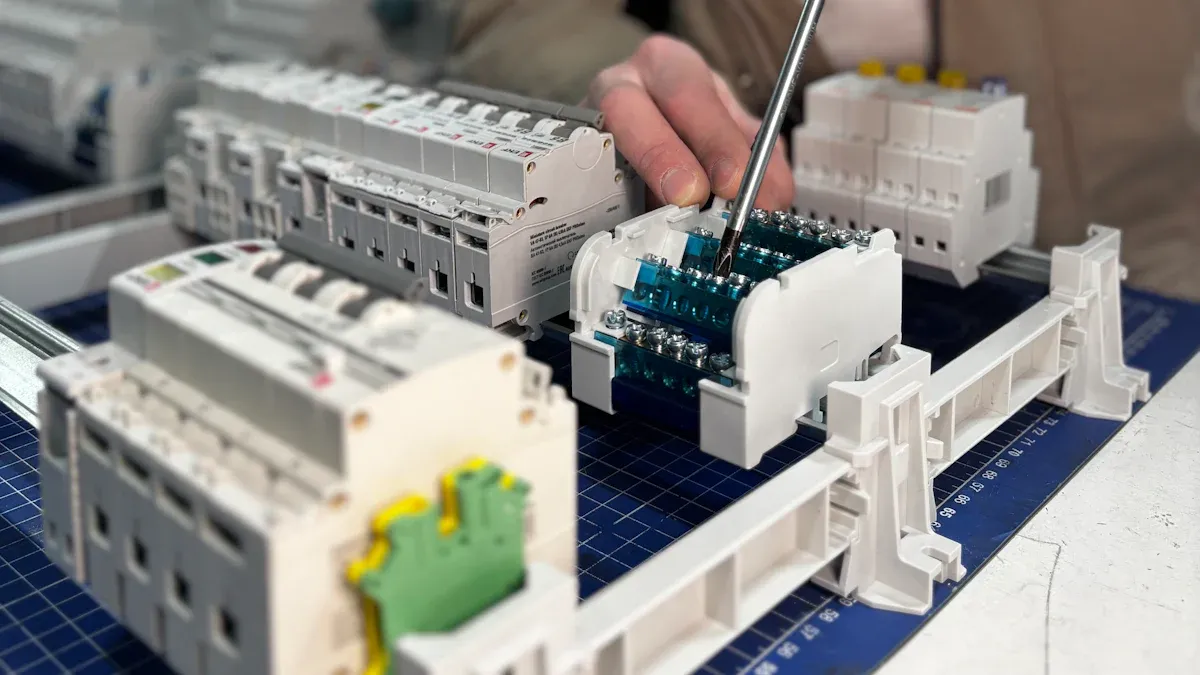
Push-in Terminal Blocks: Fast, Tool-Free Wiring
If you want to speed up your wiring projects, push-in vs screw terminal blocks make a huge difference. Push-in din rail tb lets you connect cable without tools. You just insert the cable into the feed-through terminal blocks and the spring clamp holds it tight. This tool-free connection system is easy to use and perfect for high-volume automation wiring. You save time because you don’t need to strip extra cable or tighten screws. In fact, factories using push-in din rail tb have seen up to 70% less assembly time. That means you can finish wiring faster and move on to other tasks. Push-in terminal blocks also help with safety and human error reduction. You don’t have to worry about loose cable or missed tightening steps. The feed-through terminal blocks keep every cable secure, even if you need to change things often. If you work with automation or robotics, push-in din rail tb is the smart choice for quick changes and reliable cable connections.
Tip: Push-in din rail tb is ideal for projects where you need to connect and disconnect cable often. You get consistent results every time.
Screw Terminal Blocks: Reliable, Traditional Connections
Screw type din rail tb has been the standard for years. You use a screwdriver to tighten each cable inside the feed-through terminal blocks. This method works well for power panels and control cabinets. Screw terminal blocks give you a strong grip on each cable, but installation takes longer. You need to check every screw and make sure the cable is fully inserted. Sometimes, vibrations or poor installation can cause loose cable. Here are some common challenges with screw type din rail tb:
- Loose connections from vibration or corrosion
- Overheating if the cable is too small or overloaded
- Poor wire insertion leading to weak cable contact
- Corrosion in humid or chemical environments
- Electrical arcing from loose cable or rapid switching
If you want a reliable connection and don’t mind spending extra time, screw type din rail tb is a solid choice. You can reuse the terminals and retighten screws if needed. This makes screw type din rail tb great for setups that need regular inspection or updates.
Here’s a quick look at error rates during installation:
| Aspect | Screw Terminal Blocks | Push-in Terminal Blocks |
|---|---|---|
| Operator Error | High – issues with tightening/loosening screws | N/A |
| Mechanical Reliability | Limited cycles (approx. 50) | N/A |
| Maintenance | Requires regular checks for parts falling out | N/A |
Push-in vs screw terminal blocks both have their place. If you want speed and easy cable changes, push-in din rail tb is your best bet. If you need a classic, secure connection, screw type din rail tb will get the job done.
Connection Reliability: Push-in vs Screw Terminal Blocks
Push-in Terminals: Consistent Contact and Vibration Resistance
You want your wiring to stay stable, even when machines shake or temperatures swing. Push-in terminals give you that peace of mind. The stainless spring inside keeps constant pressure on the wire, so you get a reliable connection every time. You don’t need to worry about loose wires, even in high-vibration environments. These terminals are built for contact stability under vibration and can handle temperature changes from -40°C up to 120°C.
Here’s how push-in terminals perform in tough conditions:
| Test Type | Standard | Purpose |
|---|---|---|
| Vibration Test | IEC 60068-2-6 | Ensures contact stability under mechanical vibration. |
| Temperature Resistance | IEC 61373/10.2011 | Validates performance in extreme temperature conditions. |
- Push-in terminals show less than 1% resistance change after 10,000 vibration cycles.
- The spring clamp keeps wires secure, even if your cabinet faces strong movement.
- You get high vibration resistance, so your system stays reliable.
If you work in automation or robotics, push-in terminals help you avoid downtime. You get a secure connection for larger wire sizes, and you don’t need to retighten anything.
Screw Terminal Blocks: Secure, Manual Tightening
Screw terminal blocks have a long history in industrial wiring. You tighten each screw by hand, making sure every wire sits snug. This method gives you a secure grip, especially for larger wire sizes. You get a reliable connection that stands up to vibration and movement. If you need to check or retighten, screw terminals let you do that easily.
Here’s what makes screw terminal blocks a top choice for connection reliability:
- Screw terminal blocks ensure stable connections, even in high-vibration environments.
- You can retighten screws over time to keep everything secure.
- These blocks need little maintenance after installation, but a quick check now and then helps.
Safety matters, too. Linkwell’s screw terminal blocks use flame-retardant housing and corrosion-resistant metals. They meet UL, CE, and IEC standards for industrial safety.
| Component | Material Options | Safety & Compliance Considerations |
|---|---|---|
| Housing | Polyamide(PA66), Nylon | Must meet UL, CE, or IEC standards for flame resistance and dielectric strength |
| Current Bar | Brass, Copper | Plating enhances durability in humid or corrosive environments |
| Clamping Screw | Steel, zinc-plated | Ensures stable and reliable connections over time |
| General Requirement | Certifications (UL, CE, IEC) ensure compliance with regional safety regulations |
Screw terminal blocks give you a secure connection for larger wire sizes and let you maintain high vibration resistance. You get a reliable connection that lasts, with the flexibility to inspect and retighten as needed.
Maintenance and Performance: Push-in vs Screw Connection
Push-in Terminal Blocks: Low Maintenance, Long Lifespan
You want wiring that stays reliable with little effort. Push-in terminal blocks make your job easier. You connect wires without tools, and the spring clamp keeps everything tight. You spend less time checking connections because these blocks resist vibration and temperature swings. You get fewer loose wires and less downtime. If you run a busy facility, you know how important it is to keep maintenance low.
Take a look at how maintenance compares:
| Terminal Block Type | Maintenance Requirement | Inspection Frequency |
|---|---|---|
| Push-in | Tool-free, fast wiring | Lower frequency |
| Screw | Tightening screws | Periodic inspection |
Push-in terminals help you avoid regular checks. You get a long lifespan and stable performance, even in tough environments. You can focus on other tasks instead of worrying about your wiring.
Tip: Push-in terminal blocks work best in places where you want quick changes and less hands-on maintenance.
- Push-in terminal blocks let you connect wires fast, saving up to 50% installation time.
- You get less downtime because you don’t need frequent checks.
- These blocks handle vibration well, so your system stays up and running.
Screw Terminal Blocks: Easy Inspection and Reuse
Screw terminals give you control over every connection. You tighten each screw by hand, making sure wires stay secure. You can inspect and retighten them whenever you need. This makes screw terminal blocks a solid choice for projects that need regular updates or inspections.
Linkwell’s screw terminals feature a modular design. You can expand your system or swap out parts without hassle. These terminals last through thousands of connect and disconnect cycles. You get flexibility and reliability for your control cabinets or telecom boxes.
- Screw terminals need regular checks to prevent loosening from vibration.
- Installation takes more time because you tighten each screw by hand.
- You can reuse screw terminals, making them perfect for setups that change often.
If you want easy inspection and the ability to reuse your terminals, screw terminal blocks fit your needs. You keep your system safe and ready for updates.
Space and Design: Push-in vs Screw Terminal Blocks
Push-in Terminal Blocks: Compact, High-Density Panels
If you want to save space in your control panels, push-in terminal blocks make a big difference. These blocks use a multi-level design, so you can stack several connection points in one unit. This vertical setup lets you fit more wiring into a smaller area. You get more connections without making your cabinet bigger. That’s a huge advantage for automation systems or any project where space is tight. You can use compact rail-mount terminal blocks or mini rail-mount terminal blocks for space-constrained applications. These options work well when you need reliable connections but don’t have much room to spare.
| Product Type | Description |
|---|---|
| Compact Rail-Mount Terminal Blocks | Extremely compact, ideal for space-restricted applications, utilizing CAGE CLAMP® technology for reliability. |
| Mini Rail-Mount Terminal Blocks | Designed for tight spaces with various mounting options, suitable for vibration-proof connections. |
| DIN Rail Terminal Strips | Compact and modular, easily snap onto DIN rails for quick installation and reconfiguration. |
| PCB Terminal Strips | Versatile and efficient, streamlining the wiring process in space-constrained environments. |
You can build high-density panels that keep everything organized. Push-in terminals help you maximize every inch of your cabinet.
Screw Terminal Blocks: Flexible, Modular Expansion
Screw terminal blocks give you real design flexibility. You can add or remove blocks as your system grows. This modular approach makes it easy to change your setup without starting over. Here’s why screw terminals stand out for flexible design:
- Secure and reliable connections keep your wiring safe.
- You can use many wire sizes, from small signal wires to large power cables.
- Maintenance is simple. Just loosen or tighten the screws when you need to make changes.
- Durable materials handle tough environments and last a long time.
- Modular design lets you expand or rearrange your panel as needed.
If you want a system that can grow with your needs, screw terminals are a smart choice. You get the freedom to design your panel your way, and you can make updates without hassle. Linkwell’s terminal block connectors support this kind of flexibility, so you can build panels that fit your exact requirements.
Cost Factors: Push-in vs Screw Terminal Blocks
Upfront and Labor Costs
When you plan your industrial wiring project, you want to know how much you’ll spend up front and over time. Push-in terminals usually cost more at first. You pay a bit extra for the advanced spring technology. Screw terminals come with a lower price tag, so you save money on the initial purchase. But the story doesn’t end there. Labor costs can change everything.
Here’s a quick look at how the costs stack up:
| Terminal Type | Upfront Cost | Labor Cost Implications |
|---|---|---|
| Push-in | Higher | Reduced labor costs due to faster installation and no re-tightening required. |
| Screw | Lower | Higher long-term labor costs due to maintenance needs. |
Push-in terminals let you finish wiring much faster. You don’t need tools, and you don’t have to go back to retighten connections. That means you spend less on labor, especially in big projects. Screw terminal blocks take more time to install. You need to tighten each screw and check them later. If your project needs high current capacity, screw terminals can handle the load, but you should factor in the extra time for installation and maintenance.
Long-Term Value and Bulk Solutions
You want your investment to last. Both push-in and screw terminals offer strong performance, but the way you buy them can change your total cost. Linkwell gives you options for bulk orders, so you can save money when you buy more.
- Bulk purchasing can lower the per-unit cost of terminal blocks.
- You get discounts and better pricing when you order in large quantities.
- For big jobs, buying in reels or kits can cut costs even further.
- Think about the total cost of ownership. Labor savings and fewer failures mean more value over time.
Linkwell supports you with competitive pricing and flexible bulk solutions. You get reliable terminals for any cost and application scenarios. Whether you need screw terminals for power panels or push-in terminals for automation, you can match your choice to your budget and project needs.
Tip: Always consider both upfront costs and long-term savings when choosing terminal blocks for your next project.
Application Scenarios: Which Terminal Block Is Better?

Automation, PLC, and Machine Applications
You work with automation systems, PLCs, or machine controls. You want wiring that’s fast, reliable, and easy to maintain. Push-in terminals make your job easier in these environments. You just insert the wire, and the spring clamp holds it tight. You don’t need tools, so you finish wiring faster. This is perfect for high-volume automation and frequent changes.
Take a look at how push-in terminals fit into common automation applications:
| Application Type | Description |
|---|---|
| PLC Control Cabinets | Connect I/O modules, relays, and circuits efficiently. Compact designs save space. |
| I/O Signal Modules | Quick wiring for sensors. Multi-level terminals help you fit more connections in smaller cabinets. |
| Sensor and Field Distribution Boxes | Simplify the interface between field wiring and control systems. Strong vibration resistance keeps connections stable. |
You need to consider wire size, wiring method, and space. Here’s what matters most for PLC and machine applications:
- Wire size and type: Make sure your wire fits the terminal block. Both stranded and single-core wires work.
- Wiring methods: Choose screw, push button, or push-in based on your needs. Push-in works well in harsh environments.
- Size and specifications: Pick a terminal block that fits your cabinet and meets clearance requirements.
- Voltage and current ratings: Always check the ratings for safe operation.
- Mechanical restrictions: Look at housing design and accessibility.
Push-in terminals shine in automation because they save time and space. You get strong vibration resistance, which is important for robotics and moving machinery. Linkwell offers modular terminal block connectors that support these applications, so you can build efficient panels for your automation projects.
Tip: For automation and PLC cabinets, push-in terminals help you wire faster and keep your system organized.
Power Panels, Control Cabinets, and Harsh Environments
You handle power panels, control cabinets, or work in tough environments like wind power or energy storage. You need connections that stand up to vibration, heat, and chemicals. Screw terminals give you a secure grip for high-current applications. You tighten each screw by hand, making sure every wire stays put.
Here’s how screw terminal blocks and push-in terminals compare in these settings:
| Feature | Screw Terminal | Push-In Terminal |
|---|---|---|
| Vibration Resistance | Moderate (can loosen) | Highest (strong hold with proper ferrule use) |
| Maintenance | Periodic re-tightening | Minimal |
| Best Application | Power distribution, high-current applications | High-density, fast installation |
Push-in terminals perform well in harsh environments. You get a strong hold and minimal maintenance. These terminals work in marine and chemical plants, where vibration and corrosion are common. Screw terminals need periodic checks, but they handle high currents and offer flexibility for power panels.
When you choose terminals for wind power, energy storage, or robotics, you need to meet strict standards. Linkwell’s products carry certifications like UL, CE, IECEx, ATEX, and ISO 9001. These certifications prove your wiring meets safety and quality requirements.
| Certification/Standard | Description |
|---|---|
| IECEx | International certification for explosive atmospheres. |
| ATEX | European directive for explosive environments. |
| NEC | US electrical code for safety. |
| UL | Underwriters Laboratories certification. |
| CE | European Economic Area safety marking. |
| ISO 9001 | Quality management standard. |
| ISO 14001 | Environmental management standard. |
You see screw terminals used in commercial and domestic wiring. They work well for moderate electrical currents and reliable connections. Push-in terminals are popular in marine and chemical plants, where you need easy connection and fast installation.
Note: Always check for certifications like UL, CE, and IEC when choosing terminal blocks for critical applications.
You want wiring that fits your project. For automation and robotics, push-in terminals save time and space. For power panels and high-current applications, screw terminals give you the grip and flexibility you need. Linkwell supports both options, so you can match your terminal blocks to your application and environment.
Decision Guide: Push-in vs Screw Connection for Industrial Needs
Choosing the right terminal block for your project can feel overwhelming. You want something that fits your needs, keeps your team safe, and makes your job easier. Let’s break it down so you can pick the best option for your industrial setup.
Quick Reference Table: Key Criteria Comparison
Here’s a simple table to help you compare push-in and screw connection types side by side. Use this as a cheat sheet when you’re deciding which terminal block works best for your application.
| Criteria | Push-in Terminal Blocks | Screw Terminal Blocks |
|---|---|---|
| Installation Speed | Fast, tool-free wiring | Slower, needs screwdriver |
| Maintenance | Minimal, less frequent checks | Needs periodic re-tightening |
| Vibration Resistance | Excellent, spring holds tight | Good, can retighten if needed |
| Space Efficiency | Compact, high-density panels | Flexible, modular expansion |
| Upfront Cost | Slightly higher | Lower |
| Labor Cost | Lower (saves time) | Higher (more manual work) |
| Best For | Automation, frequent changes | Power panels, high current |
| Certifications | UL, CE, IEC, ISO | UL, CE, IEC, ISO |
Tip: If you want to save time and space, push-in terminal blocks are a great choice. If you need flexibility and high-current handling, screw terminal blocks might fit your project better.
How to Choose the Right Linkwell Terminal Block
You want to make the right call for your project. Here’s a step-by-step guide to help you choose the best Linkwell terminal block for your needs:
- Check Your Application Needs
- Are you wiring for automation, robotics, or PLCs? Push-in terminals help you finish faster and keep things organized.
- Are you building power panels or working with high currents? Screw terminals give you a secure grip and let you retighten connections as needed.
- Match Electrical Ratings
- Always check the voltage and current ratings. This keeps your equipment safe and prevents overheating or fire risks.
- Make sure the terminal block matches your wire size. This avoids loose connections and keeps your circuits reliable.
- Think About the Environment
- Will your terminals face vibration, heat, or chemicals? Choose materials that resist corrosion and handle tough conditions.
- For outdoor or harsh environments, look for flame-retardant and UV-stable housings.
- Plan for Maintenance and Expansion
- If you want less maintenance, push-in terminal blocks need fewer checks.
- If you expect to update or expand your system, screw terminal blocks offer easy inspection and modular design.
- Avoid Common Mistakes
- Don’t mix materials that can corrode each other.
- Always secure your terminal blocks tightly to avoid loose connections.
- Never ignore the electrical ratings or use the wrong wire size.
- Make sure you have enough space for installation and future changes.
- Don’t forget about accessories or compliance with safety standards.
- Use Linkwell’s Support
- Linkwell offers a wide range of terminals for every scenario. You can get help with selection, bulk orders, and custom solutions.
- All Linkwell products meet international certifications, so you know you’re getting safe and reliable components.
Note: Choosing the right terminal block does more than just connect wires. It keeps your team safe, makes maintenance easier, and helps your system last longer.
When you follow these steps, you avoid common mistakes and get the most out of your Linkwell terminal blocks. You’ll have a setup that’s safe, reliable, and ready for whatever your project throws at it.
Conclusion
You’ve explored the differences between push-in terminal blocks and screw connection types. Now, you know how each style fits different industrial needs. If you want fast installation and less maintenance, push-in terminals make your job easier. You just insert the wire and move on. These terminals work great for automation, robotics, and projects where you need quick changes.
Screw terminal blocks give you flexibility and a secure grip. You can retighten connections and reuse the blocks. This style works best for power panels, control cabinets, and places where you expect regular inspections or updates.
Here’s a quick recap to help you decide:
| Feature | Push-in Terminal Blocks | Screw Terminal Blocks |
|---|---|---|
| Installation Speed | Fast | Moderate |
| Maintenance | Low | Periodic |
| Flexibility | Good for changes | Great for updates |
| Best Use | Automation, PLCs | Power, control |
Tip: Match your terminal block type to your project’s needs. You’ll save time, reduce errors, and keep your system running smoothly.
Linkwell supports you with both options. You get certified products, competitive pricing, and expert advice. If you need help choosing or want a custom solution, reach out to Linkwell. Your project deserves reliable terminals and a partner who cares about your success.
You’ve seen how push-in terminal blocks speed up wiring and make maintenance easy, while screw terminals offer flexibility and secure connections for power panels. Check out this quick table to compare their strengths:
| Feature | Push-in Terminals | Screw Terminals |
|---|---|---|
| Wiring Speed | Fast, tool-free | Manual, secure |
| Maintenance | Minimal | Periodic checks |
| Best Use | Automation, PLCs | Power, control cabinets |
If you want reliable electrical connections and organized cable management, Linkwell helps you choose the right terminals for your project. Use the decision guide or reach out for custom solutions.
FAQ
What is the main difference between push-in and screw terminals?
Push-in terminals let you connect wires without tools. You just insert the wire, and it locks in place. Screw terminals need a screwdriver. You tighten each wire by hand for a secure fit.
Can I reuse terminal blocks after disconnecting wires?
Yes, you can reuse both types. Just remove the wire and insert a new one. Screw terminals may need you to retighten the screw before reuse.
Which terminal block type is better for high-vibration environments?
Push-in terminal blocks work great in high-vibration areas. The spring clamp keeps wires tight, so you don’t have to worry about loose connections.
How do I choose the right size terminal block for my project?
Check your wire size and current needs. Pick a terminal block that matches both. Always look at the product’s ratings before you buy.
Are Linkwell terminal blocks certified for safety?
Yes, Linkwell terminal blocks meet international safety standards like UL and CE. You can trust them for industrial projects.