When you build or design a control panel, safety and compliance should always come first. The short-circuit current rating (SCCR) is not just a number—it’s what keeps your system and people safe. You might think every part inside your panel stands alone, but the truth is, your panel’s SCCR is only as strong as its weakest component. Take a look at how industry standards determine this:
| Component Type | Impact on Panel SCCR |
|---|---|
| Overcurrent protective device | Lowest rating sets limit |
| Power components | Weakest link reduces SCCR |
| Modified combinations | Can raise or lower SCCR |
So, making smart choices matters. These Key Considerations guide you to pick components that boost your panel’s SCCR. When you choose certified solutions from Linkwell, you get reliable ratings and expert support for every project.
Key Takeaways
- Understand your site’s electrical conditions. Knowing the fault current helps you choose the right components.
- Calculate the available fault current accurately. Use manual methods or software to avoid underestimating risks.
- Ensure your panel’s SCCR meets or exceeds the fault current. This prevents equipment damage and safety hazards.
- Document and label everything clearly. Good records and labels help with inspections and future upgrades.
- Plan for future changes. Design your panel to accommodate new equipment and increased power needs.
Key Considerations for Fault Current Assessment
Site Electrical Conditions
Before you pick any components, you need to know what kind of electrical environment your control panel will face. Every site is different. Some locations have higher available fault currents because of large transformers or short distances to the utility feed. Others might have older wiring or smaller service entrances. You should always check the electrical drawings and talk with the facility’s electrical engineer. This step helps you avoid surprises later.
Calculating Fault Current
Getting the right numbers is one of the most important Key Considerations. You can use several methods to figure out the available fault current at your panel:
- Manual calculations work well for simple systems. You use basic formulas and information from the utility or transformer.
- Software analysis gives you more accuracy, especially for complex sites. Many engineers use specialized programs to model the system.
- You can also start with the transformer’s fault current for a conservative estimate.
- Comparing fuse or breaker clearing curves helps you see if your protective devices will react fast enough.
If you skip this step or guess, you risk underestimating the fault current. That can lead to big problems down the road.
Matching SCCR to Fault Current
Now, you need to make sure your panel’s SCCR matches or beats the available fault current. This is one of the Key Considerations that keeps your system safe and compliant. If you mismatch these values, several things can happen:
- Equipment may get damaged because it cannot handle the fault current.
- Arc flash events can occur, putting people at risk from heat and magnetic forces.
- You might face downtime while you repair or replace damaged parts.
- Non-compliance with electrical codes can lead to failed inspections.
Panel builders often face challenges like short-circuit analysis, detailed documentation, thermal management, and selective coordination. Here’s a quick look:
| Challenge | Description |
|---|---|
| Short-Circuit Analysis | You must check if your panel can handle fault conditions. |
| Documentation | You need to keep clear records, including SCCR calculations. |
| Thermal Management | Managing heat inside the panel can be tricky. |
| Selective Coordination | Only the nearest breaker should trip during a fault for safety. |
By focusing on these Key Considerations, you set your project up for safety and success.
Codes and Standards Compliance
UL 508A and NEC Overview
You can’t ignore the rules when building a safe control panel. UL 508A and the National Electrical Code (NEC) set the standard for how you should design and label your panels. Here’s what you need to know:
- SCCR matters because it shows your panel can handle fault currents without failing. This keeps your team and equipment safe.
- The NEC says you must mark the maximum fault current at the service entrance. However, it often skips downstream equipment, so you need to check every part.
- You must document your SCCR calculations. UL 508A requires you to prove your panel meets the right rating. Good records help you pass inspections and avoid costly mistakes.
Tip: Always double-check your documentation before you finish your design. This is one of the Key Considerations that can save you time and trouble later.
Local Regulations
Rules can change depending on where you install your panel. Some countries use UL 508A, while others follow IEC 61439. Take a look at how these standards compare:
| Certificate | UL 508A | IEC 61439 |
|---|---|---|
| Region | U.S. & Canada | International (Europe, Asia, etc.) |
| Focus | Industrial Control Panels | Low-voltage switchgear & controlgear assemblies |
| Certification | Required for North American markets | Used globally, mandatory in some regions |
| Testing | Panel-level testing | System-level testing |
The NEC also says you must display the SCCR on the panel nameplate. If the available fault current is higher than your panel’s SCCR, you can’t install it. That’s a rule you can’t bend.
Linkwell Electrical Control Panel Certifications
You want a partner who understands global standards. Linkwell’s electrical control panels meet UL, IEC, CE, and RoHS certifications. These approvals show that your panels will work safely and reliably, no matter where you install them.
| Certification | Description |
|---|---|
| IEC | International standards for safety and performance |
| UL | North American standards for safety and reliability |
| CE | European safety and environmental compliance |
| RoHS | Restricts hazardous substances for environmental safety |
Linkwell’s commitment to these certifications means you can trust their products for projects around the world. You get peace of mind knowing your panels meet the latest requirements and pass inspections with ease.
Component Selection for High SCCR

Choosing the right components is where you can really boost your control panel’s SCCR. You want every part to work together, not hold you back. Let’s break down what you need to look for.
Manufacturer SCCR Data
You should always check the SCCR rating for each component. This rating tells you the highest fault current a device can handle without damage. You can find these ratings in datasheets for things like motor controllers, contactors, fuses, busbars, and connectors. If you miss one, your panel’s overall SCCR drops to the lowest number in the group. That’s why one of the Key Considerations is to avoid bottlenecks by checking every rating.
Here’s a quick checklist for verifying SCCR ratings:
- Look up the SCCR for each component.
- Make sure you have current-limiting devices in your feeder circuit.
- Check the interrupting ratings for all fuses and breakers.
- Identify the lowest rating—this sets your panel’s SCCR.
Linkwell Terminal Blocks and Transformers
You want components that make your job easier, not harder. Linkwell’s terminal blocks and control transformers come with clear, high SCCR ratings right on the datasheet and label. These products are tested to meet UL and IEC standards, so you know they’re ready for tough jobs. For example, Linkwell’s panels use certified terminal blocks and transformers that help you reach higher SCCR goals without extra steps. This means less downtime and better safety for your team.
Tip: Always ask for official SCCR documentation from your supplier. Don’t settle for default values that could limit your panel’s performance.
Coordinating Component Ratings
You need to make sure all your components work together. Use overcurrent protection devices with the right ratings. Avoid daisy chaining protection, which can lower your SCCR. Start with current-limiting fuses or high-rated breakers. This approach helps you clear faults fast, reduce arc flash risk, and keep your equipment safe. Linkwell’s panels use these best practices, so you get a system that’s both strong and reliable.
When you follow these steps, you build panels that pass inspections and protect your investment.
Understanding the Four-Step SCCR Process
The determination of a control panel’s Short-Circuit Current Rating (SCCR) is less about calculation and more about a systematic investigation of component ratings, as defined by the UL 508A standard. This process follows four key steps. First, identify the individual SCCR of each component or tested combination in the power circuit, typically from product labels or manuals. Second, evaluate whether feeder-circuit protective devices like current-limiting fuses or breakers can reduce the fault current downstream. Third, determine the panel’s overall SCCR, which is the lowest rating among the branch circuits, feeder components, and any modified ratings from current-limiting devices. Finally, you must permanently mark this final SCCR value on the control panel’s nameplate. This four-step method ensures the panel’s rating is accurately determined and properly communicated for safety and compliance.
| Step | Core Task | Key Output / Considerations |
|---|---|---|
| Step 1 | Confirm Component SCCR | Obtain the SCCR for each individual component (check labels, manuals). |
| Step 2 | Evaluate Current-Limiting Protection | Assess if feeder circuit protection (e.g., fuses, breakers) can reduce the downstream fault current. |
| Step 3 | Determine Panel SCCR | Establish the overall panel SCCR as the lowest value among the weakest protected link. |
| Step 4 | Mark the Nameplate | Must mark the final panel SCCR (in kA) on the control panel’s nameplate. |
Documentation and Labeling Practices

SCCR Calculations
You want your control panel to pass every inspection and keep people safe. That starts with clear SCCR calculations. Always document how you arrived at your panel’s SCCR. Keep a record of the available fault current, arc flash values, and any selective coordination studies. If you make changes to the panel, update your calculations right away. Digital tools can help you track these numbers and keep everything organized.
Here’s what you should include in your SCCR documentation:
- Fault-current calculations for the installation site
- Arc flash values and study results
- One-line or riser diagrams
- Overcurrent protective device (OCPD) settings
- Panel locations on floor plans
When you keep these records up to date, you make it easier for inspectors and your own team to verify compliance.
Panel Labeling
Labeling is more than just a sticker. It’s your panel’s ID card. UL 508A requires you to mark the SCCR right on the nameplate. This label must also show the electrical ratings and the UL file number. You help inspectors and end-users check if your panel matches the site’s fault current. If the label is missing or unclear, you could fail an inspection or risk unsafe installations.
| Requirement Type | Description |
|---|---|
| Labeling | Each UL 508A panel must include a label with electrical ratings, SCCR, and UL file number. |
| Documentation Maintenance | The panel shop must maintain documentation for every labeled panel, including BOM and diagrams. |
| Audit Review | UL reviews these documents during regular audits to ensure compliance. |
Tip: Always double-check your labels before shipping a panel. A clear label saves time and avoids confusion on site.
Record Maintenance
Good record maintenance keeps your business running smoothly. You should keep all calculation records, diagrams, and BOMs for every panel you build. If you add or replace components, re-verify the SCCR and update your records. Regularly review OCPD settings and make sure your documentation matches the current panel setup.
Best practices for record maintenance:
- Store digital copies of all documents for easy access
- Update records after every change or upgrade
- Prepare for UL audits by keeping files organized
When you follow these steps, you build trust with your customers and make future upgrades much easier.
Planning for Future Changes
When you build a control panel, you want it to last. But things change—new machines, more power, or different safety rules. Planning for the future keeps your panel safe and ready for upgrades. Let’s look at how you can make your panel future-proof.
Expandability
You never know when you’ll need to add more equipment. If you plan ahead, you can expand your panel without headaches or safety risks. Here are some smart strategies:
| Strategy | Description |
|---|---|
| Adequate Space | Leave 20–25% extra space in your panel for future components. |
| Proper Labeling | Label every part clearly so you can find and upgrade them easily. |
| Strategic Component Selection | Pick parts that let you upgrade or swap them out without hurting your SCCR. |
Tip: Linkwell offers customizable control panels with extra space and clear labeling. You can request custom sizes, layouts, and branded labels to fit your needs.
Flexible Components
Choosing flexible components makes upgrades simple. Some parts are designed to handle changes and keep your SCCR high. Check out these options:
| Component Type | Features | SCCR Benefits |
|---|---|---|
| Molded Case Breakers | High interrupting ratings, easy troubleshooting | Boosts SCCR and safety |
| Programmable Contactors | Work with PLCs, save space and power | Achieve higher SCCR, lower costs |
| Power Distribution Connectors | Connect multiple loads to one breaker | Save space, keep SCCR strong |
Linkwell’s panels can include these flexible components, so you’re ready for whatever comes next.
Anticipating Load Growth
You want your panel to handle more power as your business grows. Here’s how you can stay ahead:
| Method | Description |
|---|---|
| Use higher SCCR components | Choose parts with higher ratings to boost your panel’s overall SCCR. |
| Add current-limiting devices | Use fuses or breakers that limit fault current and protect your system. |
| Upgrade protective devices | Pick overcurrent devices with higher interrupting ratings for better safety. |
| Submit for testing | Have your panel tested by UL or another lab to make sure it meets standards. |
Note: Linkwell’s power distribution panels come with built-in ground fault protection and can be customized for future upgrades. You can also choose special enclosures and features to match your growing needs.
Planning for change means fewer surprises and safer systems. With Linkwell’s customizable options, you can build a panel that grows with you.
Conclusion
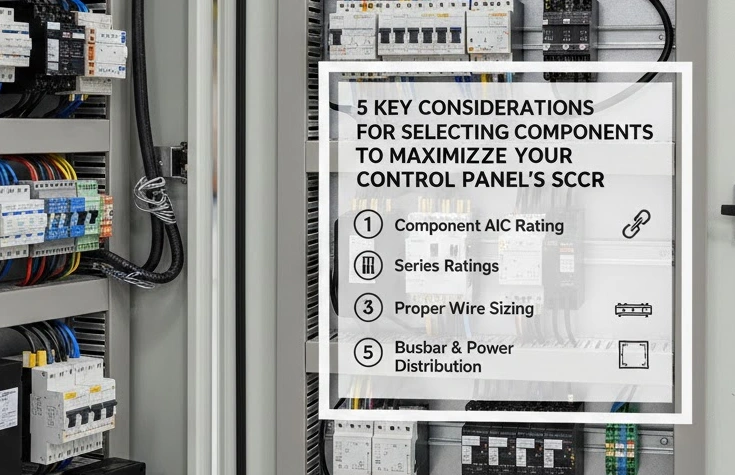
You’ve made it to the end, and now you know what it takes to build a safer, stronger control panel. Let’s do a quick recap of the five key considerations that help you maximize your panel’s SCCR:
- Assess the fault current at your site. Always know what your panel will face before you pick any parts.
- Follow the right codes and standards. UL 508A, NEC, and local rules keep your project on track and your team safe.
- Choose high-SCCR components. Don’t let one weak link hold you back. Check every rating and pick parts that work together.
- Document and label everything. Good records and clear labels make inspections easy and upgrades simple.
- Plan for the future. Build panels that can grow with your business and handle new challenges.
Pro Tip: When you work with a trusted partner like Linkwell, you get more than just parts. You get certified solutions, expert advice, and support that helps you pass inspections and avoid costly mistakes.
You don’t have to figure this out alone. Linkwell stands by you from design to delivery. Our team helps you select the right components, customize your panel, and keep your project moving forward. We offer UL, IEC, and CE certified products, so you can trust your panel will meet global standards.
Ready to build a control panel that’s safe, reliable, and future-proof? Reach out to Linkwell for guidance, fast quotes, and dependable components. Visit Linkwell Electrics or contact us today. Your next project deserves the best foundation—let’s build it together! 🚀
You want your control panel to be safe, strong, and ready for anything. Keep these five essentials in mind:
- Pick components with the right SCCR.
- Use current-limiting protection for better coordination.
- Show the SCCR on the rating plate.
- Follow all compliance rules.
- Trust skilled engineers for calculations.
When you choose Linkwell, you get certified products, tough materials, and expert support. Reach out for guidance and reliable components that help your next project succeed.
FAQ
What does SCCR mean for my control panel?
SCCR stands for Short-Circuit Current Rating. It shows the highest fault current your panel can safely handle. You need to match this rating to your site’s available fault current to keep your system safe.
How do I find the SCCR of a component?
You can check the datasheet or the label on the component. Most manufacturers, like Linkwell, provide this information clearly. If you can’t find it, ask your supplier before you buy.
Why should I avoid using default SCCR values?
Default values are usually low—often just 5kA. If you use them, your panel’s rating drops. You might fail inspections or risk safety. Always verify the real SCCR for each part.
Can I upgrade my panel’s SCCR later?
Yes, you can. Here’s how:
- Replace low-rated parts with higher SCCR components.
- Add current-limiting fuses or breakers.
- Update your documentation and labels.
Which Linkwell products help boost SCCR?
| Product Type | Benefit |
|---|---|
| Terminal Blocks | High SCCR, easy integration |
| Control Transformers | Certified, reliable ratings |
| Distribution Panels | Customizable, future-ready |