You want to know which sensor suits your job best. If you work in tough, dusty, or wet places, proximity sensors handle the challenge better. Limit switches fit simple tasks where cost matters. Check out this quick table to compare the two:
| Factor | Proximity Sensors | Limit Switches |
|---|---|---|
| Reliability | No moving parts, super reliable | Can wear out over time |
| Speed | Fast detection | Slower response |
| Environmental Resilience | Great against dust and moisture | Less resistant |
| Detection Consistency | Always accurate | Can be inconsistent |
| Physical Stress | No force on targets | May push on targets |
Choosing between limit switch vs proximity sensor depends on your environment, durability needs, and budget. You’ll get practical tips here to help you decide.
Key Takeaways
- Proximity sensors are ideal for harsh environments. They resist dust, moisture, and chemicals, making them last longer without wear.
- Limit switches are cost-effective for simple tasks. They work well in low-speed applications where physical contact is not an issue.
- Choose a sensor based on your environment. If you face extreme conditions, a proximity sensor is often the better choice.
- Consider maintenance needs. Proximity sensors require less upkeep than limit switches, which can wear out over time.
- Evaluate your budget and performance needs. Limit switches have lower upfront costs, while proximity sensors save money in the long run due to their durability.
What Is a Limit Switch

Limit Switch Working Principle
You might wonder how a limit switch actually works. This device uses a mechanical trigger to detect when something reaches a certain spot. When a moving part touches the switch, it changes the electrical contacts inside. That action sends a signal to your control system, telling it what to do next. You see this in automation all the time. The switch resets itself once the part moves away, so it’s ready for the next cycle. Limit switches give you reliable feedback for automated control, act as safety interlocks, and help with precise positioning.
Here’s a quick look at the basic steps:
- Physical triggering: The switch sits at a set position. When a part reaches it, the switch activates.
- Contact changes: The internal contacts flip, either opening or closing.
- Signal transmission: The switch sends an electrical signal to your system.
- Reset mechanism: The switch returns to its original state after the part leaves.
Types of Limit Switches
You have plenty of options when choosing a limit switch. Each type works a bit differently, so you can pick what fits your job best.
| Type | Mechanism Description |
|---|---|
| Plunger actuated | Activated by a plunger or push button, ideal for simple on-off position detection. |
| Roller lever actuated | Uses a roller at the end of a lever, reducing wear and allowing smoother actuation. |
| Rod lever actuated | Actuated by a rod or lever, more robust but requires more activation force. |
| Cable pull | Activated by a pulled cable, suitable for perimeter guarding and flexible placement. |
| Rotary actuated | Activated by a rotating cam or wheel, precise for rotational movements but complex to adjust. |
| Whisker actuated | Uses a thin wire to detect objects, sensitive but can be prone to fatigue and breakage. |
| Magnetic limit switches | Detects presence via magnetic field, durable but limited sensing range. |
| Inductive limit switches | Detects metallic objects through electromagnetic field, robust against dust and moisture. |
| Capacitive limit switches | Detects both metallic and non-metallic objects by sensing capacitance changes. |
| Optical limit switches | Uses a light beam for detection, high-speed actuation but sensitive to alignment and dirt. |
Common Limit Switch Applications
You’ll find limit switches everywhere in industrial automation. They help control machines, keep workers safe, and make sure everything runs smoothly. Some common use cases for limit switches include position detection in robotics, overload protection in force measurement systems, and safety interlocks on packaging machinery. You also see them in automotive assembly lines, HVAC systems, and agricultural equipment. These switches stop machines from breaking and help you get accurate results every time.
Tip: If you need reliable feedback and safety in tough environments, a limit switch is often your best bet.
What Is a Proximity Sensor
Proximity Sensor Working Principle
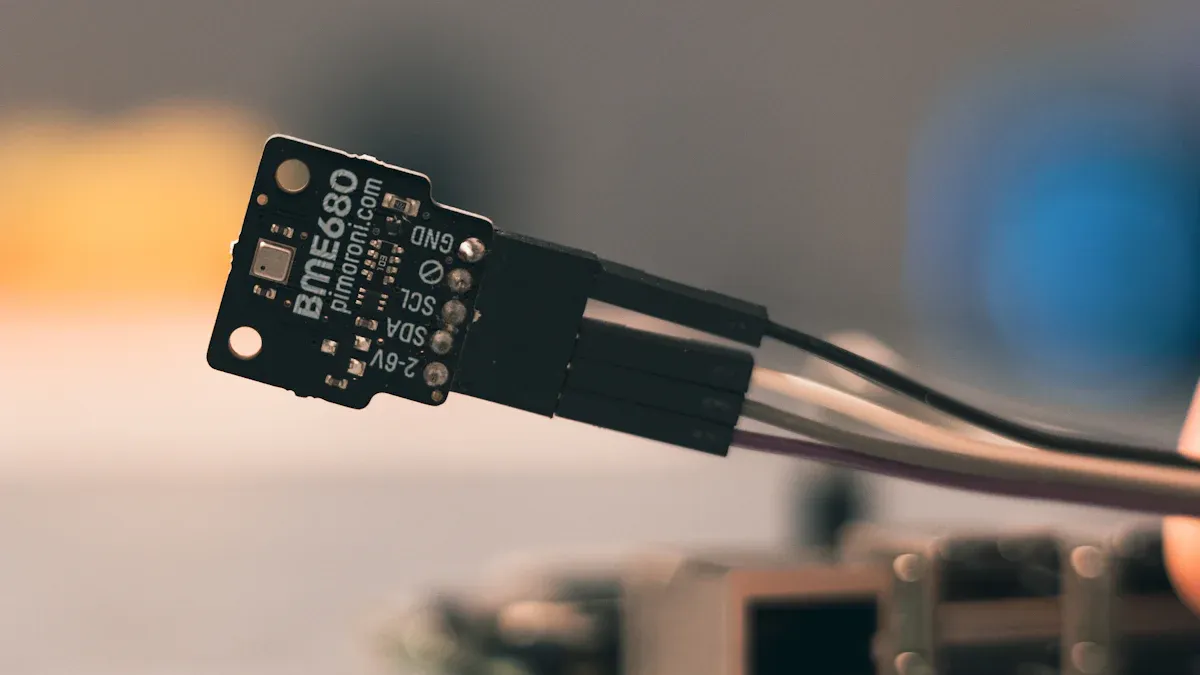
You might wonder how a proximity sensor works. This device lets you detect objects without touching them. It sends out an energy field, like a magnetic or electric field, or even sound waves. When something enters that field, the sensor picks up the change and signals your system. You get fast, reliable detection for counting, indexing, or verifying parts in industrial automation. Because there’s no physical contact, you avoid wear and tear, making these sensors a smart choice for tough jobs.
Note: A proximity sensor can spot objects in dusty, wet, or harsh environments where mechanical switches might fail.
Here’s what happens when you use a proximity sensor:
- It detects objects without physical contact, boosting efficiency.
- It senses changes in the environment when something gets close.
- It works reliably and lasts longer than mechanical switches.
Types of Proximity Sensors
You have several types of proximity sensors to choose from. Each one uses a different method to detect objects. Check out this table to see how they work and where you might use them:
| Type of Sensor | Detection Method | Common Applications |
|---|---|---|
| Inductive Proximity Sensors | Detects metallic objects using changes in magnetic fields. | Manufacturing, automotive |
| Capacitive Proximity Sensors | Detects objects by measuring changes in an electric field. | Food processing, packaging |
| Ultrasonic Proximity Sensors | Uses sound waves to detect objects. | Automotive (parking sensors, collision avoidance) |
| Magnetic Proximity Sensors | Detects magnetic fields. | Security systems, consumer electronics |
| Photoelectric Proximity Sensors | Uses light to detect objects. | Packaging, material handling |
Proximity Sensor Applications
You see proximity sensors everywhere in modern industry. They help you monitor parts, control machines, and keep things safe. Here are some common uses:
- Manufacturing: You can check if a part is present, align components, or control conveyor belts.
- Quality Control: These sensors help you spot missing pieces and prevent defects.
- Packaging: You can detect containers, monitor fill levels, and make sure packages line up right.
- Material Handling: Proximity sensors help avoid collisions and control positions in storage systems.
- Safety Systems: You can set up safety barriers or trigger shutdowns to prevent accidents.
- Process Monitoring: These sensors track material flow and tool positions, supporting predictive maintenance.
The automobile industry now relies on proximity sensors for driver assistance, electric vehicles, and gesture controls. You get sensors that work in harsh conditions and support smart technologies like AI and IoT.
Limit Switch vs Proximity Sensor: Key Differences
When you compare limit switch vs proximity sensor, you notice some big differences in how they work and where they fit best. Let’s break down the key differences in design and performance so you can pick the right sensor for your job.
Contact vs Non-Contact Operation
You’ll see the biggest difference right away. Limit switches need physical contact to detect objects. The moving part must touch the switch, which flips the internal contacts and sends a signal. Proximity sensors work without touching anything. They use magnetic fields, electric fields, or sound waves to spot objects nearby.
If you want less wear and tear, proximity sensors are the way to go. No contact means fewer breakdowns and less maintenance.
Here’s a quick table to show how they compare:
| Feature | Proximity Sensor | Limit Switch |
|---|---|---|
| Detection Method | Non-contact detection | Detection through physical contact |
| Sensing Range | Limited (few mm to cm) | Can be greater (mm to meters) |
| Contact Requirement | No physical contact needed | Requires physical contact |
| Environmental Sensitivity | Can trigger falsely in tough conditions | Less sensitive to environment |
| Speed of Operation | Fast, good for high-speed jobs | Slower, best for simple tasks |
You get fast, reliable detection with proximity sensors. Limit switches work well for slower, basic jobs where contact isn’t a problem.
Lifespan and Durability
Limit switch vs proximity sensor also stands out when you look at how long each lasts. Limit switches have moving parts. Every time something hits the switch, it wears down a little. Over time, you might need to replace them. Proximity sensors don’t touch anything, so they last much longer.
- Limit switches use tough materials like bronze and stainless steel for their housing and levers. Gold contacts help prevent corrosion.
- Some limit switches have sliding contacts that clean themselves, which helps them last longer.
- Proximity sensors must handle strong vibrations and shocks, especially in places like construction or mining. Many can survive at least 10 G-forces for short periods.
If you work in a place with lots of movement or vibration, proximity sensors keep working without wearing out. Limit switches need more care and might need replacing sooner.
Environmental Resistance
You need sensors that can handle dust, moisture, oil, or chemicals. Limit switch vs proximity sensor shows big differences here.
- Proximity sensors often come with sealed housings (IP67 or higher) to keep out water, dust, and dirt.
- Manufacturers use stainless steel or tough plastics to resist corrosion and cleaning chemicals.
- Shock and vibration resistance is built in for harsh environments.
- Limit switches can also be tough, but high moisture, dust, or chemicals can shorten their life. Extreme temperatures and humidity matter too.
Tip: Always check the ingress protection rating (like IP67 or IP69K) before you buy. This tells you how well the sensor stands up to dirt and water.
Cost and Maintenance
You might wonder which sensor saves you money. Limit switch vs proximity sensor has some clear differences.
- Limit switches usually cost less up front. They’re simple and easy to install.
- Proximity sensors cost more, but you save on maintenance because they don’t wear out as fast.
- Limit switches need regular checks and sometimes replacement. Proximity sensors need less attention.
If you want a low-cost solution for a simple job, limit switches work well. For long-term savings and less downtime, proximity sensors are a smart choice.
Quick Comparison: Features, Pros, and Cons
Here’s a bullet list to help you see the key differences at a glance:
- Limit switches:
- Need physical contact
- Can handle bigger sensing ranges
- Lower initial cost
- Wear out over time
- Less resistant to harsh environments
- Proximity sensors:
- Detect objects without contact
- Limited sensing range
- Higher initial cost
- Last longer with less maintenance
- Great for dusty, wet, or dirty places
Choosing between limit switch vs proximity sensor depends on your job, your environment, and your budget. Think about how often you want to replace parts, how tough your workplace is, and how much you want to spend up front.
Pros and Cons Comparison
Limit Switch Pros and Cons
When you look at a limit switch, you see a device that’s built for reliability. You get stable performance in many industrial settings. Here’s a quick table to help you see the main advantages and drawbacks:
| Pros of Limit Switches | Cons of Limit Switches |
|---|---|
| High reliability and stability | Restricted to low-speed equipment |
| Fast response | Must make direct contact with the target |
| Diverse forms and broad adaptability | Moving mechanical parts will wear out |
| Cost-effectiveness |
You can use a limit switch in almost any industrial environment. It gives you precise accuracy and repeatability. You need less energy to run it, and it can handle loads with high inductance. You can even control multiple loads with one switch.
Tip: If you want a simple solution that works well and doesn’t cost much, a limit switch is a solid choice.
But you should know the limitations. The device needs physical contact to work, so the moving parts will wear out over time. It’s best for equipment that doesn’t move too fast.
Proximity Switch Pros and Cons
A proximity switch gives you a different set of benefits. You don’t need to worry about physical contact, so the sensor lasts longer. Here’s a table to show you the main points:
| Pros | Cons |
|---|---|
| High accuracy | High investment cost |
| Long life | Affected by the surrounding environment |
| Stable operation in harsh environments | |
| High integration capability | |
| Wide application range |
You get stable operation even in tough places. A proximity switch works well in dusty, wet, or dirty environments. You can use it for many different jobs, and it fits easily into automated systems.
Note: A proximity switch is perfect if you want high accuracy and don’t want to deal with worn-out parts.
Keep in mind, though, that a proximity switch costs more up front. Sometimes, the environment can affect how well it works. You need to check if your workplace has strong magnetic fields or other factors that might interfere.
Application Scenarios
When to Use a Limit Switch
You should pick a limit switch when you want a simple, cost-effective solution. This device works best in places where you need to detect the exact position of a moving part. You often see it on machines that do not move too fast or in systems where physical contact is not a problem. If you need to confirm that a door is closed or a part has reached the end of its travel, this switch gets the job done. You can rely on it for safety interlocks, too. Many factories use it to make sure guards are in place before machines start.
Tip: Choose a limit switch if you want a rugged sensor that can handle basic tasks without breaking the bank.
When to Use a Proximity Sensor
A proximity sensor shines in harsh or dirty environments. You do not need to worry about dust, oil, or water causing problems. This sensor detects objects without touching them, so it lasts longer and needs less maintenance. You should use a proximity switch when you want fast, accurate detection for small parts or when you need to avoid wear and tear. It fits well in automated lines, especially where you need to count items or check if something is present. If you work with food, chemicals, or electronics, this sensor keeps things running smoothly.
Note: A proximity switch is your best friend when you want high speed, long life, and no physical contact.
Real-World Examples
You see both types of switches in action every day. Here are some ideal applications for each switch type:
- In manufacturing automation, a limit switch detects tool positions on CNC machines and monitors robotic arm end positions. It also controls cylinder strokes and ensures proper part loading.
- Material handling systems use a proximity switch to monitor pallet positions on AGVs and detect bin fill levels. It also verifies package presence on sorting lines.
- Packaging machinery relies on a proximity sensor to ensure cartons are in place for sealing or labeling. It detects film breaks and counts products as they move down the line.
- In food and beverage processing, a proximity switch monitors valve positions and checks fill levels in tanks. It also verifies container presence on filling lines.
- Automotive production lines use a limit switch to verify component seating and monitor press operations. Machine safety systems depend on both types to confirm guards are closed before starting.
You can see how each sensor fits its own role. Picking the right one depends on your needs and your work environment.
Choosing the Right Sensor
You want to pick the right sensor for your job, but the choices can feel overwhelming. Let’s break it down together. You’ll see how to match your sensor to your environment, budget, and performance needs. Here’s a simple guide to help you decide.
Assessing Environment and Conditions
Start by looking at where you plan to use the sensor. The environment can make or break your choice. Ask yourself these questions:
- Is the area wet, dusty, or full of chemicals?
- Will the sensor face extreme temperatures?
- Are there flammable materials nearby?
- Do you need the sensor to last a long time without breaking?
Check out this table to see what matters most:
| Consideration | Description |
|---|---|
| Moisture and Corrosion | Materials depend on temperature and harsh conditions; NEMA ratings indicate suitability for water exposure. |
| Temperature Requirements | High temperatures affect lubricant and housing material choices for limit switches. |
| Hazardous Locations | Presence of flammable materials influences the choice of housing materials for safety. |
| Housing Materials | Heavy-duty switches must be specified for high temperatures, with materials like bronze or aluminum used based on temperature. |
| Lever/Actuator Materials | Selection of materials like steel or brass is crucial to prevent melting under high temperatures. |
If your workplace is harsh, a proximity sensor often works better. It handles moisture, dust, and chemicals without trouble. Limit switches need more protection and can wear out faster in tough spots.
Tip: Always check the sensor’s rating for water and dust resistance. Look for IP67 or higher if you expect rough conditions.
Budget and Performance Needs
Money matters, but so does getting the job done right. You need to balance cost with how well the sensor performs.
- Limit switches usually cost less up front. They’re great for simple jobs and tight budgets.
- Proximity sensors cost more, but you save on repairs and downtime. They last longer and need less maintenance.
Think about how often you want to replace parts. If you need high-speed detection or work in a place with lots of dirt and moisture, spending more on a proximity sensor can save you headaches later.
Here’s a quick decision guide:
- List your must-haves: Do you need fast detection, long life, or low cost?
- Match to your environment: Is it clean or dirty? Dry or wet?
- Check your budget: Can you afford a higher upfront cost for less maintenance?
- Think about downtime: Will replacing sensors slow down your work?
Note: Sometimes, paying a little more now means saving a lot later.
Installation and Maintenance
Getting your sensor set up right makes all the difference. You want it to work smoothly and last as long as possible. Here are some best practices for both limit switches and proximity sensors:
- Choose the right location. Make sure you can reach the sensor easily and keep it safe from harsh conditions.
- Mount and align the sensor securely. Proper alignment helps with reliable detection and makes fine-tuning easier.
- Use good electrical wiring. Secure all connections and make sure everything is grounded.
- Test and calibrate the sensor before you start using it. Schedule regular checks to keep everything running smoothly.
If you follow these steps, you’ll get the most out of your sensor. You’ll avoid breakdowns and keep your machines working longer.
You’ve seen how environment, budget, and installation affect your choice. Take a moment to list your needs and match them to the right sensor. Whether you pick a limit switch or a proximity sensor, you’ll make a smart choice by thinking ahead.
Replacement and Compatibility
Can a Proximity Sensor Replace a Limit Switch?
You might wonder if you can swap out a limit switch for a proximity switch. In many cases, you can make the change, but you need to think about a few things first. A proximity switch works without touching the target, so it often lasts longer and needs less maintenance. If your old limit switch keeps wearing out or struggles in dirty environments, switching to a proximity switch can solve those problems.
Before you make the switch, check your system’s requirements. Does your application need physical contact for safety reasons? Some machines rely on the actual touch to confirm positions. If you only need to detect presence or movement, a proximity switch fits well. You also need to look at the sensing range. Limit switches can sometimes reach farther than proximity switches, so make sure the new sensor can handle your setup.
Tip: Always test the proximity switch in your real environment before you replace every limit switch. This helps you catch any issues early.
Integration and Compatibility
Changing from a limit switch to a proximity switch sounds easy, but you need to watch out for compatibility problems. Here’s a table to help you spot common issues:
| Compatibility Issue | Description |
|---|---|
| Electrical Issues | Inconsistent or weak power supply can cause the sensor to act up. |
| Mechanical and Environmental Concerns | Dust or grease might block detection, so keep the area clean. |
| Configuration and Installation Problems | Wrong sensing distance or poor mounting can lead to missed signals or constant triggering. |
| Sensor Output and Logic Errors | Picking the wrong output type can mess up your control system. |
| Environmental Resistance and Durability | Extreme heat or moisture can hurt performance and reliability. |
| Integration Challenges | Make sure your control system works with the new sensor to avoid errors. |
You want your proximity switch to work smoothly with your existing setup. Double-check the wiring and power supply. Mount the sensor where it can detect targets without interference. If you use a programmable controller, make sure it understands the output from the proximity switch. Test everything before you run your machines at full speed.
Note: Careful planning and installation help you avoid headaches and keep your system running strong.
You’ve seen how limit switches and proximity sensors stack up. Here’s a quick recap:
| Feature/Aspect | Limit Switches | Proximity Sensors |
|---|---|---|
| Operation | Mechanical actuation | Non-contact sensing |
| Durability | Can wear out | More durable |
| Cost | Lower | Higher |
To choose the right sensor, follow these steps:
- Check what you need to detect.
- Think about where you’ll install it.
- Decide how much accuracy and speed matter.
- Balance cost with long-term reliability.
If your job is complex, look at sensitivity, precision, and total ownership costs. You can find more resources from sensor manufacturers or automation experts.
FAQ
What’s the main difference between a limit switch and a proximity sensor?
You need physical contact for a limit switch to work. A proximity sensor detects objects without touching them. Limit switches cost less. Proximity sensors last longer and handle tough environments better.
Can you use a proximity sensor outdoors?
Yes, you can use proximity sensors outside. Look for models with high IP ratings, like IP67. These sensors resist water, dust, and temperature changes. Always check the manufacturer’s specs before installing.
How do you know which sensor fits your application?
Start by checking your environment. If you face dust, moisture, or chemicals, pick a proximity sensor. For simple, low-cost jobs, choose a limit switch. Think about speed, accuracy, and how often you want to replace parts.
Do proximity sensors need much maintenance?
No, proximity sensors need very little maintenance. You don’t have moving parts to worry about. Just keep the sensor clean and check for damage during routine inspections.
Can you replace a limit switch with a proximity sensor?
You can swap a limit switch for a proximity sensor in many cases. Make sure the new sensor matches your system’s needs. Test it first to avoid problems with range or compatibility.