When you compare electronic enclosure air conditioners to regular room AC units, you find big differences in how they work and what they’re made for. Room AC units cool open spaces where people live or work. Electronic enclosure air conditioners, on the other hand, protect sensitive equipment inside sealed cabinets. If you look at industry standards, you’ll see that each uses different efficiency metrics and test procedures. Electronic Enclosure Air Conditioner vs. Room Ac: Why They Are Not the Same comes down to their design, controls, and the environments they serve. For cooling electronics, you need a specialized enclosure air conditioner.
Key Takeaways
- Electronic enclosure air conditioners protect sensitive equipment from heat, moisture, and dust, making them ideal for industrial settings.
- Room AC units are designed for cooling living spaces, providing comfort but not the specialized protection needed for electronics.
- Enclosure air conditioners use a closed-loop system to keep contaminants out, while room AC units pull air from the room, exposing equipment to dust and humidity.
- Choose an enclosure air conditioner for precise temperature control and reliability, especially in harsh environments.
- Regular maintenance, like cleaning filters, is essential for both types of air conditioners to ensure they operate efficiently.
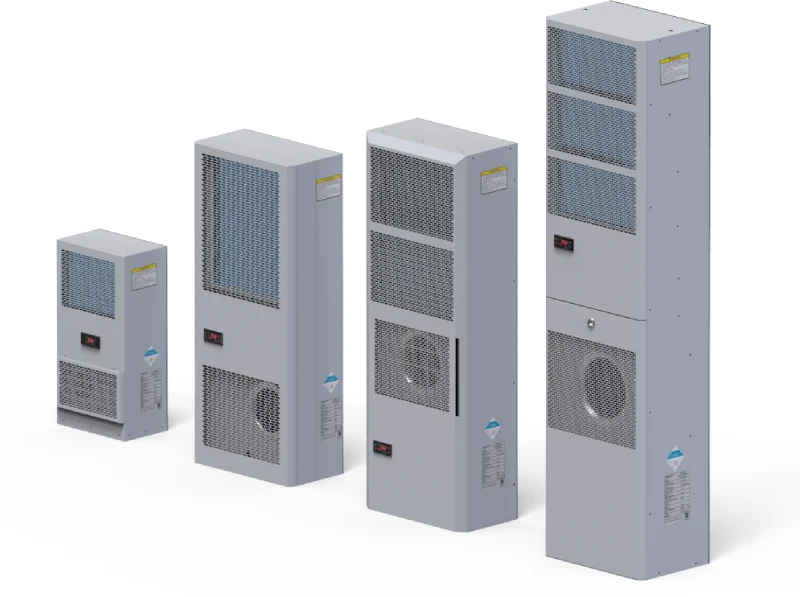
What Is an Electronic Enclosure Air Conditioner
Purpose and Uses
You might wonder why you need a special air conditioner for an enclosure. The answer is simple. Sensitive electronics inside an enclosure can get hot fast. If you let the temperature rise, you risk damaging your equipment. An enclosure air conditioner protects your electrical and electronic gear from overheating, moisture, and dust. You’ll find these units in places like factories, server rooms, and telecom boxes. They keep control panels, motor centers, and server racks safe. In commercial settings, they help with retail display cases and other enclosure applications. You can count on them to maintain stable temperatures and humidity, which means your equipment lasts longer and works better.
- Protects equipment from heat and moisture
- Maintains steady internal conditions
- Used in industrial and commercial enclosure applications
How It Works
Here’s how an enclosure air conditioner does its job. The unit pulls warm air from inside the enclosure. It passes this air through a cooling coil. The coil removes heat and moisture. Then, the unit sends the cooled, dry air back into the enclosure. This closed-loop system keeps outside air out. That means dust, water, and other harmful stuff can’t get in. The air keeps moving around your electronics, cooling and drying it again and again. This process keeps the temperature just right and helps your equipment last longer. You don’t have to worry about outside weather or dirty air messing with your sensitive gear.
Tip: Closed-loop cooling is key for protecting electronics in harsh or dusty environments.
Key Features
Let’s look at what makes these air conditioners stand out. Linkwell’s enclosure air conditioner units come packed with features that solve real-world problems.
| Feature | Description | Benefit to Cooling Needs |
|---|---|---|
| Sealing | Stops dust and debris from entering the enclosure. | Keeps sensitive equipment clean and safe. |
| Wash Down Resistance | Handles water sprays in food plants. | Works well in wet environments. |
| Chemical Resistance | Stands up to harsh cleaning agents. | Lasts longer in tough conditions. |
| Hygiene | Uses smooth, corrosion-resistant materials. | Reduces risk of contamination. |
| Condensate Control | Manages moisture inside the enclosure. | Prevents water damage. |
| Durability | Built with high-quality materials. | Withstands harsh environments and reduces maintenance. |
| Cooling Capacity | Matches the size and needs of your enclosure. | Ensures effective cooling for all enclosure sizes. |
| Remote Monitoring | Lets you check and control cooling from afar. | Helps you spot problems early and avoid downtime. |
| Compliance with Standards | Meets UL, CE, and ISO certifications. | Guarantees safety and reliability. |
Linkwell’s units also feature IP54/IP65 protection, inverter technology, and smart digital controls. You get reliable cooling, energy savings, and easy installation. With certifications like UL, CE, and ISO, you know you’re getting a product you can trust for any enclosure.
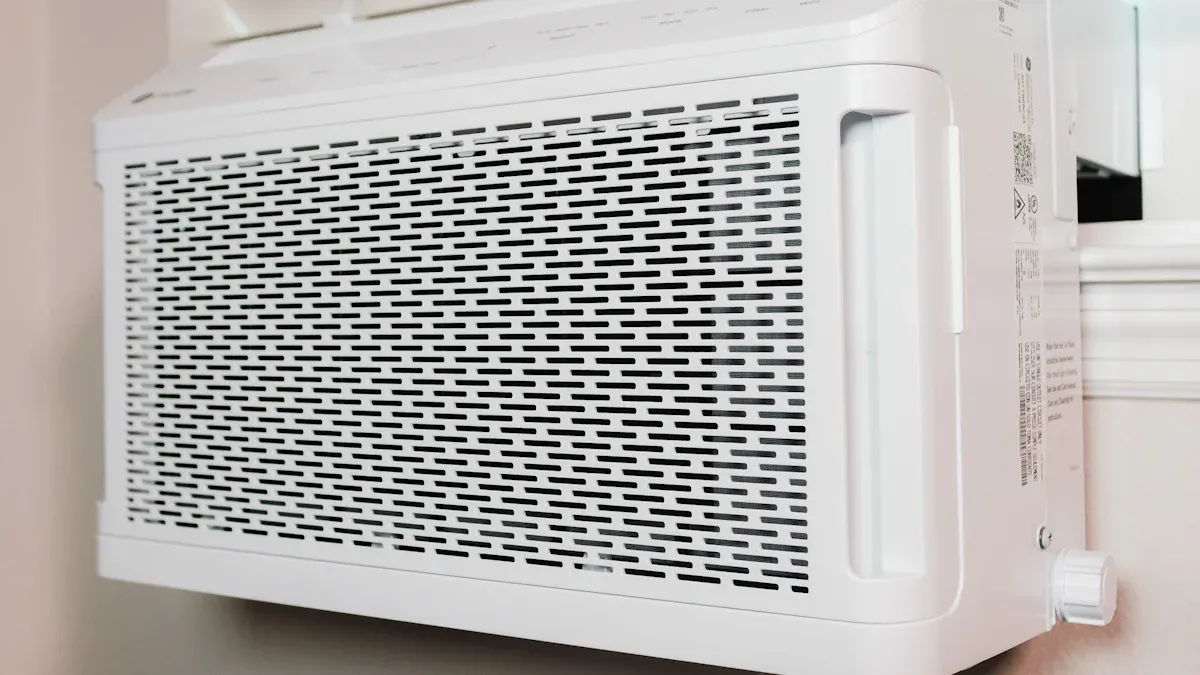
What Is a Room AC Unit
Purpose and Uses
You probably see room AC units in homes, apartments, and offices. These units are made for cooling spaces where people spend time. You can use them in bedrooms, living rooms, or small offices. Room AC units work best when you want to control the temperature in one area instead of the whole building. They help you stay comfortable during hot weather. If you live in a place with warm summers, you know how important cooling can be. Room AC units are also popular because they are easy to install and don’t require big changes to your space.
Note: Room AC units are perfect for single rooms or small spaces. You don’t need a complicated system to get reliable cooling.
How It Works
Room AC units use a simple process to deliver cooling. Here’s how it happens:
- Warm air gets pulled from your room into the unit.
- The air passes through a filter that catches dust and allergens.
- The air moves over the evaporator coil, where refrigerant absorbs heat and cools the air.
- The blower sends the cooled air back into your room.
- The unit transfers the absorbed heat outside.
This process keeps your space comfortable and helps you avoid overheating. You get steady cooling without needing a central system.
Key Features
Room AC units stand out because of their compact design and self-contained parts. You can install them in a window or mount them on a wall. They are made for cooling single rooms, which makes them different from larger systems. You don’t need a professional to set them up. Most units are economical and easy to use. You can adjust the settings to get the cooling you want. Many models have remote controls, timers, and energy-saving modes. These features make room AC units a smart choice for quick cooling and comfort.
| Feature | Description |
|---|---|
| Compact Design | Fits in small spaces |
| Easy Installation | No major changes needed |
| Adjustable Settings | Lets you control cooling |
| Economical | Saves money on energy bills |
| Self-Contained | All parts in one unit |
You get cooling that fits your needs and your space.
Electronic Enclosure Air Conditioner vs. Room AC: Why They Are Not the Same
Cooling Technology
When you look at electronic enclosure air conditioner vs. room ac: why they are not the same, the cooling technology stands out right away. Electronic enclosure air conditioners use thermoelectric coolers or compressor based system designs. Thermoelectric coolers have no moving parts, so you get higher reliability and silent operation. Many enclosure units also use a compressor based system, but they’re engineered for targeted cooling inside sealed spaces. Room AC units rely on a compressor based system with moving parts and refrigerants. This setup works well for open rooms but creates more vibration and noise.
Here’s a quick comparison:
| Feature | Electronic Enclosure Air Conditioners | Room AC Units |
|---|---|---|
| Cooling Technology | Thermoelectric coolers, compressor based system | Compressor based system |
| Reliability | Higher reliability, fewer moving parts | Lower reliability, more wear and tear |
| Size and Orientation | Smaller, flexible mounting | Larger, needs specific orientation |
| Vibration | Minimal vibration | Higher vibration and noise |
| Temperature Control | Maintains temperature within 0.5°C | +/- 2°C or more |
You get enhanced performance and reliability with enclosure cooling technology. The closed-loop system keeps contaminants out, so your electronics stay safe.
Power and Efficiency
Energy efficiency matters when you compare electronic enclosure air conditioner vs. room ac: why they are not the same. Enclosure air conditioners, especially thermoelectric and compressor based system models, use less energy overall. They deliver high cooling capacity with proportional control, so you only use the energy you need. Room AC units, which use a compressor based system, often lack this level of efficiency. They run at full power, even when you don’t need maximum cooling.
Check out this table:
| Feature | Thermoelectric Based | Compressor Based | Comments |
|---|---|---|---|
| Power Usage | More efficient in cooling and heating modes | Less efficient, lacks proportional control | Enclosure units require less energy |
| Efficiency | Up to 20 times more efficient in heating mode | Standard efficiency | Notable at lower temperature differences |
| Size | Smaller volume | Larger volume | Enclosure units save space |
| Weight | Lighter (7kgs) | Heavier (17kgs) | Easier installation for enclosure units |
| Maintenance | Low maintenance | Requires disassembly | Lower total cost of ownership |
You save energy and get better efficiency with enclosure air conditioners. The compressor based system in these units is optimized for sealed environments, so you get high cooling capacity without wasting energy.
Reliability and Durability
Reliability is a huge factor in electronic enclosure air conditioner vs. room ac: why they are not the same. Enclosure air conditioners use closed-loop cooling and compressor based system designs that protect sensitive electronics. You get IP55+ protection against dust and water, corrosion-resistant metal housing, and sealed loop cooling. These features boost reliability and durability, especially in harsh environments.
Room AC units use an open-loop compressor based system. They don’t offer the same reliability or protection. If you need cooling for an enclosure, you want a unit that can handle high ambient temperatures up to 140°F (60°C) and has certifications like UL, ATEX, and IECEx.
- Closed-loop cooling prevents overheating.
- IP ratings keep dust and moisture out.
- Corrosion-resistant housing extends lifespan.
- Sealed loop cooling stops outdoor air from entering.
Without proper cooling, internal temperatures can rise above 55°C. That leads to component failure, downtime, and faster aging of batteries. You need reliability for your enclosure, and that’s where Linkwell’s compressor based system shines.
Installation
Installation is another area where electronic enclosure air conditioner vs. room ac: why they are not the same. Enclosure air conditioners are designed for vertical mounting, often on doors or sides of cabinets. You must support the weight of the compressor based system, especially if you mount it on a door. Shallow enclosures may need specialized units. You also have to manage condensation, especially with top-mounted units.
Room AC units, which use a compressor based system, are usually installed in windows or walls. They don’t require the same careful planning. Enclosure air conditioners can be custom-designed for EIA 19-inch racks or other specific applications.
- Mount vertically on enclosure doors or sides.
- Support the weight of the compressor based system.
- Choose units for shallow enclosures.
- Manage condensation for top-mounted units.
- Select designs for racks and special applications.
You get flexibility and reliability with enclosure air conditioners. The compressor based system adapts to your space and cooling needs.
Vibration and Noise
Vibration and noise are important when you compare electronic enclosure air conditioner vs. room ac: why they are not the same. Enclosure air conditioners, especially thermoelectric and compressor based system models, operate quietly with minimal vibration. You won’t hear much from these units, so your electronics stay safe and undisturbed.
Room AC units, which use a compressor based system, create more noise and vibration. That’s because they have more moving parts. If you need cooling for sensitive equipment, you want a unit that keeps vibration low and reliability high.
- Minimal vibration protects electronics.
- Quiet operation boosts reliability.
- Compressor based system in enclosure units is engineered for silent cooling.
Temperature Control
Temperature control is a key difference in electronic enclosure air conditioner vs. room ac: why they are not the same. Enclosure air conditioners offer advanced temperature control features. You get low ambient cooling, head pressure control, and a temperature control board with LED status lights. You can adjust settings, set alarms, and run self-tests. Remote temperature sensors let you monitor and control temperature from a distance.
Room AC units, which use a compressor based system, don’t offer the same level of temperature control. They’re designed for comfort, not precision. Enclosure air conditioners maintain a closed loop environment, dehumidify, and recirculate clean air. That protects your electronics and boosts reliability.
| Feature | Description |
|---|---|
| Low ambient cooling/head pressure control | Efficient cooling in low temperatures |
| Temperature control board | LED lights, adjustable settings, alarms, self-test |
| Remote temperature sensor | Monitor and control temperature remotely |
| Closed loop environment | Keeps contaminants out |
| Dehumidification | Reduces humidity inside enclosure |
| Recirculation of clean air | Extends equipment life |
You get precise temperature control and reliability with enclosure air conditioners. The compressor based system is built for performance and energy efficiency.
Typical Applications
You see electronic enclosure air conditioner vs. room ac: why they are not the same when you look at typical applications. Enclosure air conditioners are made for industrial environments, telecom signal boxes, server racks, and control cabinets. They protect sensitive electronics from heat, dust, and moisture. The compressor based system and closed-loop cooling keep your equipment safe.
Room AC units, which use a compressor based system, are designed for homes, offices, and open spaces. They provide comfort for people, not targeted cooling for electronics.
- Enclosure air conditioners work in factories, outdoor cabinets, and high-tech applications.
- Room AC units cool bedrooms, living rooms, and offices.
- Enclosure units offer high cooling capacity, reliability, and energy efficiency.
- Room AC units focus on comfort and convenience.
If you need enhanced performance and reliability for your enclosure, choose a compressor based system designed for industrial cooling. The right unit will control temperature, save energy, and protect your equipment.
Tip: Always match your cooling solution to your application. Enclosure air conditioners deliver targeted cooling, reliability, and energy efficiency for sensitive electronics.
Choosing the Right Enclosure Cooling Solution
Assessing Cooling Needs
You want your enclosure to stay cool and safe. Start by looking at what your equipment needs. Think about how much heat your devices make and how much space you have. Use this table to help you compare what matters most when picking between a Linkwell Cabinet Air Conditioner and a room AC unit:
| Criteria | Description |
|---|---|
| Cooling Capacity | Matches the heat your equipment produces. |
| Energy Efficiency | Higher ratings save you money on power bills. |
| Form Factor and Size | Fits your enclosure and works with your mounting style. |
| Noise Levels | Lower noise is better for quiet spaces like medical equipment rooms. |
| Reliability and Durability | Keeps your system running without breaks. |
| Ease of Maintenance | Easy-to-clean filters and parts save you time. |
| Temperature Range and Control | Lets you set and hold the right temperature. |
| Ventilation and Airflow | Moves air well to stop hot spots inside the enclosure. |
If you run data centers or industrial machinery enclosures, you need a solution that matches your exact cooling needs. Linkwell’s compressor technology gives you the right fit for any enclosure.
Environmental Factors
Your environment changes everything. Dust, humidity, and extreme temperatures can make cooling tough. Outdoor enclosures face direct sunlight and higher heat, while indoor units deal with less stress. Dust and moisture can get inside and cause problems if you use the wrong system. Linkwell’s compressor air conditioners have IP54/IP65 ratings, so they keep out dust and water. You get steady cooling even in harsh places.
Maintenance and Longevity
You want your enclosure cooling system to last. Regular cleaning helps a lot. Clean the return air filters often to keep airflow strong. Deep clean your compressor unit at least once a year. In some places, people clean their units every three months for even better results. Keeping the cooling coils clean stops mold and keeps your compressor running well. Good maintenance means your enclosure stays cool and your equipment lasts longer.
- Clean filters often.
- Deep clean the compressor twice a year.
- Check cooling coils for mold.
Cost Considerations
Think about more than just the price tag. Look at energy savings, maintenance, and how long your compressor will last. Linkwell offers many options to fit your budget and enclosure needs. You can pick special sizes, colors, voltage, and even EMC-compliant models. Here’s what you can customize:
| Customization Option | Description |
|---|---|
| Dimensions | Get the right size for your enclosure. |
| Color Options | Choose colors for your LK32 series. |
| Voltage Specs | Match your power needs. |
| EMC Compliance | Pick models for sensitive electronics. |
If you need help, Linkwell’s team supports you 24/7. You get the right compressor solution for your enclosure, whether you work in data centers, medical equipment rooms, or industrial machinery enclosures.
Tip: Always match your cooling solution to your enclosure’s size, environment, and equipment. The right compressor air conditioner protects your investment and keeps your system running strong.
Summary of Key Differences
When you compare electronic enclosure air conditioners with room AC units, you see clear differences in how each one handles cooling. If you need to protect sensitive equipment, you want a solution that keeps the environment inside the enclosure stable. Room AC units focus on comfort for people, but enclosure air conditioners focus on keeping electronics safe and running smoothly.
Let’s break down the main differences:
- Enclosure air conditioners use a closed-loop system. This means the compressor recirculates air inside the enclosure, blocking out dust, moisture, and outside air. Room AC units use an open-loop system, so the compressor pulls in air from the room and pushes it outside.
- The compressor in an enclosure air conditioner is built for reliability. It can handle harsh environments, high temperatures, and even outdoor conditions. Room AC compressors are designed for indoor comfort and may not last as long in tough settings.
- You get advanced temperature control with enclosure cooling. The compressor keeps the temperature steady, often within half a degree. Room AC units have less precise controls, and the compressor cycles on and off based on comfort settings.
- Enclosure air conditioners offer IP54/IP65 protection. The compressor and all parts are sealed, so you don’t have to worry about water or dust. Room AC units don’t have this level of protection.
Tip: Always match your cooling solution to your space. Think about the size, layout, and what you need to protect. If you have sensitive electronics, an enclosure air conditioner with a reliable compressor is the best choice.
Here’s a quick table to help you compare:
| Feature | Enclosure Air Conditioner (Compressor) | Room AC Unit (Compressor) |
|---|---|---|
| Cooling System | Closed-loop, compressor | Open-loop, compressor |
| Protection | IP54/IP65, sealed enclosure | Basic, not sealed |
| Temperature Control | Precise, stable | Less precise |
| Application | Electronics, industrial, outdoor | People, indoor comfort |
| Durability | High, robust compressor | Standard, indoor compressor |
When you choose a cooling solution, look at the space, the number of devices, and the environment. Check the layout, ceiling height, and any heat sources. The right compressor system keeps your equipment safe and your costs down.
- Assess the size and layout of your enclosure.
- Consider how many devices need cooling.
- Look at ceiling height and window placement.
- Identify any extra heat sources.
If you want a productive and reliable setup, pick the compressor air conditioner that matches your enclosure’s needs.
Conclusion
Choosing between an electronic enclosure air conditioner and a room AC unit comes down to your needs and where you plan to use the system. If you want to protect sensitive electronics in tough environments, you need a solution built for the job. Room AC units work well for keeping people comfortable at home or in the office, but they do not offer the same level of protection or control.
Here’s a quick comparison to help you decide:
| Feature | Electronic Enclosure Air Conditioners | Room AC Units |
|---|---|---|
| Cooling Mechanism | Uses refrigerant cycle to cool enclosures | Uses refrigerant cycle for room cooling |
| Applications | Suitable for harsh and industrial environments | Primarily for residential use |
| Maintenance Requirements | Needs regular filter and condenser checks | Lower maintenance |
| Cooling Capacity | 1,000–20,000 BTUH | Varies, usually lower |
| Environmental Considerations | May use special coolants, check model details | Often designed to be eco-friendly |
If you work in an industrial setting, you should look for features like high protection ratings (IP54, IP65, or NEMA 4X) and closed-loop cooling. For outdoor or washdown areas, make sure your unit has rain hoods or shrouds to block water. In corrosive or marine environments, closed-loop air conditioners with stainless steel parts keep your equipment safe. Hazardous locations need explosion-proof cooling and positive pressure to keep out flammable gases.
Tip: Always match your cooling solution to your environment. Think about dust, moisture, and temperature swings before you buy.
You can use this advice to pick the right system:
- For indoor industrial use, choose filter fans with good gaskets and place intakes low.
- For outdoor or wet areas, use shrouds that block rain and spray.
- For marine or corrosive spots, go with closed-loop systems and stainless steel.
- For hazardous zones, use explosion-proof units and keep pressure inside the cabinet.
When you pick the right air conditioner, you protect your investment and keep your equipment running strong. If you need help, brands like Linkwell offer support and custom options to fit your exact needs.
You see clear differences between electronic enclosure air conditioners and room AC units. If you manage sensitive electronics, enclosure air conditioners offer sealed protection and precise control. Room AC units work best for comfort in open spaces. Check this table to guide your decision:
| Distinction | Realism | Idealism |
|---|---|---|
| Focus | Practicality and objectivity | Vision and long-term goals |
| Decision-making | Cost-effectiveness and risk management | Stakeholder engagement and sustainability |
Avoid these mistakes:
- Choosing an incompatible cooling system
- Ignoring humidity and corrosion
- Specifying incorrect cooling capacity
You can find helpful resources, like guides on NEMA and IP ratings, to support your choice.
FAQ
What makes an enclosure air conditioner different from a room AC unit?
You get a sealed system with an enclosure air conditioner. It keeps dust and moisture out. Room AC units cool open spaces for people, not electronics. Enclosure units protect sensitive equipment in harsh environments.
Can I use a room AC unit to cool my electrical cabinet?
No, you shouldn’t. Room AC units let outside air in. That means dust and humidity can reach your electronics. Enclosure air conditioners use closed-loop cooling to keep your equipment safe and dry.
How do I choose the right size for my enclosure air conditioner?
Start by checking your equipment’s heat output. Use a thermal load calculator or ask the manufacturer for help. Linkwell’s team can guide you to the best fit for your cabinet.
Tip: Always match the cooling capacity to your enclosure’s needs for the best results.
Do enclosure air conditioners need a lot of maintenance?
Not really! You just need to clean the filters and check for debris every few months. Regular maintenance keeps your unit running smoothly and extends its life.