Imagine you’re setting up a control panel in a busy factory. You need every connection to stay safe, reliable, and compliant with strict industry standards. The material you choose for your terminal blocks isn’t just a small detail—it shapes the safety and performance of your entire system. Take a look at some common issues in industrial settings:
| Safety Incident | Description | Solution |
|---|---|---|
| Corrosion | Poor connections in humid or chemical areas | Use corrosion-resistant materials |
| Inadequate Wire Size | Overheating or fires from mismatched wires | Match wire gauge to terminal block specs |
| Overloading | Risk of fire from exceeding block capacity | Use correct ratings and protective devices |
| Electrical Arcing | Damage from sparks caused by loose connections | Secure and regularly inspect all connections |
Choosing the right material can help you avoid these risks. In this guide on how to choose the right terminal block material for your application, you’ll see why certified, high-quality products from Linkwell make a difference.
Key Takeaways
- Identify your system’s electrical and mechanical needs before selecting terminal blocks. This ensures safe and reliable connections.
- Choose conductive materials wisely: copper offers the best conductivity, brass provides durability, and aluminum is lightweight and cost-effective.
- Select insulation materials based on your environment. PA66 and polycarbonate are great for fire safety, while ceramic is ideal for extreme conditions.
- Always check for certifications like UL, CE, and RoHS. These ensure your terminal blocks meet safety and quality standards.
- Investing in high-quality, certified terminal blocks may cost more upfront but saves money in the long run by reducing maintenance and downtime.
Application Requirements for Terminal Blocks
Electrical and Mechanical Needs
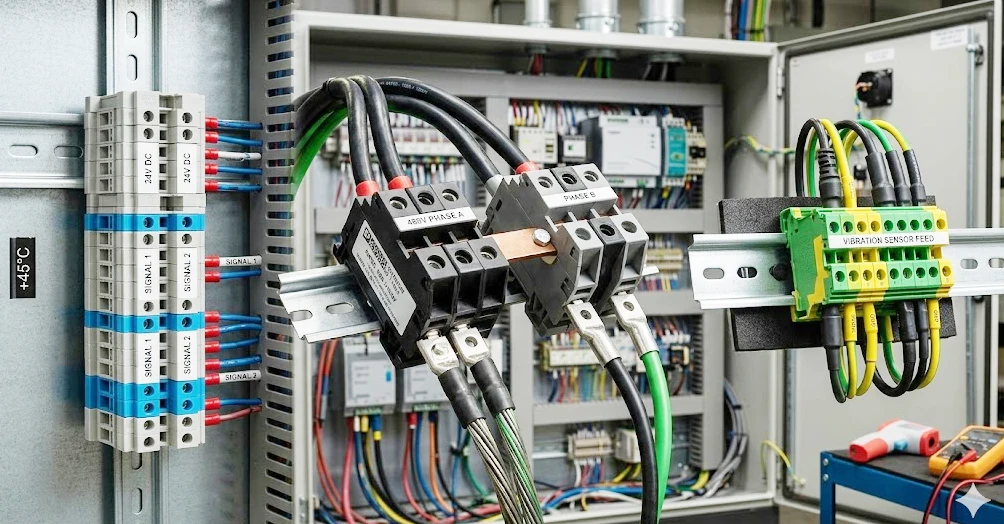
When you start thinking about how to choose the right terminal block material for your application, you need to look at both electrical and mechanical needs. Every system has its own demands, and getting these details right helps you avoid headaches down the road.
- Wire Gauge: Check the minimum and maximum wire size your system needs. The terminal block must fit your wires perfectly.
- Voltage Rating: Make sure your system’s voltage stays below the terminal block’s voltage rating. This keeps your setup safe.
- Current Requirements: Pick terminal blocks rated for at least 150% of your system’s maximum current. This gives you a safety margin.
- Pole Count: Count how many circuits you need. Terminal blocks come in options from 1 to 24 poles.
- Control Cabinet Environment: Think about how your cabinet is set up. The wiring entry style should match your space and layout.
Mechanical strength matters, too. In busy factories, terminal blocks face a lot of physical stress. Mechanical testing checks if a terminal block can handle bumps, pulls, and vibrations. If you choose a block that’s tough enough, you’ll have fewer problems with loose wires or broken parts.
Tip: Always match the terminal block’s specs to your real-world needs. This step keeps your connections reliable and safe.
Environmental and Installation Factors
Your environment can make or break your terminal block’s performance. Here are some things to watch out for:
- Temperature extremes can weaken materials or cause them to crack.
- Moisture can lead to corrosion or even failure.
- Chemical exposure may break down certain plastics or metals.
- Vibration can loosen connections over time.
- Dust can build up and interfere with electrical contact.
The installation conditions also play a big role. For example, high-quality thermoplastics give you great insulation, while metals like copper and aluminum offer strong conductivity. If your panel faces moisture or high heat, you need materials that can handle those challenges. Picking the right material means your terminal blocks will last longer and work better, even in tough environments.
How to Choose the Right Terminal Block Material for Your Application: Key Factors
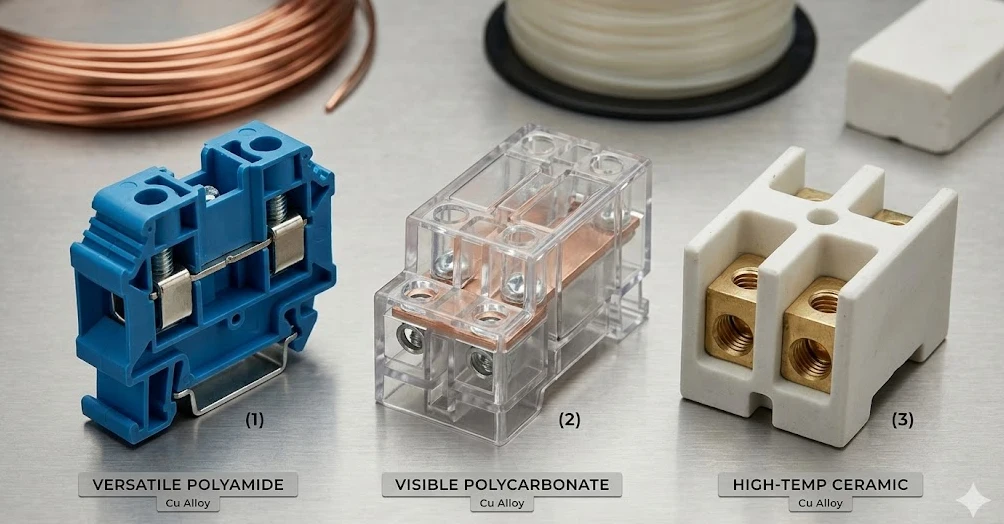
When you want to know how to choose the right terminal block material for your application, you need to look at both the conductive and insulation materials. Each one plays a big role in how your system performs and how long it lasts. Let’s break down what you need to know.
Conductive Materials: Copper, Brass, and Aluminum
The conductive part of a terminal block carries the electrical current. You want a material that keeps power loss low and stands up to tough conditions. Here’s a quick look at the most common options:
| Material | Electrical Conductivity (% IACS) |
|---|---|
| Pure Copper | 100% |
| Brass (70/30) | 28% |
| Brass (85/15) | 40-44% |
| Aluminum Bronze | 12-15% |
Copper stands out for its excellent conductivity. It keeps power loss and heat generation to a minimum, which is important for high-current applications. You’ll find copper terminals in places where reliability matters most, like control panels and power distribution systems. Copper also has great wear resistance and high tensile strength. It resists corrosion, so it works well in harsh environments.
Brass offers good mechanical strength and flexibility. It’s easier to machine than copper, which helps if you need custom solutions. Brass also resists corrosion, making it a solid choice for many industrial setups.
Aluminum is lighter and less expensive, but it doesn’t conduct electricity as well as copper or brass. You might see aluminum in applications where weight matters more than maximum conductivity.
Tip: If you want the best performance and reliability, copper is usually your best bet. Brass works well for flexible, durable connections. Aluminum is a good pick when you need to save on weight or cost.
Insulation Materials: PA66, Polycarbonate, Ceramic
The insulation material keeps the electrical current where it belongs and protects your system from heat, fire, and chemicals. Here’s how the main options compare:
| Material | Glass Transition Temperature (Tg) | Continuous Use Temperature | Heat Deflection Temperature (HDT) |
|---|---|---|---|
| Nylon 66 (PA66) | ~70°C | 80-90°C | 75-85°C at 1.8 MPa |
| Polycarbonate | ~147°C | 125-135°C | 130-140°C at 1.8 MPa |
| Ceramic | N/A | N/A | N/A |
| Material | Flammability acc. to UL 94 | Key Properties |
|---|---|---|
| Polyamide (PA66) | V-0 | Higher continuous operating temperature, Improved fire resistance, Halogen-free, Low smoke and fumes |
| Polyamide (PAGF) | HB | Excellent dimensional stability, Very good mechanical characteristics, Halogen-free flame retardant |
| Polycarbonate (PC) | V-2 / V-0 | High dimensional stability, High electrical insulation properties, Halogen-free flame retardant |
| Technical Ceramics | N/A | High fire resistance, Inherent flame protection, High chemical stability |
PA66 (Nylon 66) is a popular choice for terminal block insulation. It offers good heat resistance and fire safety, especially with a V-0 flammability rating. It’s halogen-free, so it produces less smoke and fumes if there’s a fire. Polycarbonate can handle even higher temperatures and provides strong electrical insulation. It’s also halogen-free and flame-retardant, making it a safe pick for demanding environments.
Ceramic insulation stands out for its natural fire resistance and chemical stability. You’ll see ceramic in applications where extreme heat or harsh chemicals are a concern.
Note: Always check the temperature and fire ratings for your application. If your system runs hot or faces fire risks, pick materials with high ratings like PA66 or polycarbonate.
Linkwell Terminal Blocks and Connectors
Now, let’s see how Linkwell helps you solve the puzzle of how to choose the right terminal block material for your application. Linkwell’s terminal blocks, screw terminals, and terminal block connectors use high-quality copper alloys for conductivity and flame-retardant PA66 or polycarbonate for insulation. This combination gives you reliable performance, even in tough industrial environments.
Linkwell’s products come with certifications like UL, CE, and RoHS. These certifications mean you get safety, environmental compliance, and peace of mind. Here’s a quick look:
| Certification | Description |
|---|---|
| UL | Safety standards (Underwriters Laboratories) |
| CE | EU safety compliance (Conformité Européenne) |
| RoHS | Restriction of Hazardous Substances |
You’ll find Linkwell terminal blocks in control panels, power distribution, and automation systems. They serve as the central hub for your circuit connections, keeping everything organized and safe. The modular design makes installation and maintenance easy. You can expand or reconfigure your setup without hassle.
Linkwell stands out with features like:
- Industrial-grade performance testing
- Fast lead times and global support
- Broad customization options (OEM, private-label)
- Cost-effective solutions for every project size
When you match the right material to your application, you boost system reliability and safety. For example, using copper terminals in high-current setups prevents overheating and power loss. Choosing PA66 or polycarbonate insulation protects against fire and heat. Linkwell’s certified, modular solutions make it simple to get the right fit for your needs.
Callout: Don’t overlook the impact of material choice. The right combination of conductive and insulation materials can prevent failures, reduce downtime, and keep your operations running smoothly.
If you want to know how to choose the right terminal block material for your application, start with your system’s electrical, mechanical, and environmental needs. Then, look for certified products like Linkwell’s that match those requirements. You’ll get long-term value, safety, and peace of mind.
Safety, Compliance, and Cost Considerations
Industry Standards and Certifications
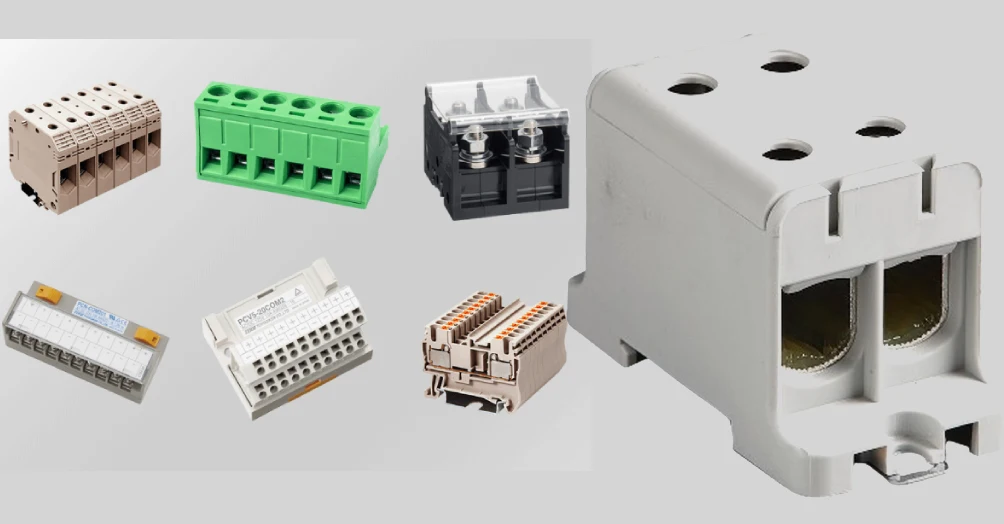
When you select terminal blocks, you want to know they meet the highest safety and quality standards. Linkwell takes this seriously. The company’s products carry certifications like TUV, UL, CE, and RoHS. These marks show that your terminal blocks follow strict rules for safety and environmental protection. You can see how different standards apply around the world:
| Standard Type | Specific Standards | Description |
|---|---|---|
| IEC | IEC 60079, IEC 60947 | Governs safety and performance in Europe |
| UL | UL 1059, UL 486A-486B | Covers safety in North America |
| CSA | CSA C22.2 series | Ensures compliance in Canada |
| ATEX/IECEx | – | For equipment in explosive environments |
| CE | – | Shows compliance with European safety laws |
| CCC | – | Mandatory safety mark in China |
| JIS | – | Japanese safety and quality standards |
Certifications like these matter. They help you access global markets and prove your products are safe. CE marking and RoHS compliance are especially important if you sell or install equipment in Europe. RoHS means your terminal blocks do not contain hazardous substances, which protects both people and the environment.
Safety and Flame Retardancy
You want your electrical connections to stay safe, even in tough conditions. Linkwell uses flame-retardant PA66 for housing, which helps prevent fires. The design includes isolation barriers to keep wires from touching each other. Pure copper conductors give you stable current flow, while corrosion-resistant coatings protect against moisture and chemicals.
Check out the minimum flame retardancy requirements for industrial terminal blocks:
| Parameter | V-0 Limit | V-1 Limit | V-2 Limit |
|---|---|---|---|
| Afterflame | ≤10 sec | ≤30 sec | ≤30 sec |
| Afterglow | ≤30 sec | ≤60 sec | ≤60 sec |
| Dripping | Not allowed | Not allowed | Allowed |
| Cotton Ignition | No | No | Allowed |
Linkwell’s terminal blocks meet the V-0 standard. This means they stop burning quickly and do not drip flaming material. You get peace of mind knowing your system is protected.
Tip: Regular checks for wear or damage help prevent electrical hazards. Grounding terminal blocks add another layer of safety by giving fault currents a safe path.
Cost, Longevity, and Value
You might wonder if certified terminal blocks cost more. The answer is yes, but you get what you pay for. Here’s a quick look at how prices compare:
| Brand | Price Range | Certification |
|---|---|---|
| Phoenix Contact | ₹80–100 | UL, CE, VDE, IEC |
| Xinlaiya | ₹40–50 | UL, CE, RoHS, IEC |
Certified products like Linkwell’s offer long-term value. You save money over time because these blocks last longer, need less maintenance, and reduce downtime. High-quality materials resist heat, vibration, and corrosion. This means your system stays up and running, even in harsh environments.
- You get enhanced safety with flame-retardant housings.
- Corrosion-resistant parts keep connections reliable.
- Efficient assembly saves you time and labor costs.
- Stable operation prevents costly shutdowns.
When you think about how to choose the right terminal block material for your application, remember that certified, high-quality products protect your investment and keep your operations safe.
Conclusion
Choosing the right terminal block material can make or break your project. You want your connections to stay safe, reliable, and compliant—no matter where you install them. Here’s a quick recap to help you make the best choice:
- Start with your application: Think about your electrical and mechanical needs. Check your wire size, current, and voltage. Don’t forget about the environment—heat, moisture, and chemicals all matter.
- Pick the right materials: Go for copper or brass if you need strong conductivity. Choose PA66 or polycarbonate for insulation when you want fire safety and durability. If you face extreme heat, ceramic might be your best friend.
- Check certifications: Look for UL, CE, RoHS, or TUV marks. These show your terminal blocks meet global safety and quality standards.
- Balance cost and value: High-quality, certified products like Linkwell’s may cost a bit more, but they last longer and keep your system running smoothly.
Tip: Don’t just pick the cheapest option. Think about long-term reliability, safety, and how much downtime could cost you.
If you’re not sure which terminal block fits your needs, check out Linkwell’s datasheets or reach out to their support team. You’ll get expert advice and find a solution that matches your project—whether you need a standard block or a custom connector.
Ready to upgrade your electrical connections? Visit Linkwell’s Terminal Blocks page or contact their team for help. Make the smart choice now, and you’ll save time, money, and headaches down the road.
You can make smart choices by following a few simple steps. First, check your electrical needs and pick the right connection type. Next, review your environment and choose materials that resist heat, moisture, and corrosion. Linkwell’s terminal blocks meet strict safety standards and offer custom options for any project. Always balance cost, performance, and compliance. For extra help, look at Linkwell’s datasheets or reach out to their support team. Certified solutions keep your system safe and reliable for years.
FAQ
What makes terminal block material so important?
The right material keeps your connections safe and reliable. It helps prevent overheating, corrosion, and electrical failures. You get better performance and longer life for your system.
How do I pick the best conductive material?
- Choose copper for top conductivity.
- Pick brass for durability and flexibility.
- Go with aluminum if you need something lightweight and affordable.
Which insulation material should I use?
| Material | Best For |
|---|---|
| PA66 | General use, fire safety |
| Polycarbonate | High heat, tough jobs |
| Ceramic | Extreme heat, chemicals |
Will my terminal blocks handle harsh environments?
You can trust certified materials like PA66 and copper. They resist heat, moisture, and chemicals. Always check the ratings for temperature and corrosion resistance before you buy.
Do certified terminal blocks cost more?
Yes, but you save money over time. Certified blocks last longer, need less maintenance, and help you avoid costly downtime. You get real value for your investment.