If you want to keep your electrical cabinet safe, you need to know how to calculate heat load for electrical cabinet: a step-by-step guide for engineers can help. Start by figuring out the watts your devices produce. Next, check how much heat enters from outside.
Add them together for your total heat load. Accurate calculations make sure you pick the right cooling system and avoid overheating. For dependable cabinet cooling, many engineers trust Linkwell for quality solutions.
Key Takeaways
- Accurate data collection is crucial. Gather details about your cabinet and its components to avoid errors in heat load calculations.
- Calculate internal heat generation by adding the power loss of each device. Use the formula to convert watts to BTU/hr for accurate results.
- Consider external heat sources like ambient temperature and sunlight. These factors can significantly impact the total heat load.
- Combine internal and external heat loads to determine the total heat load. This number helps you select the right cooling system for your cabinet.
- Regular maintenance of cooling units is essential. Clean filters and check for leaks to ensure efficient operation and prevent overheating.
How to Calculate Heat Load for Electrical Cabinet: Step-by-Step Guide for Engineers
Server Rack Cooling Calculator (CFM)
Result:
Server Rack Cooling Calculator (CFM)
Result:
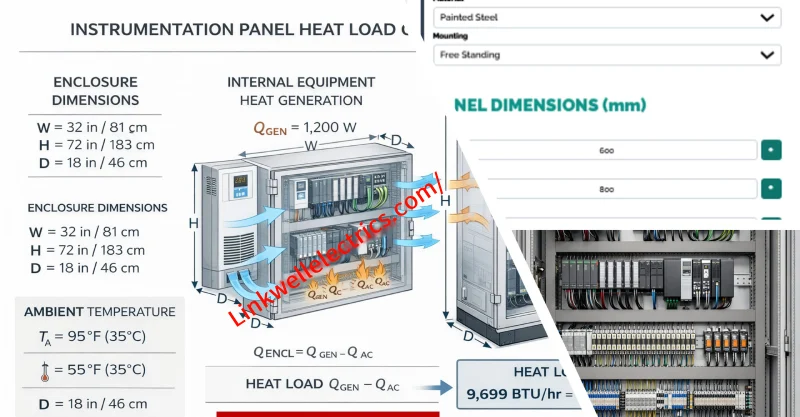
If you want to keep your electrical cabinet running smoothly, you need to master how to calculate heat load for electrical cabinet: a step-by-step guide for engineers. This process helps you avoid overheating, extend equipment life, and pick the right cooling solution. Let’s break down each step so you can get reliable results every time.
Gather Component Data and Enclosure Details
Start by collecting all the important details about your cabinet and its contents. Accurate data collection is the foundation of a reliable calculation. Even a small measurement error can throw off your results by as much as 5%. Here’s what you need to gather:
- Enclosure Type
- Enclosure Material
- Mounting Configuration
- Panel Dimensions (Width × Height × Depth)
- Internal Equipment Power Dissipation
- Ambient and Internal Temperature Conditions
- Installation Altitude
Tip: Write down every detail. Double-check your numbers. Missing or incorrect data is one of the most common errors in heat load calculations.
If you use a heat load calculator, you’ll need these data points to get an accurate answer. Linkwell’s team can help you with this step if you’re unsure about any detail.
Assess Internal Heat Generation
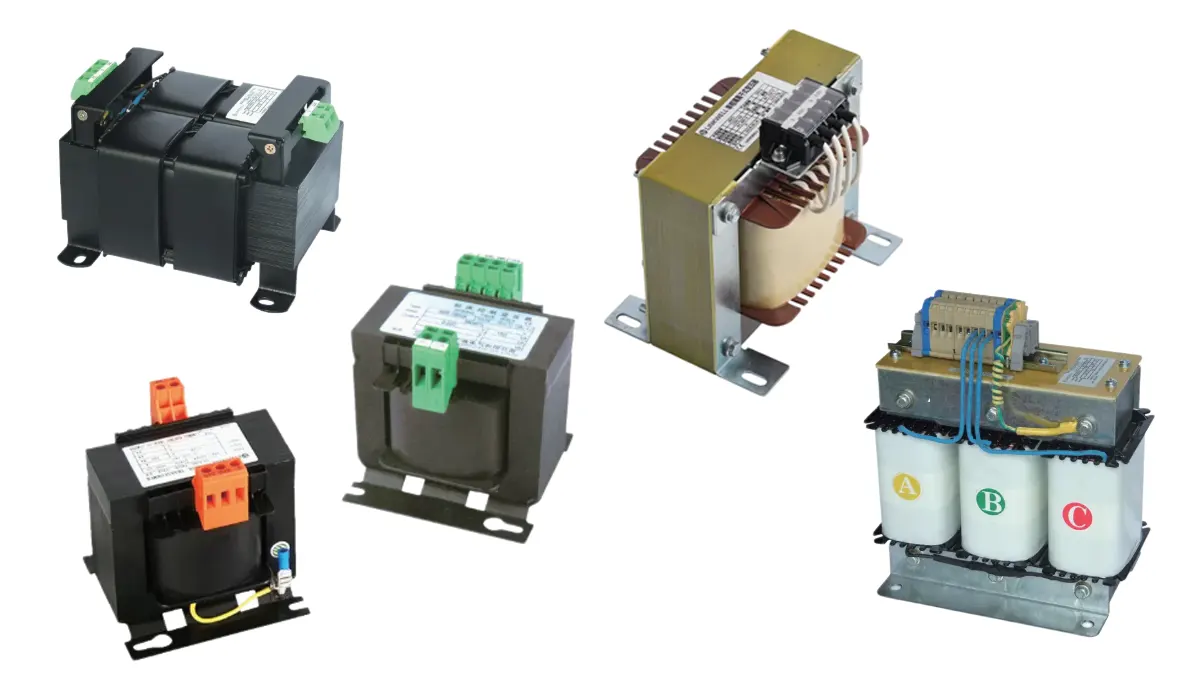
Now, look at what’s inside your cabinet. Every device generates heat. The higher the power rating, the more heat you’ll need to manage. For example, a high-power VFD or microprocessor can raise the temperature quickly, while a small PLC adds less heat.
Here’s a quick reference for common components:
| Component | Approx. Heat Loss (W) |
|---|---|
| Small PLC | 5 - 20 W |
| VFD / Inverter | 2% - 5% of rated power |
| Power Supply | 10% - 15% of output power |
To calculate the heat generation from all internal devices, add up the power loss (in watts) for each component. Then, convert the total to BTU/hr using this formula:
- Total Internal Heat Load (BTU/hr) = Total Watts Lost × 3.41
For example, if your devices lose 200 watts inside the cabinet:
Total Internal Heat Load = 200 W × 3.41 = 682 BTU/hr
Note: The conversion factor 3.41 comes from the relationship between watts and BTU/hr. If you work in a region that uses kcal/hr, multiply watts by 0.86 instead.
If you want to see how much hotter your cabinet gets compared to the room, subtract the outside temperature from the inside temperature. This gives you the Delta T.
Evaluate External Heat Sources
Don’t forget about heat coming from outside the cabinet. External sources can add a lot to the total heat load, especially if your cabinet sits in a hot room or direct sunlight. Here are the main external heat sources:
| External Heat Source |
|---|
| Heat transfer due to ambient temperature |
| Solar heat gain |
| Heat transfer from nearby equipment |
To estimate the heat entering from outside, calculate the surface area of your enclosure and multiply it by the temperature difference between inside and outside. Sunlight can make a big difference, so consider the cabinet’s location and exposure.
Humidity and dust can also affect your calculations. High humidity can cause condensation, and dust can block vents, making your cooling system work harder.
When you combine all these factors, you get the total heat load. This is the number you’ll use to size your cooling solution. Linkwell’s experts recommend checking your numbers and using the right formulas to avoid common mistakes like ignoring starting currents or using the wrong voltage.
If you follow how to calculate heat load for electrical cabinet: a step-by-step guide for engineers, you’ll get a reliable result. This helps you choose the right Linkwell cooling product and keeps your equipment safe.
Heat Load of an Enclosure: Combining Internal and External Factors
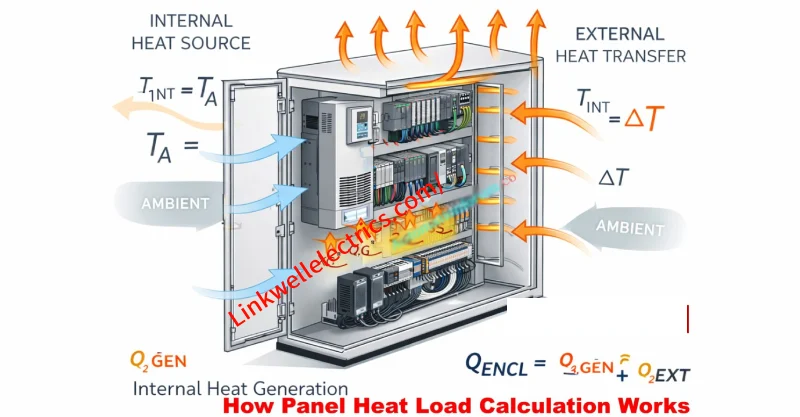
Calculate Total Heat Load
You have already figured out the heat from your internal devices. Now, you need to add the heat coming from outside. This gives you the total heat load of an enclosure. Here’s a simple way to do it:
- Add up all internal heat sources (like PLCs, VFDs, and power supplies).
- Calculate the heat entering from outside. This depends on the surface area, material, and how much hotter it is outside compared to inside.
- Combine both numbers for your total.
Let’s look at a sample calculation:
Suppose your internal devices lose 200 watts. The enclosure has a surface area of 10 square feet. The outside temperature is 95°F, and you want to keep the inside at 85°F. The temperature rise is 10°F.
Use this formula:
Total Heat Load (BTU/hr) = (Internal Watts × 3.413) + (1.25 × Area × Temperature Rise)
Plug in the numbers:
- Internal: 200 × 3.413 = 682.6 BTU/hr
- External: 1.25 × 10 × 10 = 125 BTU/hr
Total heat load of an enclosure = 682.6 + 125 = 807.6 BTU/hr
Always check your math. Even a small mistake can lead to overheating or system failure.
Consider Temperature Differentials and Solar Gain
Temperature rise is not just about the devices inside. The difference between inside and outside temperatures matters a lot. If the outside is hotter, heat flows in, causing a bigger temperature rise. If the inside is hotter, you might lose heat instead.
Sunlight can make things even trickier. Direct sun on your cabinet can cause a huge temperature rise. Outdoor cabinets often face this problem. Solar gain can push the temperature rise much higher than you expect.
Here are some ways to manage temperature rise from sunlight and ambient conditions:
- Place cabinets in shaded areas.
- Use light-colored paint to reflect sunlight.
- Add insulation or sunshields.
- Increase airflow with fans or air conditioners.
Note: Lighter colors like white or light gray reflect more sunlight, which helps lower the temperature rise inside your enclosure.
If you combine all these factors—internal heat, outside temperature, and solar gain—you get a true picture of the heat load of an enclosure. This helps you pick the right cooling method, whether it’s natural convection, forced air, or an active cooling system. Adjust your cooling strategy based on the actual temperature rise you measure or calculate.
Selecting Linkwell Cooling Solutions for Electrical Cabinets
Choosing a Cabinet Air Conditioner
You’ve calculated your total heat load. Now, you need to match it to the correct cooling system. Linkwell offers cabinet air conditioners that fit a wide range of needs. You want to look at several factors before you decide. Check out this table for a quick guide:
| Factor | Description |
|---|---|
| Internal Heat Load | Add up all heat dissipation from your devices to find the cooling capacity. |
| Ambient Temperature | Think about where your cabinet sits. Hot rooms need more cooling. |
| Solar Exposure | Cabinets in sunlight need extra heat dissipation and maybe insulation. |
| Humidity & Condensation | High humidity means you need moisture control. |
| Contaminants | Dust and chemicals call for closed-loop cooling to protect your electronics. |
| Water Exposure | If your cabinet faces water, pick sealed and corrosion-resistant units. |
Linkwell’s cabinet air conditioners come in different models. The LK-AJ Series gives you high precision temperature control and handles heat dissipation up to 2000W. The LK-ANT Series works well for power industry cabinets and tight spaces, with optional heating and dehumidification. You can use this info to pick the right unit for your cabinet’s heat dissipation needs.
Benefits of Outdoor Enclosures and Top Mounted Cabinet AC Units
If your cabinet sits outdoors or in a harsh environment, you need extra protection and reliable heat dissipation. Linkwell’s outdoor enclosures and top mounted cabinet AC units offer strong cooling performance and flexible installation. Here’s a quick comparison:
| Feature | Linkwell Outdoor Enclosures | Top Mounted Cabinet AC Units |
|---|---|---|
| Energy Efficiency | High (inverter compressors) | Varies by model |
| Cooling Performance | Consistent in tough spots | Depends on setup |
| Protection Rating | IP54/IP65 | Varies |
| Installation Flexibility | Multiple mounting options | Fixed top installation |
| Advanced Controls | Digital controls | Limited |
You get high energy efficiency and steady heat dissipation with outdoor enclosures. Top mounted AC units save space and deliver targeted heat dissipation right where you need it.
Tip: Place intake fans at the bottom or front to bring in cool air. Put exhaust fans at the top or back to push heat out. Keep a 1:1 ratio of intake to exhaust fans for balanced airflow.
For maintenance, clean exterior surfaces with 70% IPA after each use. Use hydrogen peroxide-based cleaner for the inside weekly. Inspect gaskets monthly and clean ventilation components with compressed air. Always disconnect power before cleaning.
Choosing the right Linkwell cooling solution keeps your cabinet safe and ensures proper heat dissipation. Plan ahead, measure carefully, and follow these tips for the best results.
You can’t afford to guess when it comes to heat load calculations. Accurate numbers keep your equipment safe and efficient. Here’s why it matters:
- Proper sizing can cut equipment costs by up to 20%.
- Energy savings may reach 30% over the system’s life.
- You avoid surprise breakdowns and extend equipment life by years.
| Common Issue | What Happens |
|---|---|
| Power Outages | Operations get disrupted |
| High Device Failure Rate | Overheating causes more breakdowns |
| Fire Hazards | Overloaded circuits increase fire risk |
Need help? Linkwell’s experts offer technical support, project customization, and step-by-step guides. Visit Linkwell’s website or reach out for advice on your next project.
FAQ
How do I determine the right size for my cooling system?
You need to calculate the total heat load, including internal device heat and external factors. Proper sizing ensures your cabinet stays cool without wasting energy. Use accurate data and formulas to find the right cooling capacity for your setup.
What factors affect the amount of heat transferred into my enclosure?
External factors like sunlight, ambient temperature, and humidity influence heat transfer. These elements can increase the heat transferred into your cabinet, making it essential to consider location and environment when choosing cooling solutions.
Can I use outdoor enclosures for harsh environments?
Absolutely! Outdoor enclosures are designed to withstand weather, dust, and corrosion. They often include features like sealing and cooling options, helping you manage heat transfer effectively in tough conditions.
How often should I maintain my cabinet cooling units?
Regular maintenance keeps your system running smoothly. Clean filters, check for leaks, and inspect fans monthly. Proper upkeep prevents excess heat transfer and ensures your equipment stays protected.
Is it necessary to consider solar gain when calculating heat load?
Yes! Solar gain can significantly increase heat transfer into your cabinet, especially outdoors. Accounting for sunlight exposure helps you select the right cooling capacity and avoid overheating.