When people search for “different types of air conditioners,” most results focus on home units—split systems, window units, or portable ACs. But if you’re working in an industrial, commercial, or engineering environment, that perspective is incomplete.
Because in real-world B2B applications, the question is not simply “what type of air conditioner?”—it’s:
What exactly are you trying to cool—and under what conditions?
Once you shift your thinking from product names to application logic, choosing the right system becomes much clearer. This guide walks you through that process step by step, helping you move from general understanding to precise selection—especially for equipment and enclosure cooling.
Start with the Core Question: What Are You Cooling?
All air conditioning systems fall into two fundamentally different categories:
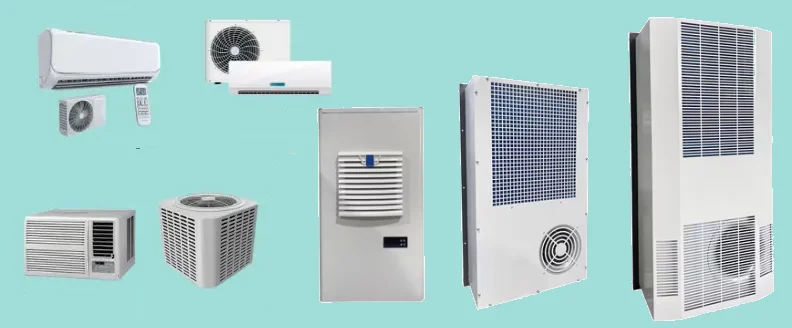
Comfort Cooling (Human-Focused)
These systems are designed to regulate temperature for human comfort in indoor environments.
Typical examples include:
- Split Air Conditioner
- Window Air Conditioner
- Portable Air Conditioner
Key characteristics:
- Broad temperature tolerance (not highly precise)
- Focus on airflow, noise reduction, and aesthetics
- Designed for homes, offices, retail spaces
These systems dominate the consumer market—but they are not suitable for industrial equipment cooling.
Equipment / Process Cooling
In B2B environments, the priority is not comfort—it’s system reliability.
Applications include:
- Electrical control cabinets
- Automation systems
- Telecom enclosures
- Energy storage systems (ESS)
- Outdoor control panels
Typical solutions:
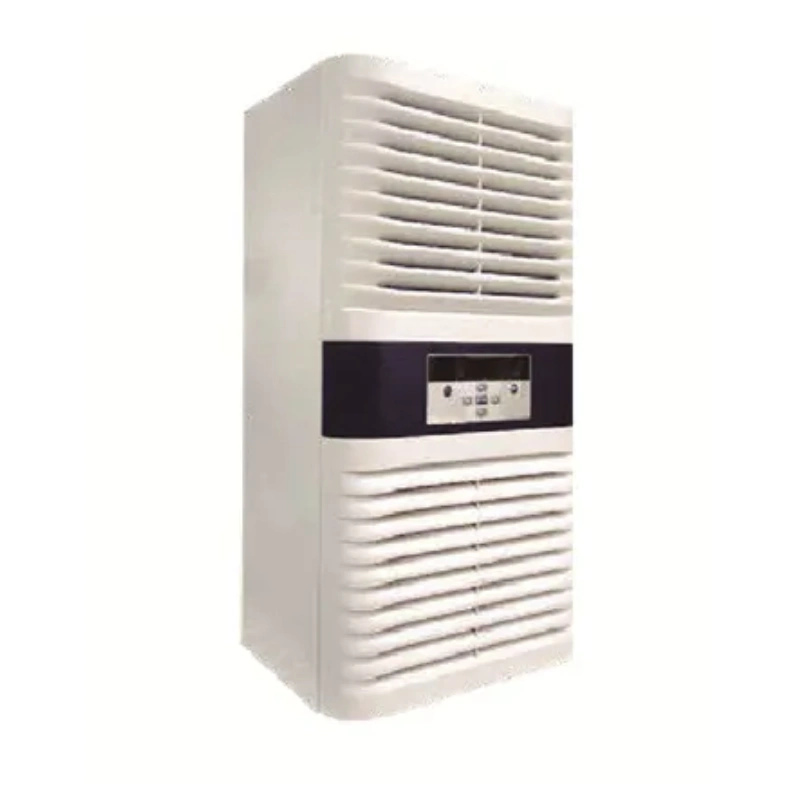
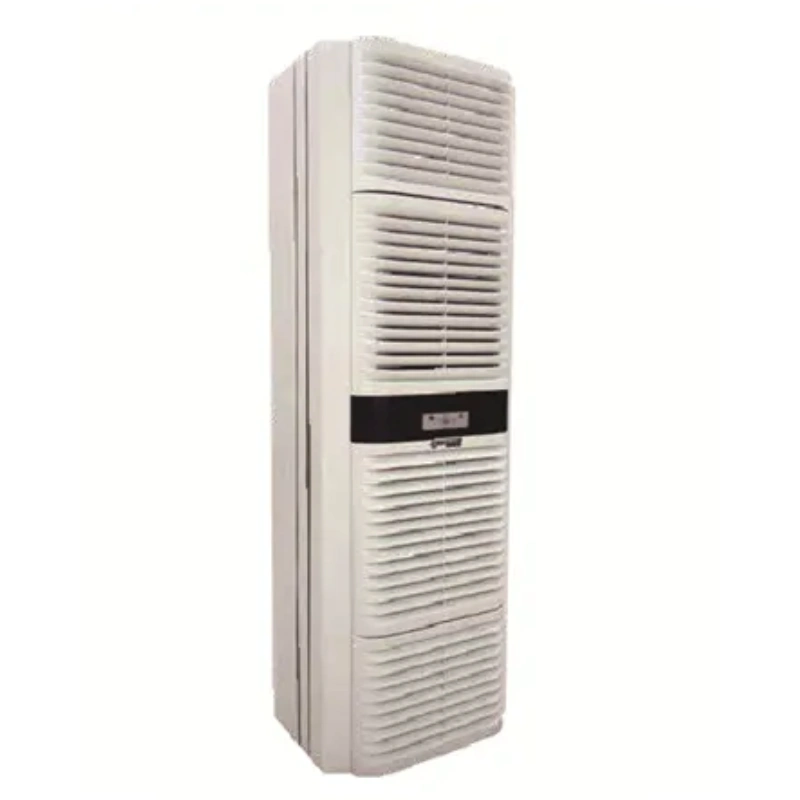
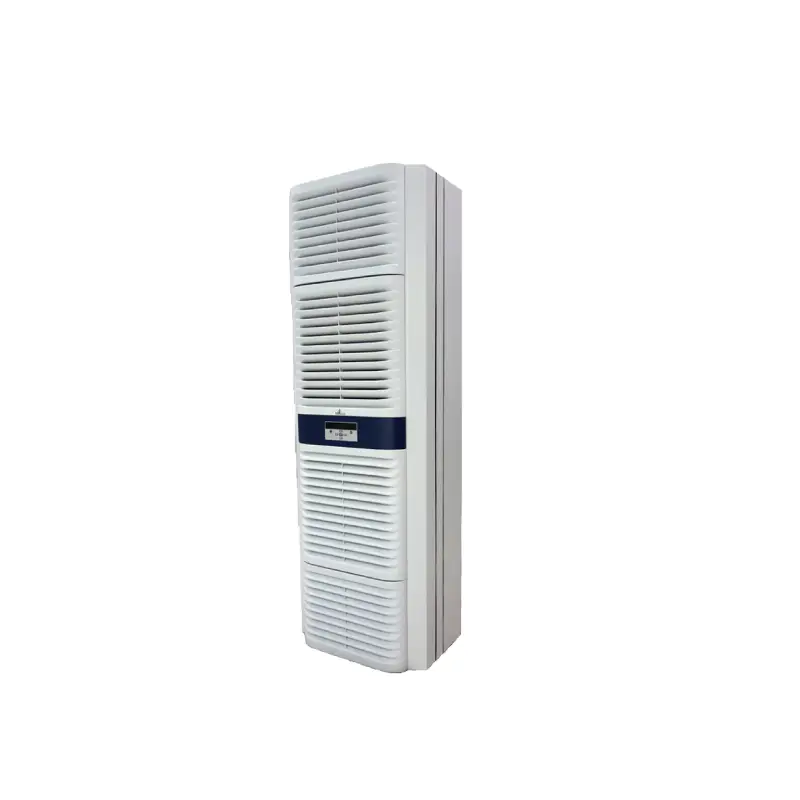
- Enclosure Air Conditioner
- Telecom Shelter Air Conditioner
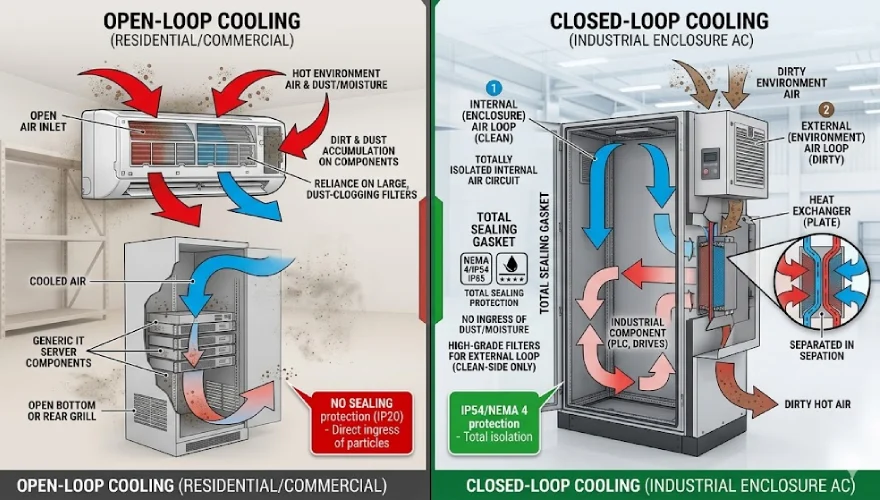
Why this category is different:
| Factor | Comfort AC | Equipment Cooling |
|---|---|---|
| Goal | Human comfort | Equipment protection |
| Temperature control | ±2–3°C | ±0.5–1°C |
| Environment | Indoor, stable | Harsh, outdoor, dusty |
| Design priority | Quiet & aesthetic | Sealing, durability, IP rating |
This distinction is critical. Many system failures happen because users apply residential AC logic to industrial scenarios.
Recommended products

Structural Types: How the System Is Built and Installed
Once you define the application, the next step is understanding how the system is physically configured.
Different Types of Air Conditioners: Compact / Local Cooling Systems (High Relevance for Industry)
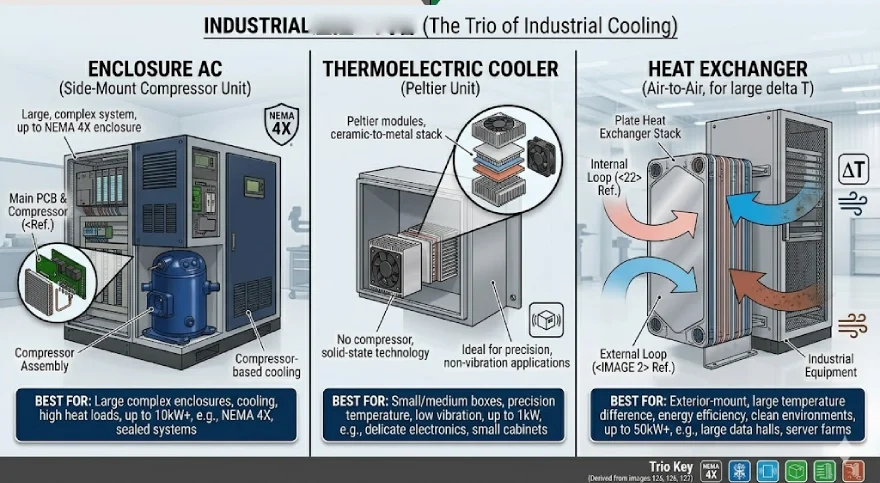
These are designed for small, enclosed, high-heat-density environments.
Common types:
- Thermoelectric Cooler
- Mini compressor-based cooling units
- Cabinet-mounted air conditioners
Advantages:
- Independent operation (no central system required)
- Easy integration into existing equipment
- Precise temperature control
These are ideal for:
- Control cabinets
- Battery storage boxes
- Outdoor telecom enclosures
Distributed Systems (Commercial Use)
These systems serve multiple indoor zones.
- Multi-zone split systems
- VRF (Variable Refrigerant Flow) systems
Suitable for:
- Office buildings
- Retail environments
Centralized Systems (Large-Scale Cooling)
Used in large infrastructure:
- Packaged Rooftop Unit
- Chilled water systems
Features:
- High cooling capacity
- Centralized control
- Complex installation
These are effective for large buildings—but overkill for localized equipment cooling.
Heat Rejection Method: How the System Removes Heat
This is where engineering selection becomes more technical—and where manufacturers can differentiate.
Air-Cooled Systems (Most Common)
Heat is dissipated through ambient air using fans and condensers.
Benefits:
- Simple installation
- Lower cost
- No additional infrastructure required
Most enclosure air conditioners fall into this category.
Water-Cooled Systems (High Efficiency)
Heat is transferred via circulating water.
Benefits:
- Stable performance in high ambient temperatures
- Higher efficiency under heavy loads
Limitations:
- Requires cooling towers and piping systems
- Higher installation and maintenance complexity
Typically used in:
- Large industrial plants
- Central cooling systems
Thermoelectric Cooling (Specialized Applications)
Based on the Peltier effect rather than compressors.
Benefits:
- No refrigerant
- No moving parts
- Silent and vibration-free
Limitations:
- Lower efficiency (low COP)
- Limited cooling capacity
Best suited for:
- Small electronic enclosures
- Precision instruments
Application-Based Segmentation
From a B2B sales perspective, this is the most practical way to guide customers.
Residential & Light Commercial
- Split systems
- Window units
- Portable ACs
High competition, price-sensitive, low differentiation.
Commercial Buildings
- Ceiling cassette systems
- Ducted systems
- Packaged rooftop units
Focus on airflow distribution and energy efficiency.
Industrial & Equipment Cooling (High-Value Segment)
This is where specialized solutions dominate.
Key subcategories:
① Enclosure / Cabinet Cooling
- Designed for sealed electrical cabinets
- Dustproof, waterproof (IP-rated)
- Prevents overheating of sensitive components
② Harsh Environment Cooling
- High temperature resistance
- Anti-corrosion design
- Suitable for steel plants, chemical facilities
③ Telecom & Outdoor Cooling
- Operates in extreme climates
- Supports 24/7 cooling (even in low ambient temperatures)
- Often powered by DC or hybrid energy systems
Why Standard Air Conditioners Fail in Industrial Use
This is a critical conversion point.
Many buyers initially consider using standard split systems for equipment cooling—but this often leads to problems:
- ❌ Poor sealing → dust ingress
- ❌ Condensation risk → electrical failure
- ❌ Inability to handle high ambient temperatures
- ❌ Lack of precise temperature control
In contrast, specialized enclosure cooling systems are designed to:
- Maintain stable internal temperatures
- Protect against environmental contamination
- Extend equipment lifespan
How to Choose the Right Air Conditioner
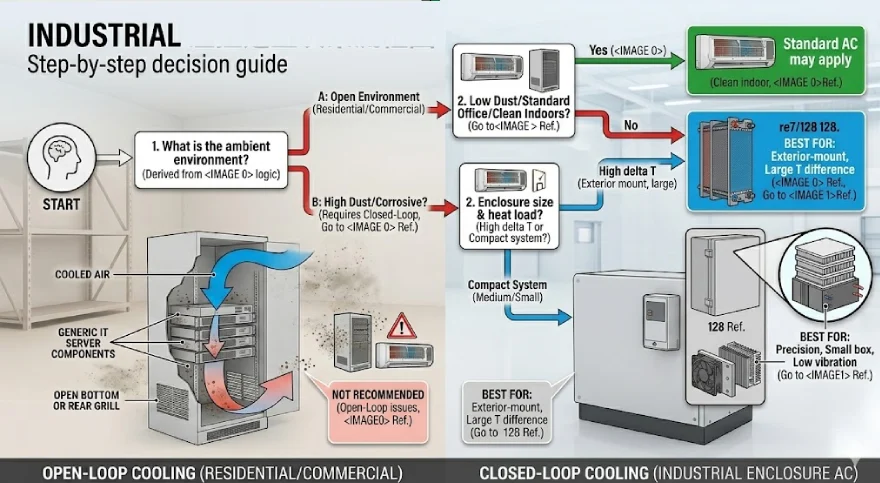
Instead of comparing brands, follow this structured approach:
Step 1: Define the Application
- Human comfort or equipment protection?
Step 2: Evaluate Heat Load
- Total heat generated inside the enclosure or space
Step 3: Analyze Environment
- Indoor or outdoor?
- Ambient temperature range?
- Dust, humidity, or corrosive exposure?
Step 4: Select Cooling Type
- Air-cooled, water-cooled, or thermoelectric
Step 5: Match Structure
- Cabinet-mounted, wall-mounted, rooftop, etc.
This process ensures you select a system based on functionality—not assumptions.
FAQ
What are the main types of air conditioners?
The most common types include:
- Split Air Conditioner
- Window Air Conditioner
- Portable Air Conditioner
- Packaged rooftop units
- Enclosure air conditioners
Can I use a regular split air conditioner to cool an electrical cabinet?
In most cases, no.
Standard split systems are designed for open indoor spaces, not sealed environments. When used for cabinets, they can lead to:
- Dust and moisture entering the enclosure
- Condensation forming on sensitive components
- Unstable temperature control
For electrical cabinets, a dedicated
Enclosure Air Conditioner is the correct solution, as it maintains a closed-loop system and protects internal components.
What is the difference between comfort cooling and equipment cooling?
The difference lies in purpose and design:
- Comfort cooling focuses on human temperature perception
- Equipment cooling focuses on heat dissipation and system stability
Equipment cooling systems offer:
- Higher temperature precision
- Sealed operation (dustproof and waterproof)
- Better performance in harsh environments
This is why industrial applications require specialized systems instead of residential AC units.
Which type of air conditioner is best for outdoor environments?
- Enclosure air conditioners
- Telecom cooling units
- Ruggedized industrial AC systems
These are specifically designed to handle:
- High ambient temperatures
- Dust and debris
- Rain and humidity
Standard indoor AC systems are not built for these conditions and tend to fail prematurely.
What is the best cooling solution for small enclosed spaces?
For compact spaces such as control panels or battery enclosures, the most suitable options are:
- Thermoelectric Cooler
- Small compressor-based cabinet air conditioners
The choice depends on heat load:
- Low heat → thermoelectric cooling
- Medium to high heat → compressor-based systems
What is the difference between air-cooled and water-cooled air conditioners?
The main difference is how heat is removed:
- Air-cooled systems use fans and ambient air
- Water-cooled systems use circulating water for heat transfer
Air-cooled systems are more common due to:
- Simpler installation
- Lower cost
How do I choose the right air conditioner for my application?
Instead of focusing on brand or model, follow this process:
- Define what you are cooling (people or equipment)
- Calculate the heat load
- Evaluate environmental conditions
- Select the appropriate cooling method
- Match the system structure to your installation space
This approach ensures you select a solution that fits your actual needs—not just a general-purpose product.
Why is temperature control important for electrical equipment?
Excess heat is one of the main causes of equipment failure.
Without proper cooling, you may face:
- Component aging and reduced lifespan
- Unexpected shutdowns
- Increased maintenance costs
Conclusion
Understanding the different types of air conditioners is not about memorizing product categories—it’s about recognizing application fit.
While comfort cooling systems dominate the market, the real engineering challenge lies in cooling equipment in demanding environments.
That’s where specialized solutions—like enclosure air conditioners and compact cooling units—deliver real value:
- Higher reliability
- Better protection
- Lower long-term maintenance costs