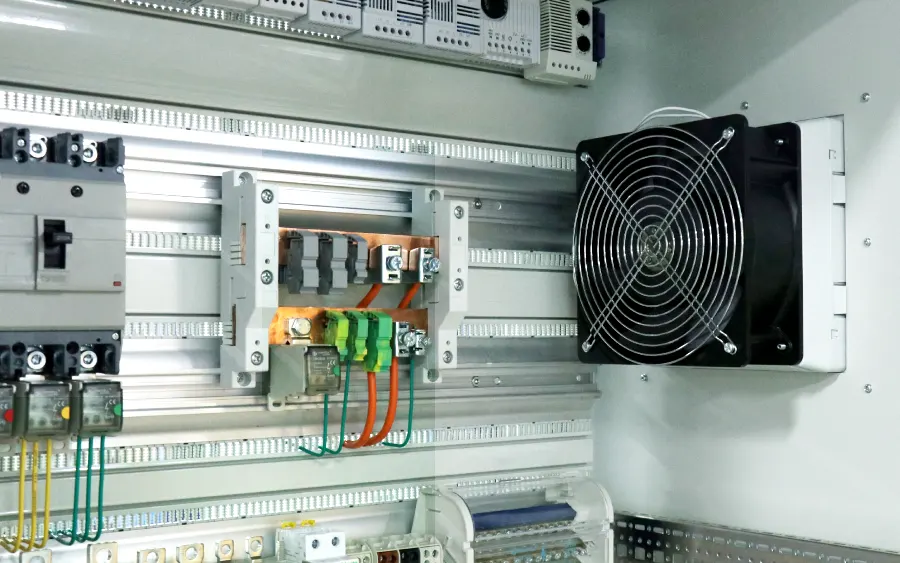
You want to get transformer sizing right for your electrical cabinets, and for good reason. The wrong transformer can cause serious problems—think fire hazards, overheating, or even arc flashes. Here’s a quick look at what can go wrong:
| Root Cause | Hazard Result |
|---|---|
| Internal arcing or short circuit | Oil ignition and fire |
| Overheating of windings | Thermal runaway and combustion |
| Tap changer failure | Contact sparking and arc flashes |
| Bushing breakdown | External flashover or explosion |
That’s why picking a certified, energy-efficient control transformer matters. Linkwell offers reliable solutions built for industrial control panels and machinery, giving you peace of mind and long-term performance.
Key Takeaways
- Identify all devices in your electrical cabinet and their power ratings. This helps prevent overloads and ensures smooth operation.
- Calculate the total load demand by adding the VA ratings of all devices. Include a safety margin of 15-25% to accommodate unexpected loads.
- Choose a transformer that matches your calculated kVA rating and voltage needs. Always round up to the next available capacity for future expansion.
- Consider customization options for unique requirements, such as special voltages or mounting styles. Linkwell offers tailored solutions to fit your needs.
- Review certifications like UL and CE to ensure safety and reliability. Trust in quality transformers to protect your equipment and maintain efficiency.
- Inside a transformer, stability and reliability are crucial.
Identify Loads
Before you pick a control transformer for your electrical cabinet, you need to figure out what devices you want to power. This step helps you avoid overloads and keeps your equipment running smoothly. Let’s break it down.
List Devices and Ratings
Start by making a list of every device inside your cabinet. You might see relays, contactors, timers, sensors, and small motors. Each device has a power rating, usually shown on its label or in the manual. These ratings tell you how much electricity each load needs.
Here’s a quick look at the types of loads you’ll find most often:
| Type of Load | Description | Examples |
|---|---|---|
| Resistive Load | Converts electricity into heat. | Incandescent lamps, space heaters |
| Inductive Load | Needs a magnet to work. | Transformers, electric motors |
| Capacitive Load | Controls current flow in circuits. | Used in power circuit control |
You’ll also want to think about how each load operates:
- Essential loads: These run all the time, like emergency lighting or main machinery.
- Flexible loads: You can turn these on or off as needed, such as non-critical equipment.
- Variable loads: These change power needs, like motors or heaters.
- Background loads: These use steady power, such as computers or lighting.
Gather Voltage and Current Data
Once you have your list, check the voltage and current for each load. You’ll find this info on the device’s nameplate or in the specs. Write down the operating voltage (like 24V, 120V) and the current (in amps or milliamps). If you see a device with a high inrush current—like a motor or contactor—make a note. These loads need extra power when they start up.
You’ll notice that power ratings can vary by industry. For example, small businesses and offices usually have loads up to 50 kW, while commercial fleets or transit systems might use loads between 51–150 kW. Most electrical cabinets for control circuits use much lower ratings, so focus on the actual needs of your equipment.
By listing every load and gathering voltage and current data, you set yourself up for accurate transformer sizing. This step keeps your control circuits safe and reliable.
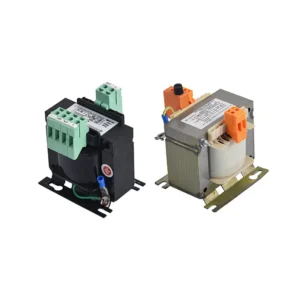
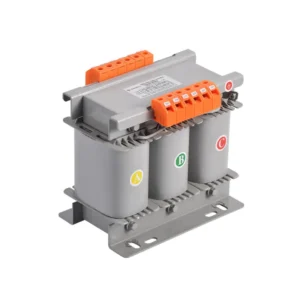
Recommended products

Calculate Transformer Sizing

Getting transformer sizing right is the key to safe and reliable control circuits in your electrical cabinet. You want to make sure your transformer can handle all the loads, plus any surprises that might pop up. Let’s walk through the process step by step, so you can pick the right kVA rating and avoid headaches down the road.
Single-Phase Sizing Formula
If you’re working with a single phase transformer, you need to figure out how much power your control circuit will draw. Start by adding up the VA ratings of every device in your cabinet. This includes relays, contactors, timers, and anything else that needs low voltage power.
Here’s a simple way to do it:
- List all devices and their steady-state VA ratings.
- Add up the continuous VA for each device to get your total sealed VA load.
- Check if any devices have a high inrush current, like contactors or motors. Add up the inrush VA for all devices that might start at the same time.
- Use this formula to find the selection inrush VA:
Selection Inrush VA = √((VA Sealed)² + (VA Inrush)²) - Divide the total VA by 1000 to convert to kVA. This gives you the kVA rating you need for proper transformer sizing.
Tip: Always use connected loads for transformer sizing. This helps you cover peak demand and keeps your control circuits safe.
Let’s look at an example. Say you have three devices with steady-state VA ratings of 20, 30, and 50. The total sealed VA is 100. If the inrush VA is 60, plug these numbers into the formula:
Selection Inrush VA = √((100)² + (60)²) = √(10000 + 3600) = √13600 ≈ 117 VA
Divide by 1000 to get 0.117 kVA. Choose a single phase transformer with a kVA rating that meets or exceeds this value.
Three-Phase Sizing Formula
If your cabinet uses a three phase transformer, the calculation is a bit different. You still need to add up all the loads, but the formula changes because three-phase power works differently.
Here’s what you do:
- Add up the total current (in amps) for all devices running on three-phase power.
- Multiply the total current by the operating voltage.
- Use this formula to find the kVA rating:
| Parameter | Formula |
|---|---|
| Three Phase kVA | Volts × Amps × 1.732 / 1000 |
Let’s try an example. Suppose your cabinet has a total current of 10 amps and runs at 400 volts. Plug these numbers into the formula:
Three Phase kVA = 400 × 10 × 1.732 / 1000 = 6928 / 1000 = 6.928 kVA
Pick a three phase transformer with a kVA rating of at least 7 kVA for proper transformer sizing. This covers your connected loads and gives you a buffer for peak demand.
Note: Electrical utilities and NEC guidelines recommend sizing based on connected loads. This prevents overloads and keeps your system reliable.
Apply Safety Margins
You don’t want your transformer running at its limit all the time. Adding a safety margin helps your transformer handle unexpected loads, like when motors start or when you expand your cabinet in the future.
Industry standards suggest a safety margin of 15–25% for transformer sizing in industrial applications. Here’s how you do it:
- Calculate your total kVA rating using the formulas above.
- Multiply by 1.15 to 1.25 to add a safety margin.
For example, if your calculated kVA rating is 2 kVA, add a 20% margin:
Final kVA Rating = 2 × 1.2 = 2.4 kVA
Choose a transformer with a kVA rating of at least 2.4 kVA. This gives you room for future expansion and keeps your control circuits running smoothly.
Pro Tip: Safety margins protect your transformer from overheating and voltage dips. You’ll avoid equipment failures and keep your cabinet reliable.
When you follow these steps for proper transformer sizing, you make sure your electrical cabinet stays safe, efficient, and ready for anything. Always check the transformer’s nameplate data to confirm it meets or exceeds your calculated needs. If you plan to add more devices later, bump up your kVA rating to stay ahead of the game.
Select Linkwell Control Transformer
Choosing the right control transformer for your electrical cabinet can feel overwhelming, but you can make it simple by focusing on three main things: matching the capacity and voltage, considering custom options, and checking certifications and durability. Linkwell makes this process easier with a wide range of solutions designed for industrial control panels, machinery, and electrical equipment. Let’s walk through how you can select the best transformer for your needs.
Match Capacity and Voltage
You want your transformer to handle the required capacity of your cabinet without breaking a sweat. Start by looking at the total VA or kVA you calculated earlier. This number tells you the minimum capacity your transformer needs. Linkwell offers a diverse selection of VA ratings, so you can always find a model that matches your required capacity. You’ll see options for both single-phase and three-phase transformers, which means you can cover almost any control circuit setup.
Linkwell control transformers also support a wide range of voltage configurations. Whether your cabinet runs on 110V, 220V, 400V, or even up to 800V, you’ll find a transformer that fits. You can specify different primary and secondary voltage combinations, including multi-tap options. This flexibility ensures your transformer works with international voltage standards and all sorts of industrial equipment.
Here’s a quick checklist to help you match the right transformer:
- Confirm the total required capacity (VA or kVA) for your cabinet.
- Choose a transformer with a capacity rating equal to or greater than your calculated value.
- Select the correct input (primary) and output (secondary) voltage to match your control circuit.
- Consider multi-tap or adjustable voltage models if your cabinet may move between locations or countries.
Tip: Always round up to the next available capacity rating. This gives you extra headroom for future expansion or unexpected loads.
Consider Custom Options
Sometimes, your cabinet has unique requirements. Maybe you need a special mounting style, a custom enclosure, or a specific voltage combination. Linkwell understands that one size doesn’t fit all, so they offer a variety of customization options to make sure your transformer fits perfectly.
| Type of Customization | Description |
|---|---|
| Electrical Customization | Custom voltages, frequency options, tap settings, and terminal designs tailored to your needs. |
| Mechanical Customization | Adjustments to mounting holes, enclosure size, and wiring directions for easier installation. |
| Brand & Market Customization | Support for OEM logos, labels, and packaging to boost your brand identity and market reach. |
You can request transformers with special features, like enhanced insulation for harsh environments or noise filtering for sensitive electronics. If you have a project that needs something out of the ordinary, just reach out to Linkwell’s team. They’ll help you design a transformer that meets your exact requirements, so your cabinet runs safely and efficiently.
Review Certifications and Durability
You want peace of mind knowing your transformer will last and keep your equipment safe. Linkwell control transformers come with top industry certifications, so you know you’re getting a product you can trust.
| Certification | Purpose |
|---|---|
| UL | Ensures safety and reliability in industrial use |
| CE | Confirms compliance with European standards |
| ISO9001 | Shows commitment to quality management principles |
These certifications mean your transformer meets strict safety and quality standards. You can install it in cabinets for machinery, automation, or electrical equipment and know it will perform reliably. Linkwell also builds its transformers with robust materials and energy-efficient designs. This means less heat, lower energy bills, and a longer lifespan for your equipment.
Note: Linkwell transformers are designed to handle high inrush currents and provide stable low voltage power for control circuits. This protects your sensitive devices from overloads and voltage spikes.
If you want to explore the full range of Linkwell control transformers, including detailed specs and customization options, visit their industrial control transformer page. You’ll find everything you need to make the right choice for your electrical cabinet.
Transformer Sizing Examples
You might feel unsure about transformer sizing selection, but real-world examples can make things clear. Let’s walk through two common scenarios you’ll see in electrical cabinets.
Single-Phase Example
Picture a control panel for a small machine. You have these loads:
- One relay (10 VA)
- One timer (15 VA)
- Two contactors (each 25 VA, with 60 VA inrush)
First, add up the steady-state VA:
10 + 15 + (2 × 25) = 75 VA
Now, check the inrush. Both contactors could start together, so total inrush is 120 VA.
Use the formula:
Selection Inrush VA = √((75)² + (120)²) = √(5625 + 14400) = √20025 ≈ 141.6 VA
Add a 20% safety margin:
141.6 × 1.2 ≈ 170 VA
Choose a Linkwell single-phase control transformer rated at least 0.2 kVA (200 VA). This covers your loads and gives you room for future devices.
Tip: Single-phase transformers work best for lighting, small motors, and electronics in cabinets with light loads.
Three-Phase Example
Now, imagine a larger control cabinet in a factory. You have:
- Total current: 8 A
- Voltage: 400 V
Use the formula:
Three Phase kVA = 400 × 8 × 1.732 / 1000 ≈ 5.54 kVA
Add a 20% margin:
5.54 × 1.2 ≈ 6.65 kVA
Pick a Linkwell three-phase transformer rated at least 7 kVA. Three-phase transformers handle higher power and keep voltage stable for big machines and automation.
Note: Sizing transformers for three-phase systems is key for industrial cabinets with many motors or heavy equipment.
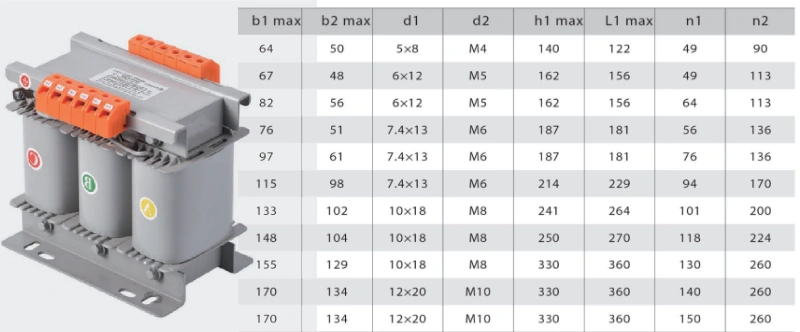
Model No. Capacity KVA b1 max b2 max d1 d2 h1 max L1 max n1 n2
JSG-0.16 0.16 64 50 5×8 M4 140 122 49 90
JSG-0.25 0.25 67 48 6×12 M5 162 156 49 113
JSG-0.4 0.4 82 56 6×12 M5 162 156 64 113
JSG-0.63 0.63 76 51 7.4×13 M6 187 181 56 136
JSG-1 1 97 61 7.4×13 M6 187 181 76 136
JSG-1.6 1.6 115 98 7.4×13 M6 214 229 94 170
JSG-2.5 2.5 133 102 10×18 M8 241 264 101 200
JSG-4 4.0 148 104 10×18 M8 250 270 118 224
JSG-6.3 6.3 155 129 10×18 M8 330 360 130 260
JSG-8 8 170 134 12×20 M10 330 360 140 260
JSG-10 10 170 134 12×20 M10 330 360 150 260
Quick Reference Chart
Here’s a handy chart for common cabinet applications:
| Application Type | Typical Load (kVA) | Recommended Transformer Type |
|---|---|---|
| Small control panel | 0.1 – 0.5 | Single-phase |
| Machine control cabinet | 0.5 – 2 | Single-phase |
| Automation panel | 2 – 5 | Single-phase or Three-phase |
| Large machinery cabinet | 5 – 15 | Three-phase |
| Industrial system | 15 – 50 | Three-phase |
You’ll see single-phase transformers in lighter loads and three-phase units in bigger, industrial setups. Always check your actual load and add a safety margin.
Common mistakes include underestimating peak demand, ignoring future expansion, or picking an oversized transformer. Review all devices and their needs before you finish sizing transformers for your cabinet.
Conclusion
You’ve made it to the end, and now you know how to size a low voltage control transformer for your electrical cabinet. Let’s recap the steps you should always follow:
- Inventory and classify every load in your cabinet. Check if each device is resistive, inductive, or non-linear.
- Determine the total load demand. Add up the amperage for each device and use conversion tables to help with quick calculations.
- Apply a safety margin—usually 15–25%—to your calculated amperage. This gives you room for future expansion and unexpected spikes.
- Choose a transformer that matches your voltage and amperage needs. Make sure it can handle the highest inrush amperage you expect.
When you select a Linkwell control transformer, you get more than just the right amperage. You get peace of mind with features that boost safety and reliability:
| Feature | Contribution to Safety and Reliability |
|---|---|
| Stable Voltage Output | Keeps sensitive equipment safe from voltage swings. |
| Electrical Isolation | Shields devices from surges and faults. |
| Noise Filtering | Maintains accuracy and efficiency in control systems. |
| Durability | Handles tough conditions for long-term use. |
| High Efficiency | Reduces energy loss and saves money. |
| Short-Circuit Protection | Prevents damage during faults. |
Linkwell transformers meet UL, CE, and ISO 9001:2015 standards. You can trust their quality and safety in any industrial cabinet.
Don’t forget about future needs. Oversize your transformer by 15–25% so you’re ready for new devices or higher amperage. Always check for overload and thermal protection, fault detection, and compliance with safety certifications.
If you still have questions, you’re not alone. Many people ask about the main job of a step down transformer, customization options, how to pick the right amperage, and whether Linkwell transformers are safe for industrial use. The answer is yes—Linkwell transformers are built for safety, reliability, and efficiency.
Remember: Control transformers are designed to provide stable low voltage power for control circuits in cabinets or equipment. Get the amperage right, plan for growth, and choose a trusted brand like Linkwell for the best results.
You now know how to size a control transformer for your electrical cabinet. Just remember these steps:
- List every device and its power needs.
- Calculate total load and add a safety margin.
- Pick a transformer that matches your voltage and future plans.
Linkwell control transformers give you reliable, efficient power for your control circuits. Need help or a custom solution? Reach out to Linkwell’s experts. Always plan ahead—your cabinet will thank you!
FAQ
What does kVA mean when picking a control transformer?
You see kVA on every transformer label. It stands for kilovolt-amperes. This number tells you how much power your transformer can handle. Always check the kVA rating before you buy. You want enough kVA for all your devices.
How do I know if I need a single-phase or three-phase transformer?
You need to check your cabinet’s power supply. If you see two wires, you probably need single-phase. If you see three or four wires, you need three-phase. Always match the phase to your equipment.
Why should I add a safety margin to my kVA calculation?
You add a safety margin to your kVA so your transformer never runs at full load. This keeps your transformer cool and safe. You also get extra kVA for future devices. Most people add 15–25% more kVA.
Can I use a higher kVA transformer than I calculated?
Yes, you can use a higher kVA transformer. You get more headroom for new devices. Your transformer will run cooler. Just make sure the voltage and phase match your cabinet.
What happens if I pick the wrong phase or kVA?
If you pick the wrong phase, your equipment will not work. If you pick too little kVA, your transformer will overheat. If you pick too much kVA, you waste money. Always check your phase and kVA before you buy.
Tip: Always double-check your kVA and phase before you order. This keeps your control circuits safe and reliable.
What Size Low Voltage Transformer Do I Need?
To determine what size low voltage control transformer you need, first calculate the total VA of all connected loads, including contactors, relays, solenoids, and indicator lights. Always consider starting or inrush current, especially for coils. Add a 20–30% safety margin to ensure stable operation, prevent overheating, and allow for future system expansion without replacing the transformer.