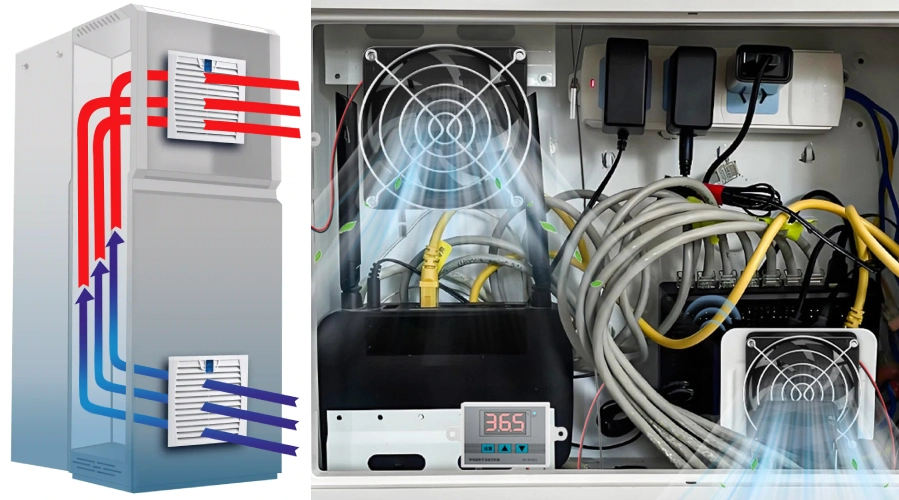
You want your electrical cabinet air conditioner to run smoothly, last longer, and keep your electronics safe—right?
In industrial applications, where ambient temperatures can exceed 50°C and airborne contaminants are prevalent, compressor selection becomes a critical design decision.
That’s why hermetic compressors lead the pack. They seal in refrigerant to prevent leaks, handle tough environments, and cut down on the need for constant attention. Your choice of compressor shapes cooling performance, impacts costs, and influences how often you’ll need repairs. Linkwell uses hermetic compressor technology in all their cabinet air conditioners, making them a smart pick for anyone who values peace of mind.
- Hermetic compressors are sealed units that prevent refrigerant leaks, ensuring reliable cooling for sensitive electronics.
- These compressors are energy-efficient, helping to lower electricity costs while maintaining powerful cooling performance.
- The compact design of hermetic compressors allows for easy installation in tight spaces, making them ideal for electrical cabinets.
- Hermetic compressors require less maintenance than semi-hermetic types, providing peace of mind and reducing downtime.
- Choosing a hermetic compressor means investing in durability and long-term reliability for your cooling systems.
What Is a Hermetic Compressor
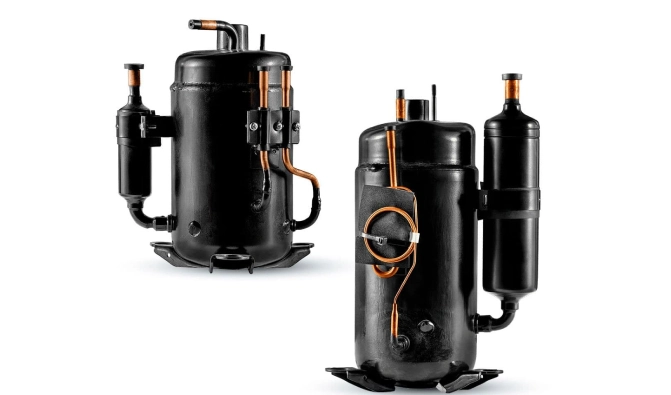
Hermetic Compressor Structure
If you open up an electrical cabinet air conditioner (not that you need to), you’ll find a special kind of compressor inside. This is called a hermetic compressor.
A hermetic compressor is a sealed motor-compressor unit that is welded together and is not generally repaired.
You get a compressor and a motor combined in one tight, welded shell. The whole unit sits inside the pressurized gas envelope of the refrigeration system. The motor actually runs inside the same space as the refrigerant, which cools it down as it works. This design keeps everything protected from dust, moisture, and outside air. You won’t see any bolts or gaskets that could loosen up over time. That’s why hermetic compressors are the go-to choice for electrical cabinet air conditioners.
- In hermetic and most semi-hermetic compressors, the compressor and motor driving the compressor are integrated.
- They operate within the pressurized gas envelope of the system.
- The motor is designed to operate in, and be cooled by, the refrigerant gas being compressed.
This setup means you don’t have to worry about leaks or outside contaminants sneaking in. The sealed design also means you won’t be opening it up for repairs—if it ever fails, you swap it out for a new one.
Key Benefits for Cabinet Air Conditioners
When you use hermetic compressors in your electrical cabinet air conditioners, you unlock a bunch of advantages that make your life easier and your equipment safer. Check out how these compressors stack up:
| Benefit | Description |
|---|---|
| Energy Efficiency | Hermetic compressors are designed to minimize electricity consumption while providing powerful cooling. |
| Durability | Their sealed design protects internal components, enhancing longevity and reliability. |
| Quiet Operation | These compressors operate quietly, reducing the need for soundproofing in sensitive environments. |
| Versatility | Suitable for various applications, from small fridges to large chillers, making them highly adaptable. |
| Effective Heat Dissipation | Built-in mechanisms ensure efficient heat transfer, preventing overheating and maintaining performance. |
| Cost-Effectiveness Over Time | Lower operational costs and reduced maintenance needs lead to a lower total cost of ownership. |
You want your electrical cabinet air conditioner to run efficiently and quietly, especially if it sits near sensitive electronics or in a control room. Hermetic compressors deliver on both fronts. Their energy-saving design keeps your power bills in check, while the sealed construction means you won’t have to worry about dust or moisture causing trouble inside your refrigeration system. Over time, you’ll notice fewer interruptions and more consistent cooling. That’s why Linkwell trusts hermetic compressors for every cabinet air conditioner—because you deserve peace of mind and reliable performance.
What Is a Semi-Hermetic Compressor
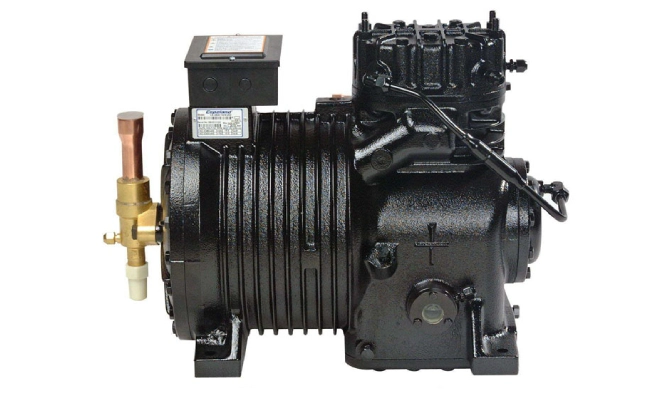
Semi-Hermetic Compressor Structure
You might wonder what sets a semi-hermetic compressor apart from the hermetic type you find in electrical cabinet air conditioners. The answer lies in the way the compressor is built and serviced. A semi-hermetic compressor comes with a bolted housing, not a welded shell. This design lets you open the compressor for repairs or maintenance. You can access the internal parts, swap out worn components, and even fix leaks if they happen.
Unlike hermetic compressors, which you replace as a whole unit, you can actually repair a semi-hermetic compressor. That sounds handy, but it also means more points where refrigerant can escape.
Let’s compare the two in a simple table:
| Feature | Hermetic Compressors | Semi-Hermetic Compressors |
|---|---|---|
| Maintenance | Cannot be opened for maintenance; replacement is needed. | Can be repaired; access to components is possible. |
| Leaks | Extremely low incidence of refrigerant leakage. | More frequent refrigerant leakage compared to hermetic. |
| Lubrication | Lubrication by centrifugal force. | Forced lubrication via an oil pump. |
| Application | Used in domestic and compact commercial refrigeration. | Suitable for supermarkets and large industrial systems. |
You get more flexibility with a semi-hermetic compressor, but you also take on more risk of leaks and extra maintenance.
Typical Applications and Limitations
Semi-hermetic compressors show up in places where you need big cooling power and regular service access. You see these compressors in supermarkets, cold storage warehouses, and large industrial chillers. They handle tough jobs, like cooling chemical reactors or keeping food fresh in blast freezers.
| Industry | Applications |
|---|---|
| Chemical Processing | Solvent recovery, distillation, reactor cooling systems |
| Food Processing & Cold Storage | Blast chillers, cold rooms, continuous operation for food quality |
| Pharmaceutical Manufacturing | Cleanroom cooling, vaccine storage, regulatory compliance |
| Laundry & Textile Industries | Drying systems, temperature control in textile processes |
| Marine Refrigeration & HVAC | Shipboard refrigeration, marine HVAC |
| Commercial HVAC Systems | Variable thermal loads, serviceable design for cost control |
You might think a semi-hermetic compressor sounds perfect for every job, but that’s not the case. These compressors take up more space and need more attention. They fit best in large, open areas where you can get to them easily. For electrical cabinet air conditioners, you want a compact, sealed solution that keeps leaks out and maintenance simple. That’s why you see hermetic compressors in Linkwell’s designs—they match the needs of electrical enclosures far better than semi-hermetic compressors.
Difference Between Hermetic and Semi-Hermetic Compressors
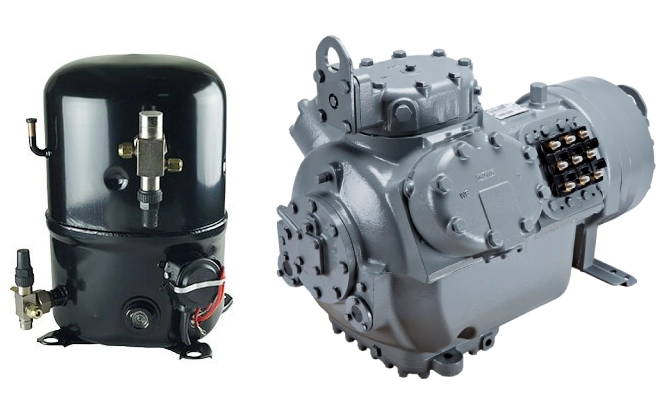
What Is the Difference Between Hermetic and Semi Hermetic Compressors
You might wonder what is the difference between hermetic and semi hermetic compressors. The answer starts with the way each compressor is built and how it works inside your electrical cabinet air conditioner. Imagine two types of compressors: one is like a locked vault, the other is more like a toolbox with a removable lid.
A hermetic compressor seals everything inside a welded steel shell. You can’t open it up for repairs. The refrigerant and motor stay protected from dust, moisture, and outside air. This design keeps leaks at bay and makes the compressor nearly maintenance-free. You get a unit that works quietly and efficiently, perfect for electrical cabinets where space is tight and reliability matters.
On the other hand, a semi-hermetic compressor uses bolts and gaskets to hold its housing together. You can open it up and fix parts like bearings or valve plates. This sounds handy, but every gasket and bolt creates a spot where refrigerant might escape. You trade easy repairs for a higher risk of leaks and more frequent maintenance.
Let’s compare these two compressor types side by side:
| Feature | Hermetic Compressors | Semi-Hermetic Compressors |
|---|---|---|
| Application | Commonly used in residential AC and light commercial systems, with capacities up to 10 tonnes. | Used in larger applications like supermarket refrigeration, with capacities comparable to Volkswagen engines. |
| Maintenance | Cannot be repaired; must be replaced if malfunctioning. | Most parts are repairable, making them more economical. |
| Leakage | Extremely low probability of refrigerant leakage. | Higher probability of refrigerant leakage compared to hermetic compressors. |
| Cost | Generally less expensive. | Typically more expensive due to complexity and application. |
You see that the difference between hermetic and semi-hermetic compressors comes down to leak prevention, maintenance, and cost. Hermetic compressors fit best in electrical cabinet air conditioners because you want a sealed system that keeps refrigerant inside and contaminants outside. You don’t want to worry about leaks or constant repairs. That’s why Linkwell uses hermetic compressor technology in all their cabinet cooling solutions.
Reliability and Maintenance Comparison
Reliability matters when you trust your electrical cabinet air conditioner to protect sensitive electronics. You want a compressor that won’t let you down. Hermetic compressors offer airtight protection. Their welded shell prevents refrigerant leaks and keeps the system clean. You get peace of mind knowing your compressor won’t let contaminants sneak in.
Semi-hermetic compressors allow for repairs, but every service visit means opening the housing and risking leaks. Gasket joints can fail over time, letting refrigerant escape and reducing system integrity. You might save money on repairs, but you pay for it with more frequent maintenance and the risk of downtime.
Check out how leak prevention and system integrity compare:
| Compressor Type | Leak Prevention | System Integrity |
|---|---|---|
| Hermetic Compressor | Completely airtight, preventing refrigerant leakage and contamination | Enhances system integrity |
| Semi-Hermetic Compressor | More prone to leaks at gasket joints due to serviceability | Allows for maintenance but may compromise integrity due to potential leaks |
Maintenance costs also play a role in your decision. Hermetic compressors require you to replace the whole unit if it fails. This means longer downtime, but you get a fresh, sealed compressor every time. Semi-hermetic compressors let you fix individual parts, which can reduce downtime and save money over the long run. However, the risk of leaks and the need for regular servicing can add up.
| Compressor Type | Maintenance Characteristics | Cost Implications |
|---|---|---|
| Hermetic Compressors | Require complete unit replacement after failure, leading to longer downtime. | Higher one-time replacement costs. |
| Semi-Hermetic Compressors | Allow for modular servicing of components like bearings and valve plates, reducing downtime. | Lower long-term maintenance costs due to serviceability. |
If you value leak prevention and system integrity above all, hermetic compressors win every time. You get a compressor that acts like a fortress, keeping refrigerant locked inside and protecting your electronics from harm. For electrical cabinet air conditioners, this is the gold standard. Linkwell’s commitment to using hermetic compressor technology means you get reliable cooling, fewer worries, and a system built to last.
You now know what is the difference between hermetic and semi hermetic compressors. You see how the difference between hermetic and semi-hermetic compressors affects reliability, maintenance, and cost. Hermetic compressors give you the best protection for your electrical cabinet air conditioner. You can trust Linkwell to deliver a compressor that keeps your system safe and efficient.
Why Linkwell Cabinet Air Conditioners Use Hermetic Compressors
Recommended products

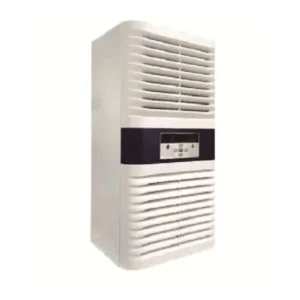
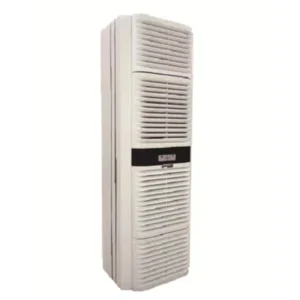
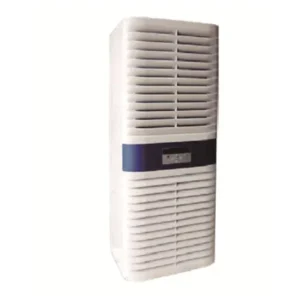
Leak Prevention and System Integrity
You want your electrical cabinet air conditioner to keep working, no matter what the environment throws at it. That’s why Linkwell uses a hermetic compressor in every model, from compact indoor units to the Top Mounted Cabinet Air Conditioner. The welded shell of a hermetic compressor locks in refrigerant and blocks out dust, moisture, and air. This means you don’t have to worry about leaks or outside contaminants sneaking in. Your electronics stay safe, and your cooling system keeps running without interruption. When you choose Linkwell, you get a system that acts like a vault—sealed tight and built to protect what matters most.
Compactness and Installation Flexibility
Space inside an electrical enclosure is precious. Hermetic compressors help you save room because they combine the motor and compressor in one sealed unit. You can fit Linkwell cabinet air conditioners in tight spots, on the side, or even on top of your cabinet. The Top Mounted Cabinet Air Conditioner, for example, sits neatly above your enclosure, freeing up valuable side space. This compact design makes installation simple and gives you more options for different cabinet layouts. You don’t need to worry about bulky parts or complicated setups. Just mount, connect, and let the hermetic compressor do the work.
Compliance with Industry Standards
You need equipment that meets strict safety and quality standards. Linkwell cabinet air conditioners use hermetic compressors to help achieve certifications like UL, CE, RoHS, and ISO 9001. These compressors support advanced features that make your life easier and your system safer. Take a look at how these features work together:
| Feature | Description |
|---|---|
| Inverter Technology | Adjusts compressor speed based on cooling demand, boosting energy efficiency and equipment life. |
| IP54/IP65 Protection | Shields electronics from dust, rain, and humidity for safe operation in tough environments. |
| Smart Controls | Lets you manage temperature and airflow easily with digital controls and EC fans. |
With a hermetic compressor at the heart of every Linkwell unit, you get more than just cooling—you get peace of mind. You know your system meets international standards and stands up to real-world challenges. That’s why so many industries trust Linkwell for their electrical cabinet cooling needs.
Summary Table: Hermetic vs Semi-Hermetic Compressors
Key Feature Comparison
You want to make the right choice for your electrical cabinet air conditioner. Comparing the two main types side by side makes things clear. Check out this table to see how each compressor stacks up:
| Feature | Hermetic Compressors | Semi-Hermetic Compressors |
|---|---|---|
| Structure | Fully enclosed, motor and compressor share a main shaft, no shaft sealing required. | Cylinder block and crankcase are separable, motor shell is an extension of the crankcase. |
| Advantages | Compact size, reduced weight, high reliability, and long life. | Easier to repair due to separable design, ensures concentricity between components. |
| Disadvantages | Difficult to open for repairs, high installation requirements. | Slightly larger due to separable design, but easier maintenance. |
When you look at the table, you notice that a hermetic compressor keeps everything sealed and simple. The design means fewer moving parts exposed to the outside world. That’s a big win for anyone who wants to avoid leaks and keep things running smoothly. On the other hand, a semi-hermetic compressor gives you the option to open it up for repairs, but that comes with more points where things can go wrong.
If you care about space, weight, and keeping your system protected, the hermetic compressor stands out as the smarter choice for electrical cabinet air conditioners.
Suitability for Electrical Cabinet Air Conditioners
Choosing the right compressor for your enclosure isn’t just about features—it’s about what works best for your application. Here’s how the two types compare when it comes to electrical cabinet air conditioners:
- Hermetic compressors fit perfectly in small to medium-sized cabinets. Their compact design and lower cost make them a favorite for most enclosure cooling needs.
- You get high efficiency and a sealed system that keeps dust and moisture out. That’s essential for protecting sensitive electronics.
- Semi-hermetic compressors work better in large-scale systems where you need more cooling power and easy access for repairs.
- For most electrical cabinet air conditioners, you want a solution that’s efficient, cost-effective, and simple to install. Hermetic compressors check all those boxes.
If you want peace of mind and a system that just works, go with a hermetic compressor. That’s why Linkwell uses them in every cabinet air conditioner—so you can focus on your business, not on maintenance.
Most Important Criteria for Selection
When you pick a compressor for your electrical cabinet air conditioner, keep these criteria in mind:
| Criteria | Description |
|---|---|
| Required operating pressure | Make sure the compressor matches your system’s demands. |
| Duty cycle | Think about how often your compressor will run. |
| Maintenance needs | Consider how easy it is to service or replace the unit. |
| Noise level | Choose a compressor that keeps things quiet. |
| Durability | Look for a design that handles tough conditions. |
| Air quality | Protect your electronics from dust and moisture. |
| Budget | Balance cost with future needs and expansion plans. |
You want a compressor that meets your needs today and tomorrow. Hermetic compressors give you that flexibility, especially when you choose a trusted brand like Linkwell.
Conclusion
Choosing the right compressor for your electrical cabinet air conditioner isn’t just a technical detail—it’s a decision that shapes the safety and future of your equipment. When you pick a hermetic compressor, you’re not just getting a part; you’re investing in a shield that keeps leaks out and your electronics protected. The airtight, welded housing blocks every possible leak path. No shaft seals means you skip the common failure points that can haunt other designs. This kind of protection matters most in places where dust, moisture, and temperature swings threaten your sensitive gear.
If you want your system to run without constant interruptions, focus on reliability and long-term value. Linkwell cabinet air conditioners use hermetic compressors for a reason. Their design means you get up to 99% refrigerant retention over the life of the compressor. That’s peace of mind you can count on, especially in harsh environments where other compressors might struggle.
Here’s how Linkwell stands out in the industry:
| Evidence Type | Description |
|---|---|
| Extensive Experience | Decades of expertise in electrical solutions. |
| Partnerships with Industry Leaders | Trusted by ABB, Siemens, and Schneider. |
| Commitment to Quality and Innovation | Innovative, customized products for every client. |
You want more than just cooling—you want a solution that saves energy, protects your investment, and keeps your business moving. Linkwell’s cabinet air conditioners offer all that and more. Their corrosion-resistant housing and programmable thermostats help you avoid equipment failures and production delays, giving you an edge over competitors using semi-hermetic compressors.
If you’re planning your next project, choose a cabinet air conditioner with a hermetic compressor. You’ll get reliability, efficiency, and support from a brand that leads the industry. That’s a smart move for your business and your peace of mind.
You want your cabinet air conditioner to act like a fortress, keeping leaks out and your electronics cool. Hermetic compressors do just that. They seal refrigerant inside, block dust and moisture, and cut down on service calls. Linkwell builds every unit with this technology, so you get peace of mind and steady performance. With certifications like UL and CE, you know your investment lasts. If you’re looking for a cooling solution that stands the test of time, Linkwell leads the way.
FAQ
What makes hermetic compressors better for electrical cabinet air conditioners?
You get a sealed system that keeps refrigerant inside and blocks dust or moisture. This means fewer leaks and less risk for your electronics. Linkwell’s design gives you peace of mind, especially in tough environments.
Can I repair a hermetic compressor if it stops working?
No, you can’t open a hermetic compressor for repairs. If it fails, you swap it out for a new one. This keeps your system clean and leak-free, which is perfect for sensitive electrical cabinets.
Why does Linkwell use hermetic compressors in all cabinet air conditioners?
Linkwell wants you to have reliable cooling with no surprises. Hermetic compressors help meet strict standards like UL and CE. They also fit in tight spaces and support smart features, making your job easier.
How do I know if my cabinet air conditioner uses a hermetic compressor?
Check your product manual or the technical specs. If you see “hermetic compressor” listed, you’re set. All Linkwell cabinet air conditioners use this type, so you don’t have to guess.
Do hermetic compressors save energy?
Yes! Hermetic compressors use inverter technology to match cooling power to your needs. This cuts electricity use and helps your equipment last longer. You’ll notice the savings on your energy bill.