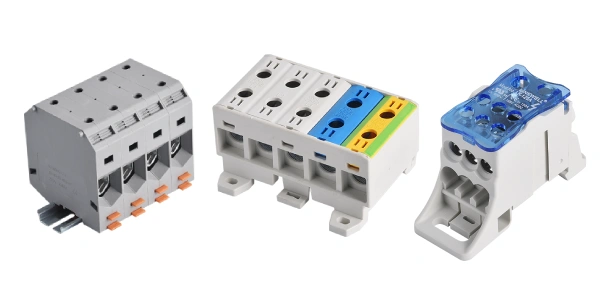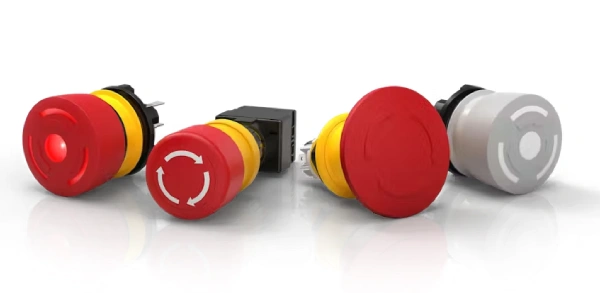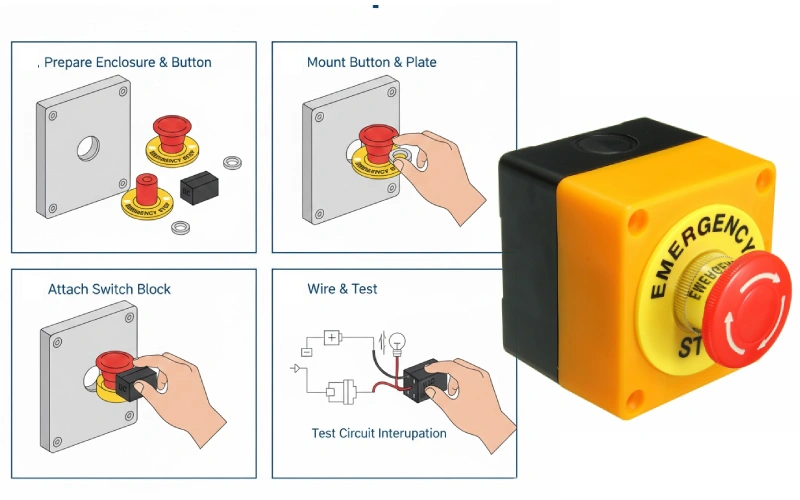
When you ask what terminal block for lighting, you want a solution that keeps your project safe, simple, and reliable. Linkwell brings decades of experience and offers trusted options like Lighting Panelboards, Screw Terminals, and Terminal Block Connectors. You get peace of mind knowing your wiring stays secure and your lights run smoothly. Choosing the right terminal block makes your installation easier and helps you avoid headaches down the road.
Key Takeaways
- Choose the right terminal block to ensure safe and reliable lighting installations.
- Screw terminal blocks provide strong connections and are ideal for long-term reliability.
- Terminal block connectors help keep wiring organized, especially in LED setups.
- Always match terminal blocks to your project’s voltage, current, and wire size requirements.
- Follow best practices for installation and maintenance to enhance the longevity of your lighting system.
Terminal Blocks in Lighting Systems
What Terminal Blocks Do
You might wonder what role terminal blocks play in your lighting setup. Think of them as the backbone of your wiring system. Terminal blocks give you a safe and organized way to connect wires. When you use them, you keep your wiring neat and easy to follow. This makes a big difference, especially if you have a lot of lights or circuits to manage.
Linkwell’s Lighting Panelboards and Terminal Block Connector help you group wires together in one place. You can quickly see where each wire goes. If you ever need to add or change something, you don’t have to untangle a mess of cables. You just loosen a screw, swap a wire, and you’re done. This saves you time and keeps your project looking professional.
Why Terminal Blocks Matter for Lighting
You want your lighting to work every time you flip the switch. Terminal blocks make that possible. They give you secure connections that won’t come loose over time. This means your lights stay on, and you avoid annoying flickers or outages.
Here’s why terminal blocks matter for your lighting:
- They provide strong, reliable connections for your wires.
- They keep your wiring organized, which helps when you need to troubleshoot or expand your system.
- Their design helps prevent accidents like short circuits or loose wires.
In both homes and businesses, terminal blocks help you manage complex lighting setups with confidence. You get peace of mind knowing your installation is safe and efficient. With Linkwell’s solutions, you can trust that your lighting will perform as expected, day after day.
What Terminal Block for Lighting: Types and Comparison
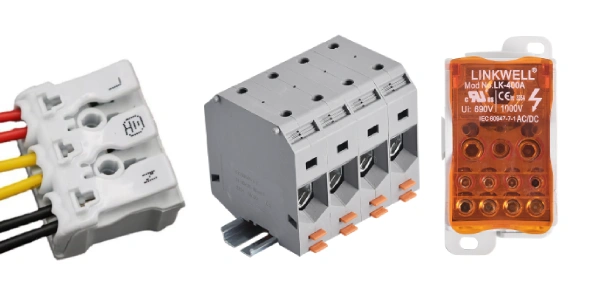
When you start looking for what terminal block for lighting, you’ll see a few main types. Each one has its own strengths. Picking the right one can make your installation smoother and your lighting more reliable. Let’s break down the most common options you’ll find in lighting projects.
Screw Terminal Blocks
Screw terminal blocks are a classic choice. You probably see them in many lighting panels and control cabinets. They use a simple screw to clamp down on the wire, holding it tight. Here’s why you might choose them for your next lighting job:
- You get a secure, dependable connection that stands up to vibration and movement.
- They work with both solid and stranded wires, so you have flexibility.
- You can reuse them. Just loosen the screw, swap the wire, and tighten it again.
- They’re easy to maintain, which is great if you need to make changes later.
You should know that screw terminal blocks might take a little longer to install than some newer types, like push-in or spring clamp terminal blocks. Those newer styles can save time, but screw terminal blocks still win when you want long-term reliability. Many electricians trust them for both LED and traditional lighting because they keep connections strong year after year.
Tip: If you want a balance between speed and reliability, you can use screw terminal blocks for main circuits and spring clamp terminal blocks for quick add-ons.
Terminal Block Connector Options
If you’re working on a modern lighting system, especially with lots of LED fixtures, terminal block connectors can make your life easier. These connectors help you organize your wiring and keep everything neat. Here’s what makes them stand out:
- They deliver steady power to every light, which is key for LEDs.
- You can keep your wiring tidy, so it’s easy to trace and troubleshoot.
- They last a long time, even in demanding setups.
- You can use them with different wire types, which helps if your project has mixed wiring.
- Maintenance is simple. If you need to swap out a fixture, you can do it fast.
- They scale well. If your lighting system grows, you can add more connectors without a hassle.
When you ask what terminal block for lighting, terminal block connectors often come up as a top pick for LED and low-voltage projects. They help you keep things organized and running smoothly.
Barrier Strips and Pluggable Blocks
Barrier strips and pluggable blocks give you another way to connect wires safely. These are popular in both commercial and industrial lighting. Let’s look at how they help:
| Feature/Advantage | Description |
|---|---|
| Screw or Clamping Connection | Gives you a strong hold on each wire, so nothing comes loose. |
| Insulation Bar Design | Keeps wires separated, which helps prevent short circuits. |
| Enclosed or Open Design | Lets you pick more protection or easier access, depending on your needs. |
| High Reliability | Keeps wires secure, even if your panel shakes or moves. |
| Easy Maintenance | Makes it simple to disconnect and reconnect wires for repairs or upgrades. |
| Safety | Lowers the risk of shocks and shorts, keeping you and your team safe. |
You’ll often see barrier strips in places where safety and easy maintenance matter most. Pluggable blocks are great if you want to swap out parts quickly. Both types help you answer what terminal block for lighting when you need something safe and easy to work with.
Making the Right Choice
When you decide what terminal block for lighting, think about your project’s needs. Screw terminal blocks give you reliability. Terminal block connectors offer neatness and flexibility. Barrier strips and pluggable blocks boost safety and make maintenance a breeze. Each type has a place in lighting, especially as LED and low-voltage systems become more common.
You should also keep an eye on costs. The market for plug connectors is growing fast, and prices may rise. It’s smart to look at both the upfront price and the long-term value. A reliable terminal block can save you money on repairs and downtime later.
No matter which type you choose, terminal blocks play a huge role in keeping your lighting safe, organized, and easy to manage. If you want your installation to last, take the time to pick the right terminal blocks for your setup.
Choosing Terminal Blocks: Key Factors
When you pick terminal blocks for your lighting installation, you want to make sure they match your project’s needs. The right choice keeps your system safe, reliable, and easy to maintain. Let’s look at the most important things you should check before you start wiring.
Voltage and Current Ratings
You always need to match your terminal blocks to your current and voltage requirements. Each block has a rated voltage and current. These ratings tell you the maximum load the block can handle safely. If you go over these limits, you risk overheating, energy loss, or even failure. For example, a block rated for 250V and 10A works well for many lighting circuits, but bigger jobs might need higher ratings.
- Rated voltage shows the highest voltage the block can handle for long-term use.
- Rated current tells you how much current the block can carry without problems.
Choosing terminal blocks with the right current and voltage requirements helps your lighting system last longer and stay safe.
Wire Compatibility
Wire size compatibility is another key factor. Terminal blocks only fit certain wire sizes, so you need to check the specs. Most LED lighting uses 18 gauge wire, while bigger fixtures might need 16 or 14 gauge. Here’s a quick guide:
| Wire Size | Application |
|---|---|
| 18 gauge | Commonly used in LED setups |
| 16 gauge | Supports up to 6 amps |
| 14 gauge | Suitable for many appliances |
Make sure your terminal blocks match the wire size compatibility for your project. Always check if the block fits both the conductor and the insulation. If you use stranded wire, ferrules can help you get a better connection.
Environmental Protection
Think about where you’ll install your terminal blocks. Indoor jobs need less protection, but outdoor or damp places need higher IP ratings. Here’s what to look for:
| Environment Type | IP Rating | Description |
|---|---|---|
| Indoor | IP22 or IP30 | Good for dry, clean spaces. |
| Semi-Outdoor | IP64 | Protects against dust and water spray. |
| Outdoor | IP67 | Dust-tight and safe from temporary water submersion. |
Temperature and humidity can also affect performance. High heat or moisture can cause corrosion or loose connections. Linkwell’s products come with certifications like UL and CE, so you know they meet strict safety standards. Always follow best practices for installation, like grounding and using the right junction boxes, to avoid common compliance issues.
Tip: Double-check your installation for proper grounding and secure connections. This helps prevent electrical shocks and keeps your lighting running smoothly.
Installation Best Practices with Linkwell Products
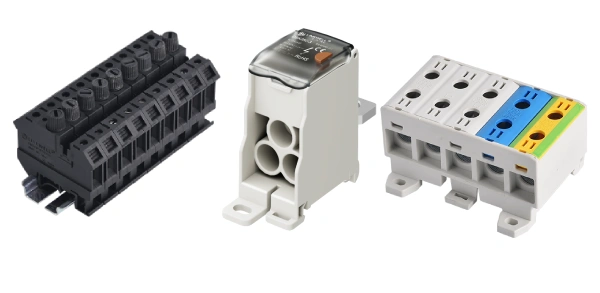
Lighting Panelboards for Safe Distribution
You want your lighting system to run safely and smoothly. Linkwell Lighting Panelboards help you distribute power with confidence. When you start your installation, follow these steps to boost reliability and quality:
| Installation Practice | Description |
|---|---|
| Personal Protective Equipment | Always wear insulated gloves, safety glasses, and sturdy shoes. |
| Permits | Check if you need a permit before making changes to your panel. |
| Professional Help | Call a licensed electrician if you feel unsure or work with high voltage. |
| Torque Specifications | Use the right torque for connections. Label each circuit for easy checks. |
| Panel Installation | Mount the panel straight and secure to avoid future problems. |
| Electrical Diagrams | Use standard diagrams to prevent mistakes. Ask for help if you need it. |
Tip: Good documentation and clear labeling make future maintenance much easier.
Terminal Block Connector for Efficient Wiring
A terminal block connector keeps your wiring organized and boosts reliability. You can make your lighting project look neat and professional. Here’s how to get the most out of your terminal block connector:
- Inspect each terminal block connector before use. Look for signs of wear or rust.
- Clean connectors with a contact spray and brush to keep them free from dirt.
- Store your terminal block connector in a dry place. Use coatings to protect against moisture.
- Handle each terminal block connector gently. Use the right tools for installation.
- Add insulation or UV-resistant covers to protect your terminal block connector from temperature swings.
- Seal connections with weather-resistant materials to block water.
Regular maintenance of your terminal block connector means fewer problems and longer life for your lighting system. You’ll see the difference in reliability and quality.
Screw Terminal for Reliable Connections
Screw terminals give you strong, lasting connections. They shine in places with lots of vibration. To get the best reliability and quality, follow these steps:
- Strip wires to the correct length and insert them fully into the terminal.
- Tighten screws to the recommended torque. This prevents loose connections.
- Check for corrosion, overheating, or loose wires during regular inspections.
- Clean screw terminals and retighten connections as needed.
- Choose high-quality terminal blocks and keep your installation area clean and dry.
Screw terminals resist loosening, even in tough environments. You can count on them for reliability in your lighting circuits.
Note: Most common errors come from poor contact, poor fixation, or poor insulation. You can avoid these by following installation best practices and using quality products.
By following these tips, you’ll boost the reliability and quality of your lighting installation. Linkwell products make it easy to keep your wiring safe, organized, and ready for anything.
Conclusion
You’ve learned how important it is to pick the right terminal block for your lighting project. The right choice keeps your electrical connections safe, neat, and easy to manage. Linkwell gives you solid options like Lighting Panelboards, Screw Terminals, and Terminal Block Connectors. These products help you build strong electrical connections that last.
When you plan your next lighting job, remember these key points:
- Match your terminal block to your voltage and current needs.
- Check wire size and make sure your electrical connections fit tight.
- Think about where you’ll install your blocks. Pick the right protection for indoor or outdoor jobs.
- Follow best practices for installation and maintenance.
If you want your electrical connections to stay reliable, use quality products and check your work often.
Here’s a quick table to help you decide:
| Project Type | Best Terminal Block Option | Why It Works |
|---|---|---|
| Home Lighting | Screw Terminal | Simple, strong electrical connections |
| LED Upgrades | Terminal Block Connector | Neat, easy to expand |
| Industrial/Outdoor | Lighting Panelboard | Safe, organized, weather-resistant |
You don’t have to figure it out alone. Linkwell’s team can help you choose the best solution for your electrical connections. Reach out for expert advice and reliable products that make your lighting installation a success.
You want your lighting installation to last and stay safe. Linkwell gives you top choices like Lighting Panelboards, Screw Terminals, and Terminal Block Connectors. Always check your terminal block selection checklist before you start. This helps you match the right block to your project and meet safety standards every time. Need help? Reach out to Linkwell for expert advice and reliable products.
FAQ
How do you connect led strip lights to terminal blocks?
You connect led strip lights by stripping the wire ends, inserting them into the terminal block, and tightening the screws. This method gives you secure wiring and strong connections. Always check for safety before powering up your led strip lights.
Can you use terminal blocks for all led wiring?
Yes, you can use terminal blocks for most led wiring projects. They help you organize connections and boost safety. You get reliable results for both home and professional installations. Always match the block to your led strip lights and wiring size.
What makes wiring for led strip lights safe?
You keep wiring safe by using quality terminal blocks, checking connections, and following installation guidelines. Good safety practices include labeling wires and inspecting for loose connections. This approach works for led strip lights and other led projects.
Do you need special tools for led wiring with terminal blocks?
You usually need a wire stripper and screwdriver for led wiring. These tools help you make secure wiring and neat connections. For professional installations, you might use a torque driver to ensure safety and long-lasting led strip lights.
Why choose Linkwell for led strip lights wiring?
You choose Linkwell because you want reliable connections, easy wiring, and top safety. Linkwell products support led strip lights and other led setups. You get support for professional installations and peace of mind for every installation.