You know that getting the right torque on terminal block screws keeps your electrical connections safe and reliable. Linkwell builds trusted terminal blocks and screw terminals that meet strict standards. These products carry certifications like UL, CE, CCC, and ROHS, showing they’re built for safety and quality.
| Certification | Description |
|---|---|
| UL | Underwriters Laboratories certification for safety standards |
| CE | European Conformity marking indicating compliance with EU regulations |
| CCC | China Compulsory Certification for product safety in China |
| ROHS | Restriction of Hazardous Substances compliance for environmental safety |
Torque makes sure you achieve secure electrical connections every time. If you want to follow the Torque Specifications for Terminal Block Screws: A Best Practice Guide, you’re in the right place.
Key Takeaways
- Correct torque on terminal block screws ensures safe and reliable electrical connections, preventing overheating and equipment damage.
- Always check the manufacturer’s torque specifications before installation to avoid loose or damaged connections.
- Use calibrated torque tools like screwdrivers and wrenches to achieve the right tightness and protect your equipment.
- Routine inspections of terminal blocks help catch issues early, ensuring all connections remain secure and functional.
- Document your torque values and installation steps for compliance and future reference, enhancing safety and reliability.
Why Torque Matters for Terminal Blocks
Safety and Reliability
You want your electrical connections to work every time. Torque plays a big role in making sure terminal blocks stay safe and reliable. If you tighten screws too much, you can damage the equipment or break the wire strands. If you don’t tighten them enough, the connection can overheat and fail. Getting the torque just right keeps your wiring secure and helps prevent accidents.
Take a look at how torque affects safety and reliability:
| Issue | Impact on Electrical Safety and Reliability |
|---|---|
| Over-tightening | Can damage the lug or equipment, potentially breaking conductor strands. |
| Under-tightening | Leads to overheating and failure at the connection. |
| Correct Torque | Ensures low resistance connections and prevents overheating. |
You need to follow safety precautions every time you install terminal blocks. When you apply the correct torque, you create a low resistance path. This means electricity flows smoothly, and your system stays reliable. If you use the wrong torque, you risk poor connections and possible hazards.
| Connection Quality | Description |
|---|---|
| Low Resistance Path | Achieved by applying optimum torque to create sufficient contact points. |
| Insufficient Torque | Results in inadequate pressure, compromising the connection’s reliability. |
Linkwell Terminal Blocks in Industrial Applications
You see terminal blocks everywhere in industry. Linkwell terminal blocks help organize and protect wiring in busy factory environments. They make sure machines get the power they need and keep everything running smoothly. You find them in control panels, electrical enclosures, and telecom cabinets.
- Terminal blocks are essential for secure wiring in industrial control panels.
- They provide excellent electrical connections, crucial for machinery that relies on electricity.
- They help organize and protect wiring from damage in busy factory environments.
When you use Linkwell terminal blocks, you get products designed for reliability and safety. These blocks handle tough conditions and keep your connections strong. You can trust them to deliver consistent performance, even when your project demands change.
Understanding Torque Specifications for Terminal Block Screws: A Best Practice Guide
What Is Torque?
You might wonder what torque means when you work with terminal block screws. Torque is the force you use to turn a screw and create a solid connection between two parts. In electrical connections, torque helps you make sure the connector interfaces are fully engaged and stay secure. If you follow torque specifications for terminal block screws: a best practice guide, you avoid loose or damaged connections. You want your electrical connections to last and perform well, so getting the torque right is key.
When you use Linkwell terminal blocks, you get products that meet strict standards. These blocks carry certifications like UL, CE, and RoHS. That means you can trust the materials and safety of your electrical connections. Here’s a quick look at the certifications you’ll find on Linkwell products:
| Certification | Description |
|---|---|
| UL | Underwriters Laboratories certification for safety standards |
| CE | European Conformity marking for EU safety standards |
| IEC | International Electrotechnical Commission standards for electrical safety |
Tip: Always check the torque specifications for terminal block screws: a best practice guide in your product manual. This helps you stay compliant and safe.
Torque and Electrical Performance
You know that torque affects how well your terminal block screws work. If you use the right torque, you get reliable contact and strong electrical connections. If you use too little torque, your screws can loosen and cause problems. Too much torque can damage the conductor and lead to failures.
Here’s what you need to remember about torque and electrical performance:
- Proper torque is essential for reliable contact in terminal block screws.
- Insufficient torque can cause loose connections.
- Excessive torque may damage conductors.
- Both issues can lead to electrical performance problems.
You should follow torque specifications for terminal block screws: a best practice guide. Most screw-type terminals need torque between 0.5-2.5 Nm, depending on wire size. This range keeps your electrical connections secure without harming the conductor.
Linkwell terminal blocks use safe materials and meet RoHS and REACH standards. You get peace of mind knowing your electrical connections are safe for health and the environment.
Risks of Incorrect Torque
Loose Screws and Hazards
You might think a loose screw isn’t a big deal, but it can cause serious trouble in your electrical panel. When you don’t apply the right torque, the screw can loosen over time. This creates a weak connection that heats up and may even melt the connector. Sometimes, loose wires start to arc, which increases resistance and leads to connector failure. You don’t want to deal with melted connectors or unreliable circuits.
Here’s what can happen if you skip proper torque:
- Loose wires can get hot enough to start fires or create shock hazards.
- Overheating from loose screws increases the risk of fire in your panel.
- Circuit breakers may not trip, leaving circuits unprotected and raising the chance of electrical shock.
You need to focus on safety every time you tighten terminal block screws. Using the correct torque keeps your connections secure and helps prevent dangerous situations.
Tip: Always double-check your connections after installation. A quick check can save you from costly repairs and keep your system safe.
Overtightening and Damage
You might think tighter is better, but overtightening can damage your equipment. When you use too much torque, you risk harming the terminal block and the wires inside. Sharp edges or excess force can cut into the wire insulation, making the connection unsafe. Damaged wires lead to poor connections and can create dangerous situations.
Let’s look at the types of damage caused by overtightening:
| Type of Damage | Description |
|---|---|
| Damage to Terminal Block | Too much torque can crack or break the terminal block. |
| Stripped Threads | Excess force strips the threads of the screws, making them useless. |
| Wire Insulation Damage | Overtightening cuts or crushes the wire insulation, risking shorts. |
You want to protect your equipment and keep your wiring safe. Using the right torque helps you avoid these problems and keeps your electrical system reliable.
Note: Always use a calibrated tool to set the correct torque. This simple step boosts safety and extends the life of your terminal blocks.
Tools for Achieving Correct Torque
Torque Screwdrivers and Wrenches
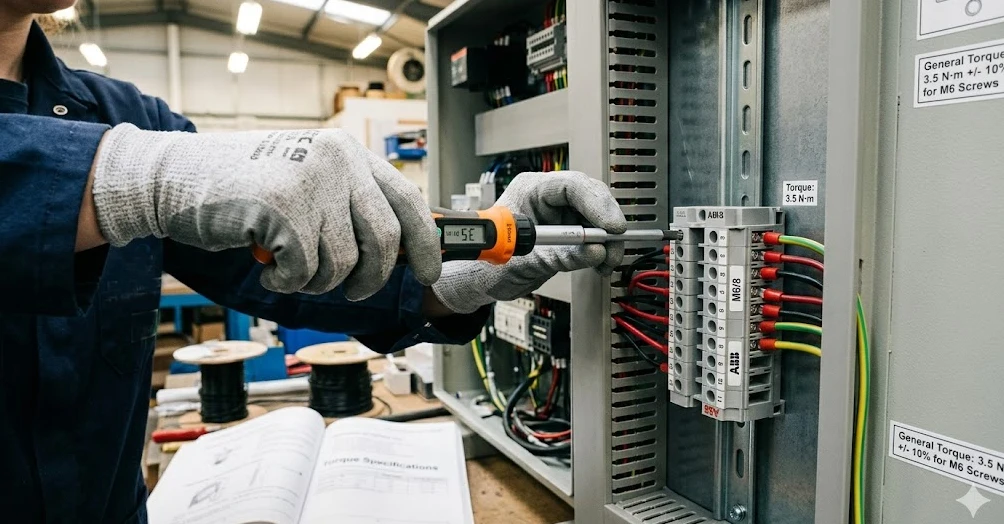
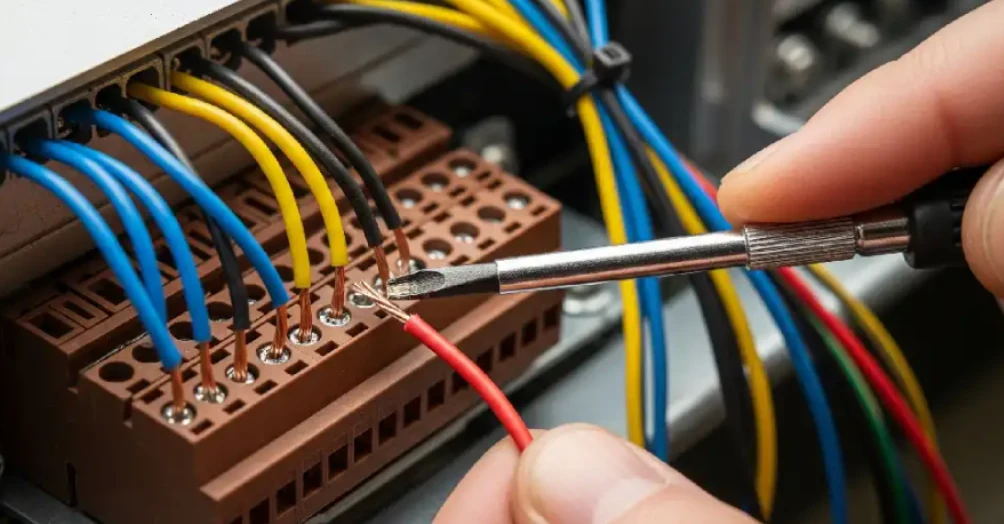
You want your terminal blocks to stay secure and safe. The right tool makes all the difference when you set the torque. Torque screwdrivers and wrenches help you tighten screws to the exact value needed. You avoid guessing and prevent mistakes.
Torque screwdrivers come with precision machined tips. These tips fit terminal block screws perfectly. You get a cushion-grip handle, which feels comfortable in your hand. Most torque screwdrivers use steel for durability. The overall length is about 7.75 inches, and the tip size is 1/8 inch. You can work for hours without fatigue because the tool weighs only 2.4 ounces.
Torque wrenches offer a break-over feature. When you reach the preset torque, the wrench signals by breaking over. This reduces the risk of over or under tightening. You get high torque accuracy and an ergonomic handle. The unique bit changing system lets you switch bits quickly. Factory calibration ensures professional results.
| Tool Type | Features |
|---|---|
| Break-over Torque Wrench | Signals when preset torque is reached, reduces risk of over/under tightening, ISO6789 accuracy |
| Torque Screwdriver | Precision machined tip, cushion-grip handle, steel material, lightweight, exact fit for screws |
Tip: Always use a calibrated tool for the proper use of terminal blocks. This keeps your electrical connections reliable.
Linkwell Screw Terminals and Tool Compatibility
You need tools that match your terminal blocks. Linkwell screw terminals work with most torque screwdrivers and wrenches. The modular design makes installation easy. You can use both solid and stranded wires. The housing resists corrosion and flame, so you get long-lasting performance.
When you use the right torque tool, you protect your terminal blocks from damage. You keep your electrical system safe. Linkwell products support high torque accuracy. You can trust them for industrial applications. The compatibility means you spend less time worrying about fit and more time getting the job done.
Here’s what you get with Linkwell screw terminals:
- Ergonomic handle design for optimal handling.
- High torque accuracy for precise work.
- Unique bit changing system for enhanced dexterity.
You achieve secure connections every time. Your terminal blocks stay reliable, and your wiring stays organized. Using the correct torque tool is a smart move for any installer.
Identifying Torque Specifications for Terminal Block Screws
Manufacturer Guidelines
When you work with terminal blocks, you need to know the right torque for each screw. The best place to start is always the manufacturer’s guidelines. Every brand, including Linkwell, tests their products and provides specific torque values. You’ll find these numbers in the product manual or on the datasheet. These values help you avoid guesswork and keep your connections safe.
Linkwell terminal blocks come with clear instructions. You get torque values that match the size and type of screw. These products carry UL and CE certifications, so you know they meet strict safety rules. If you use Linkwell terminal blocks, you can trust that the torque values are tested and reliable. Always check the label or manual before you start tightening screws.
Tip: If you can’t find the torque value, reach out to the manufacturer or visit their website. It’s better to ask than to risk a poor connection.
Common Torque Values
You might wonder what torque values are typical for terminal blocks. Most manufacturers, including Linkwell, design their products to meet international standards. You’ll see torque values listed in Newton-meters (Nm) or pound-inches (lb-in). For small terminal blocks, the torque usually ranges from 0.5 to 1.2 Nm. Larger blocks may need up to 2.5 Nm.
Here’s a quick table to help you:
| Terminal Block Size | Typical Torque (Nm) | Standard Reference |
|---|---|---|
| Small (up to 2.5mm²) | 0.5 – 0.8 | UL 486E, IEC 60947-7-1 |
| Medium (4-10mm²) | 1.0 – 1.5 | UL/CSA, NEC |
| Large (16mm² and up) | 2.0 – 2.5 | UL/CSA, NEC |
You should always follow standards like NEC and UL/CSA when you install terminal blocks. These standards help you pick the right torque and keep your system safe. If you use Linkwell products, you get the added benefit of certified safety and easy-to-read instructions.
Note: Using the correct torque protects your equipment and keeps your wiring secure. Never guess—always check the specs!
Step-by-Step Torquing Procedure
Preparing Terminal Blocks and Wires
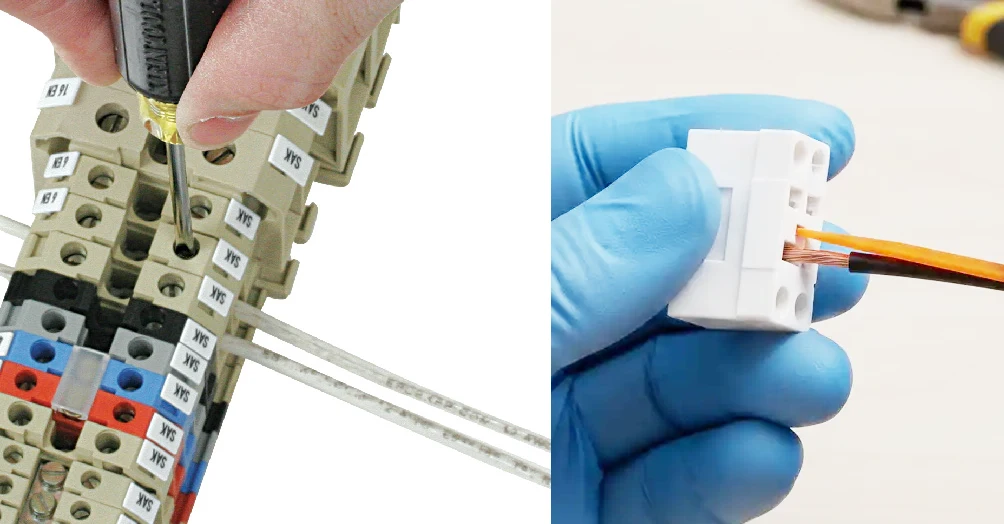
You want to start with a clean workspace and the right tools. This step-by-step guide helps you achieve correct terminal connections and a secure installation every time.
- Gather your tools. Pick screwdrivers in different sizes and a wire stripper that fits your wire gauge. Make sure your tools match the terminal screws.
- Prepare the wire. Cut it to the length you need. Strip the insulation so the bare wire fits perfectly inside the terminal block. Don’t leave too much or too little exposed.
- Choose the right terminal block and wire. Look at the voltage and current levels for your project. Pick blocks and wires that handle the environment and load.
- Disconnect power. Always turn off the power supply before you touch any wires. Use a multimeter to verify power is off. Safety comes first.
Tip: Double-check that you disconnect power before you start. This keeps you safe and prevents accidents.
Setting Torque Tools
You need to set your torque tools correctly to avoid mistakes. Terminal blocks have specific torque ratings, often set by UL and CSA standards. If you use the wrong torque, you risk breaking or deforming connectors.
- Use a calibrated torque screwdriver or wrench. This ensures you tighten screws to the exact value needed.
- Check the torque rating for your terminal block. You’ll find this in the manual or datasheet.
- Avoid over-tightening or under-tightening. Both can cause failures, overheating, or circuit issues.
- Make sure your torque measuring instrument matches the screw type and size.
Note: Using the right tool helps you achieve a secure installation and keeps your terminal blocks in good shape.
Tightening Screws
Now you’re ready to tighten the screws. Follow these steps to get the best results:
- Always follow the torque specifications listed in your equipment or installation manual.
- Use your calibrated torque wrench or screwdriver for tightening.
- Check the tightness at 90% of the specified torque level. If the screw doesn’t turn, your connection is solid. If it does, rework and retorque to 100%.
- For high voltage connections, disconnect power and verify power is off before you access the terminals.
Tip: Take your time. Rushing can lead to mistakes and unsafe connections.
You finish the process with confidence. Your terminal blocks are secure, your wiring is organized, and your electrical system is ready for action.
Verifying Torque After Installation
Checking Torque Accuracy
You finished tightening the terminal block screws, but you still need to make sure everything is secure. You want to check connections and confirm that you applied the right torque. Testing helps you catch mistakes before they cause trouble. Here are three simple ways to test the setup and verify torque accuracy:
- First Movement Test: Grab a torque measuring tool and apply force to the screw until you notice the first movement. The reading you get shows the original torque you used.
- Loosening Test: Use your tool to turn the screw in the loosening direction. When the fastener breaks loose, the value you see is close to the torque you applied during installation.
- Marking Test: Make a mark on the screw and the surface it clamps. After you loosen and retighten the screw, the torque needed to line up the marks tells you if you matched the original torque.
You can use these testing methods to spot any issues early. If you find a screw that doesn’t meet the torque rating, you can fix it right away. This step keeps your electrical system safe and reliable.
Tip: Always test the setup after installation. You protect your equipment and avoid costly repairs.
Documentation and Compliance
You want your work to meet industry standards and pass inspections. After you finish testing, you should record your results. Write down the torque values for each terminal block screw. Use proper labeling so anyone can check connections later. Good records help you prove that you followed safety rules.
You can keep a logbook or use digital tools for documentation. Make sure you include the date, torque readings, and any notes about testing. If you work with Linkwell terminal blocks, you’ll find that clear instructions and compliance certifications make this process easier.
Note: Proper labeling and documentation show that you care about safety and quality. Inspectors and team members will appreciate your attention to detail.
Common Mistakes and How to Avoid Them
Tool Selection Errors
You might grab any screwdriver or wrench when working with terminal block screws. That’s a common mistake. Not all tools fit every screw, and using the wrong one can cause problems. Sometimes, you apply too much force and damage the terminal block. Other times, you don’t tighten enough, and the connection stays loose.
Check out this table to see some typical tool selection errors and how you can fix them:
| Problem | Solution |
|---|---|
| Over-Tightening Screws | Follow manufacturer guidelines for recommended torque values. Use torque screwdrivers or wrenches to avoid excessive force. Use terminal blocks with torque-limiting features if possible. |
You want to use tools that match the screw size and type. Torque screwdrivers and wrenches help you get the right tightness every time. If you choose terminal blocks with torque-limiting features, you make your job easier and safer.
Tip: Always check your tool before you start. Make sure it’s calibrated and fits the screw perfectly.
Ignoring Specifications
You might skip reading the manual or ignore the torque values listed by the manufacturer. That’s risky. Ignoring specifications can lead to several problems:
- Compromised electrical connections
- Increased resistance, which causes overheating
- Potential risk of fire hazards due to improper connections
- Over-torquing weakens fasteners permanently
- Under-torquing causes loose connections, leading to arcing or short circuits
If you follow the manufacturer’s instructions, you keep your electrical system safe and reliable. You avoid costly repairs and dangerous situations. Always check the specs and use the right tools for the job.
Note: Taking a few extra minutes to read the guidelines can save you hours of troubleshooting later.
Best Practices for Terminal Blocks
Routine Inspection
You want your terminal blocks to stay reliable and safe. Routine inspection helps you catch problems early and keeps your electrical system running smoothly. When you check your terminal blocks, you make sure every connection stays secure and performs well. Here’s what you should do during each inspection:
- Use the correct tools to apply torque precisely.
- Stick to the specified torque values to avoid damaging the terminal blocks.
- Make sure all connections are tight and secure to prevent electrical failures.
- Never exceed the recommended torque values, since that can cause cracks or stripped threads.
- Always perform torquing on de-energized equipment when possible.
- Demonstrate proper torque before you energize the service.
You can follow a simple checklist to ensure correct torque during installation:
- Follow the manufacturer’s torque specifications to prevent equipment failures and safety hazards.
- Use a calibrated torque tool to achieve the specified torque value as indicated in the installation instructions.
- Adhere to National Electrical Code (NEC) requirements for proper installation and torque application.
Tip: Regular inspections help you spot loose screws or damaged terminal blocks before they become a bigger issue.
Training and Support
You don’t have to tackle terminal blocks alone. Training makes a big difference in how well you install and maintain your connections. Linkwell offers guidance and support for installers, electricians, and panel builders. You get access to clear manuals, videos, and technical advice. If you have questions, Linkwell’s team is ready to help you 24/7.
Linkwell terminal blocks stand out because they’re easy to install, durable, and certified for safety. You can trust their products in tough environments. The modular design lets you expand or reconfigure your system without hassle. When you choose Linkwell, you get reliable terminal blocks and ongoing support for your projects.
Note: Good training and strong support help you avoid mistakes and keep your electrical system safe.
Conclusion
You’ve made it to the end of this guide, and now you know why getting the right torque on terminal block screws matters so much. When you follow the right steps, you keep your electrical connections safe, reliable, and ready for anything. You don’t just avoid problems—you build confidence in your work.
Let’s do a quick recap of what you learned:
- Always check the manufacturer’s instructions before you start.
- Use the right tools for the job, like calibrated torque screwdrivers or wrenches.
- Never guess the torque value—look it up and set your tool.
- Inspect your connections after installation to make sure everything is tight and secure.
- Keep records of your work for safety and compliance.
Remember: Taking a few extra minutes to get the details right can save you hours of troubleshooting later.
When you choose Linkwell terminal blocks and screw terminals, you get products that meet strict safety standards. You also get support from a team that’s ready to help you 24/7. Linkwell makes it easy to find the right solution for your project, whether you’re working in a busy factory or a small control panel.
Here’s a handy checklist for your next installation:
| Step | Action |
|---|---|
| 1. Preparation | Gather tools and materials |
| 2. Power Off | Disconnect all power sources |
| 3. Wire Prep | Strip and insert wires |
| 4. Torque | Tighten screws to spec |
| 5. Inspection | Check and document results |
You’re now ready to handle terminal block installations with confidence. Safe wiring starts with the right torque and the right partner. If you ever need help, Linkwell is just a call or click away.
You know that applying the right torque keeps your terminal block connections safe and reliable. Linkwell supports you with expert advice and high-quality products, making installation easier. When you follow best practices, you prevent loose connections, avoid damage, and extend equipment life. Here’s a quick checklist for your next job:
- Strip wires to the correct length.
- Use ferrules for stranded wires.
- Tighten screws with a calibrated tool.
- Label each terminal block.
- Plan test points.
- Route wires carefully.
Stay safe and keep your electrical system running smoothly!
FAQ
How do you know if you’ve tightened a terminal block screw enough?
You check the manufacturer’s torque value in the manual. Use a calibrated torque screwdriver or wrench. If the screw stops turning at the specified setting, you’ve got it right.
Can you reuse terminal blocks after loosening the screws?
Yes, you can reuse most terminal blocks. Just make sure the screw threads and housing are undamaged. Always inspect for wear before reconnecting wires.
What happens if you ignore the torque specification?
You risk loose connections or damaged equipment. Ignoring the torque can cause overheating, arcing, or even fire. Always follow the guidelines for safety.
Do Linkwell terminal blocks work with both solid and stranded wires?
You can use Linkwell terminal blocks with solid and stranded wires. The design supports secure connections for both types. This makes installation flexible and easy.
Where can you find support if you have trouble installing terminal blocks?
You can reach out to Linkwell’s technical team. They offer 24/7 support and clear manuals. Visit their website or contact them directly for help.