You want your enclosure to stay safe, right? When you compare thermostats, you’ll see that the real difference comes down to reliability, flexibility, maintenance, and cost-effectiveness. Linkwell’s experience shows that both fixed and adjustable bimetal thermostats have unique strengths. Take a look at these key criteria that matter most in the industry:
| Criteria | What Matters Most |
|---|---|
| Temperature Range & Setpoint Accuracy | Matches your operating needs and keeps your system stable |
| Electrical Load Compatibility | Handles the right voltage and current for your equipment |
| Sensing Method & Response Time | Responds quickly or averages temperature for steady protection |
| Environmental Resilience | Survives tough conditions and keeps working |
| Mounting & Calibration Flexibility | Lets you install and adjust easily, or stick to a preset for hassle-free operation |
With Linkwell’s enclosure thermostats, you get solutions that tackle these challenges head-on. Fixed vs. Adjustable Bimetal Thermostat: Which One Saves Your Enclosure? Let’s break it down and find what works best for you.
Key Takeaways
- Fixed bimetal thermostats offer reliable, set-and-forget performance, making them ideal for consistent processes without the need for adjustments.
- Adjustable bimetal thermostats provide flexibility, allowing users to set specific temperatures for varying applications, which is beneficial for changing environments.
- Both thermostat types are easy to install and maintain, but fixed models require less upkeep, while adjustable models may need recalibration over time.
- Choosing the right thermostat depends on your needs: fixed for simplicity and reliability, adjustable for control and adaptability.
- Linkwell thermostats meet global safety standards, ensuring your equipment stays protected and operates efficiently.
Fixed Bimetal Thermostat
What Is a Fixed Bimetal Thermostat
You might wonder what makes a fixed bimetal thermostat different from other thermostats. This device uses a bimetal strip that bends when the temperature changes. The thermostat has a factory-set temperature, so you don’t need to adjust anything. When the temperature inside your enclosure hits the preset point, the bimetal snaps and switches the circuit. You get a simple, reliable solution that works every time. Linkwell’s bimetal thermostat stands out because it mounts easily on a DIN rail and fits right into your panel. You can trust it to keep your equipment safe without extra fuss.
How Fixed Thermostats Protect Enclosures
Fixed bimetal thermostats protect your enclosure by acting fast when the temperature rises. The bimetal strip senses the heat and snaps open or closed, depending on the need. This mechanical response gives you a safety cutoff that prevents overheating. You don’t have to worry about electronics failing or settings drifting. The thermostat works as a fail-safe mechanism. Here’s a quick look at the main safety advantages:
| Safety Advantage | Description |
|---|---|
| Fail-safe mechanism | The bimetallic strip cuts off power when temperature thresholds are reached, preventing overheating. |
| Mechanical response | The thermostat operates by snapping open or closed in response to temperature changes, ensuring safety. |
You see this kind of thermostat in industrial refrigeration unit thermostats, switchgear panels, and other places where you need steady protection. Linkwell’s bimetal thermostat handles cooling fans, heaters, and refrigeration units with ease.
Pros and Cons for Enclosure Safety
You get several benefits with fixed-setpoint thermostats.
- You don’t need to adjust the thermostat, so you avoid mistakes.
- The bimetal thermostat gives you reliable performance for over 100,000 cycles.
- You save time during installation because the thermostat mounts quickly.
- The safety cutoff keeps your enclosure safe from overheating.
If you work with industrial refrigeration unit thermostats or need a simple solution for cooling and heating, the bimetal thermostat fits your needs. Linkwell’s thermostats deliver consistent temperature control for refrigeration, switchgear, and automation panels. You get peace of mind knowing your enclosure stays protected.
Adjustable Bimetal Thermostat
What Is an Adjustable Bimetal Thermostat
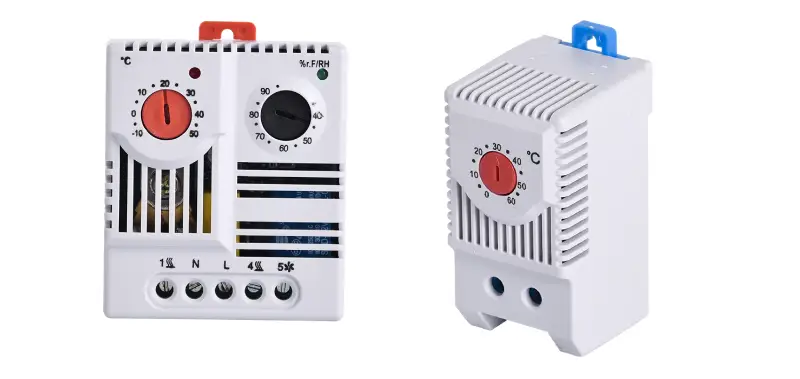
You want more control over your enclosure’s climate? An adjustable bimetal thermostat gives you that power. This thermostat uses a bimetal strip, just like the fixed type, but you can set the temperature you want. You turn a dial or use a screw to pick the right temperature for your equipment. Linkwell’s adjustable bimetal thermostats make it easy to match your needs, whether you work with cooling fans, heaters, or even refrigeration units. You get a device that fits right into your panel and lets you fine-tune the environment.
Here’s a quick look at the typical user-set temperature ranges you’ll find in these thermostats:
| Temperature Range | Description |
|---|---|
| 0 °C to +60 °C | Typical user-set range for thermostats |
This range covers most industrial applications, including sensitive refrigeration and automation panels.
How Adjustable Thermostats Protect Enclosures
You can boost safety and performance with an adjustable bimetal thermostat. When you set the temperature, the bimetal strip reacts to changes inside your enclosure. If the temperature climbs too high, the thermostat snaps and turns on a fan or air conditioner. If things get too cold, it can switch on a heater. This keeps your refrigeration and electrical equipment safe from damage.
Let’s see how adjustable models compare to fixed ones:
| Feature | Adjustable Models | Fixed Models |
|---|---|---|
| Trigger Point Setting | Manual setting via dial or screw | Pre-set trip temperatures |
| Flexibility | Flexible for varying processes; reusable | Not field-adjustable; must be replaced |
| Calibration | May require recalibration over time | Highly reliable, but fixed |
You get flexibility and control. You can reuse the same thermostat for different projects or adjust it as your refrigeration needs change.
Pros and Cons for Enclosure Safety
Adjustable bimetal thermostats give you several advantages:
- You can set the temperature for each enclosure.
- You can use one thermostat for many refrigeration or automation jobs.
- You get easy installation with Linkwell’s DIN rail mounting.
- You can protect your equipment from overheating or freezing.
You might need to check calibration sometimes, but you gain the freedom to adapt. If you work with changing refrigeration loads or need to tweak settings, adjustable bimetal thermostats are your best choice. Linkwell’s products help you keep your enclosures safe, efficient, and ready for anything.
Fixed vs. Adjustable Bimetal Thermostat: Which One Saves Your Enclosure?
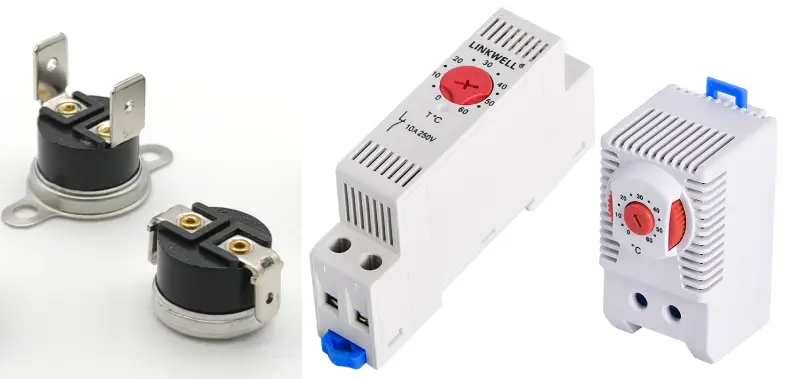
Reliability Comparison
You want your refrigeration equipment to run smoothly. Reliability matters most when you choose thermostats. Fixed vs. adjustable bimetal thermostat: which one saves your enclosure? Fixed thermostats give you consistent performance. You set them once, and they keep working for years. Adjustable thermostats let you change settings, but you need to check calibration sometimes. Both types use a bimetal strip for temperature control. This mechanical action means you get dependable system protection.
Linkwell thermostats come with certifications that prove their reliability. Take a look at the table below:
| Certification | Description |
|---|---|
| CE | Compliance with European safety standards |
| RoHS | Restriction of hazardous substances |
| ISO9001 | Quality management standards |
| CCC | China Compulsory Certification |
You can trust Linkwell thermostats to meet global standards. They work in refrigeration panels, switchgear, and automation systems. You get peace of mind knowing your enclosure stays safe.
Flexibility and Customization
Do you need flexibility in temperature regulation? Adjustable thermostats let you set the temperature for each refrigeration job. You can use the same device for different projects. Fixed thermostats work best when you want accurate control without adjustments. Fixed vs. adjustable bimetal thermostat: which one saves your enclosure? Adjustable models give you more options for changing loads or environments.
Linkwell offers electronic temperature controllers with customizable ranges. You can pick the right setpoint for your refrigeration needs. If you work in food processing or data centers, you might need to change settings often. Adjustable thermostats make that easy. Fixed thermostats suit applications where you want simple, reliable protection.
Tip: If your refrigeration system changes often, choose adjustable thermostats. If you want set-and-forget performance, fixed thermostats are your best bet.
Maintenance and Lifespan
You want your refrigeration panels to last. Fixed vs. adjustable bimetal thermostat: which one saves your enclosure? Fixed thermostats need almost no maintenance. You install them, and they keep working. Adjustable thermostats may need recalibration if you change settings often. Both types offer long life—Linkwell thermostats can handle over 100,000 cycles.
Electronic temperature controllers from Linkwell are easy to mount and replace. You save time during installation. You also reduce downtime in your refrigeration systems. Linkwell designs thermostats for durability. You get reliable temperature control and system protection for years.
Cost and Value
You care about cost and value. Fixed vs. adjustable bimetal thermostat: which one saves your enclosure? Fixed thermostats cost less up front. They work well in standard refrigeration applications. Adjustable thermostats cost a bit more, but you get flexibility and customization. Linkwell thermostats deliver value through energy efficiency. They only activate cooling or heating when needed.
Linkwell electronic temperature controllers help you cut operational costs. You protect your refrigeration equipment and extend its lifespan. You also meet international standards with certified products. You get accurate control, reliable performance, and strong protection for your enclosure.
Note: Linkwell thermostats are trusted by major brands like ABB, Siemens, and Schneider Electric. You get proven performance in refrigeration, automation, and industrial panels.
Fixed vs. adjustable bimetal thermostat: which one saves your enclosure? You need to match your choice to your refrigeration needs. Linkwell gives you the tools to protect your equipment and optimize performance.
Choosing the Right Thermostat for Your Enclosure
Best Use Cases for Fixed
You want a thermostat that works without extra steps. Fixed bimetal thermostats fit best in places where you need steady protection and don’t plan to change the settings. You see these in switchgear panels, refrigeration units, and automation cabinets. If your enclosure runs the same process every day, a fixed thermostat keeps things simple. You install it once and let it do its job. Linkwell’s fixed thermostats offer factory-set points, so you avoid mistakes and save time. You get reliable performance for years.
| Application | Why Fixed Works Well |
|---|---|
| Switchgear panels | Consistent temperature needed |
| Refrigeration units | No need for frequent adjustments |
| Automation cabinets | Simple, set-and-forget operation |
Best Use Cases for Adjustable
You want flexibility. Adjustable bimetal thermostats let you set the temperature for each job. If your enclosure handles different loads or you work in changing environments, you need this option. Adjustable thermostats work well in data centers, food processing, and energy storage systems. You can tweak the settings as your needs change. Linkwell’s adjustable thermostats make it easy to match your equipment and keep everything safe.
- Data centers: Adjust for varying heat loads.
- Food processing: Change settings for different products.
- Energy storage: Adapt to seasonal changes.
Quick Decision Guide
You want to make a fast choice. Here’s a simple checklist to help you decide:
- Do you need steady, unchanging protection? Go with fixed.
- Do you want to adjust the temperature for different projects? Choose adjustable.
- Are you looking for easy installation and operation? Both types offer that.
- Is cost a concern? Fixed thermostats are usually more affordable.
- Do you need professional guidance? Ask Linkwell for help.
Tip: Bimetal thermostats are easy to install and operate. If your environment doesn’t require quick temperature changes, fixed models are a cost-effective solution. For more complex needs, adjustable thermostats give you control.
You can trust Linkwell to help you pick the right thermostat for your enclosure. You get reliable protection and the flexibility you need.
Conclusion
You want your enclosure to stay safe, efficient, and worry-free. Choosing between a fixed and adjustable bimetal thermostat comes down to what you need most—steady protection or flexible control. Both options from Linkwell give you reliable performance, but each shines in different situations.
If you want a set-and-forget solution, a fixed bimetal thermostat keeps things simple. You install it, and it does its job day after day. If your projects change or you need to tweak settings, an adjustable thermostat gives you that freedom. You can match the temperature to your equipment and environment with just a quick turn.
Let’s look at how Linkwell’s product value helps you make the right choice:
| Feature | Benefit |
|---|---|
| Reliable Solutions | Keeps your equipment safe and running in tough conditions. |
| Customizable Controls | Lets you manage temperature for many different applications. |
| Certified Standards | Meets strict safety and quality rules for industrial use. |
| Programmable Features | Handles heating and cooling automatically to prevent problems. |
| Energy Efficiency | Cuts down on energy use and saves you money. |
You get more than just a thermostat with Linkwell. You get peace of mind. Here’s what you can expect:
- Your equipment stays safe from overheating, freezing, and moisture.
- You see fewer breakdowns and longer life for your gear.
- You spend less time worrying about sudden failures.
Linkwell stands behind every thermostat with global certifications and a reputation trusted by industry leaders. You get support whenever you need it. If you want to protect your enclosure and keep your operations smooth, Linkwell has the right thermostat for you.
Tip: Not sure which model fits your needs? Reach out to Linkwell’s team for expert advice and find the perfect match for your enclosure.
You want the best protection for your enclosure. Linkwell gives you reliable thermostats that fit your needs, whether you want fixed or adjustable control. Customers say things like:
- “Performance is flawless, no condensation, and energy savings are remarkable.”
- “Reliable, energy-efficient, and in high demand.”
When you pick a thermostat, remember to check:
- Temperature control needs
- Durability and build quality
- Safety features
- Compatibility
- Cost and long-term value
Explore Linkwell’s solutions for peace of mind and lasting performance.
FAQ
How do you install a Linkwell bimetal thermostat?
You snap the thermostat onto a DIN rail inside your enclosure. Connect the wires to the terminal blocks. The process takes just a few minutes. You don’t need special tools.
Can you use one thermostat for both heating and cooling?
Yes, you can. Linkwell offers SPDT bimetal thermostats. One contact controls cooling, and the other handles heating. You manage both functions with a single device.
What industries use Linkwell enclosure thermostats?
You find Linkwell thermostats in wind power, energy storage, electric power, data centers, and food processing.
They protect sensitive equipment in many industrial environments.
How do you choose between fixed and adjustable thermostats?
| Fixed Thermostat | Adjustable Thermostat |
|---|---|
| Set-and-forget | Customizable control |
| Simple operation | Flexible for changing needs |
| Great for steady processes | Best for variable loads |
Are Linkwell thermostats certified for global use?
You get UL, CE, RoHS, and ISO9001 certifications with Linkwell thermostats. These certifications mean you can use them in projects worldwide.